
English cottage decor is less a strict formula than a warm, layered way of making a home feel settled, welcoming, and personal. Its character comes from the balance of soft painted colors, floral or botanical patterns, practical furniture, aged finishes, natural textures, and accessories that appear to have been gathered gradually. A room may include a faded rug, a painted wood table, comfortable upholstery, framed artwork, and a few well-loved ceramics without needing to look overly themed.
The most successful approach begins with comfort and builds in layers. Choose a gentle palette, introduce pattern with purpose, and let wood, linen, wool, cotton, and ceramic surfaces add texture. Whether the goal is a peaceful bedroom, a sociable living room, or a more cohesive cottage interior, each element should support an atmosphere that feels relaxed rather than carefully staged.
English Cottage Decor Bedroom
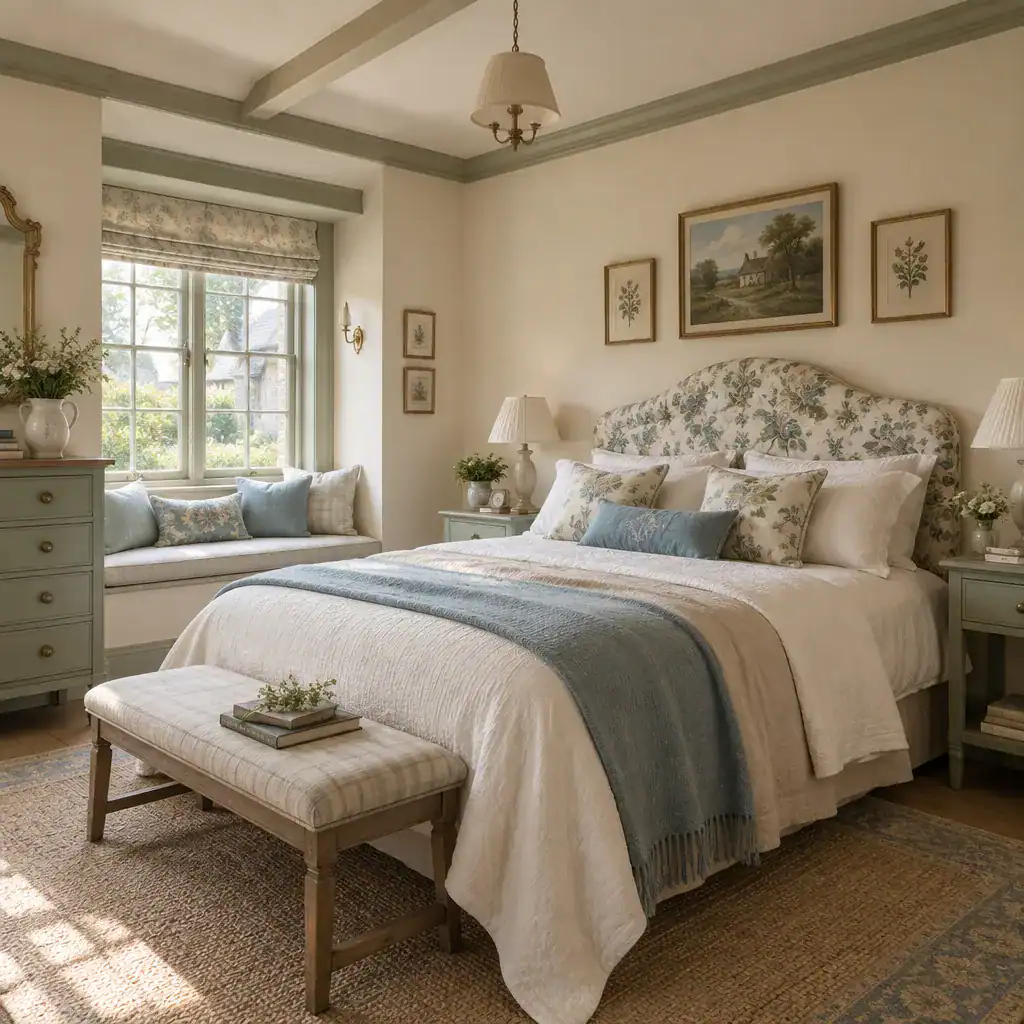
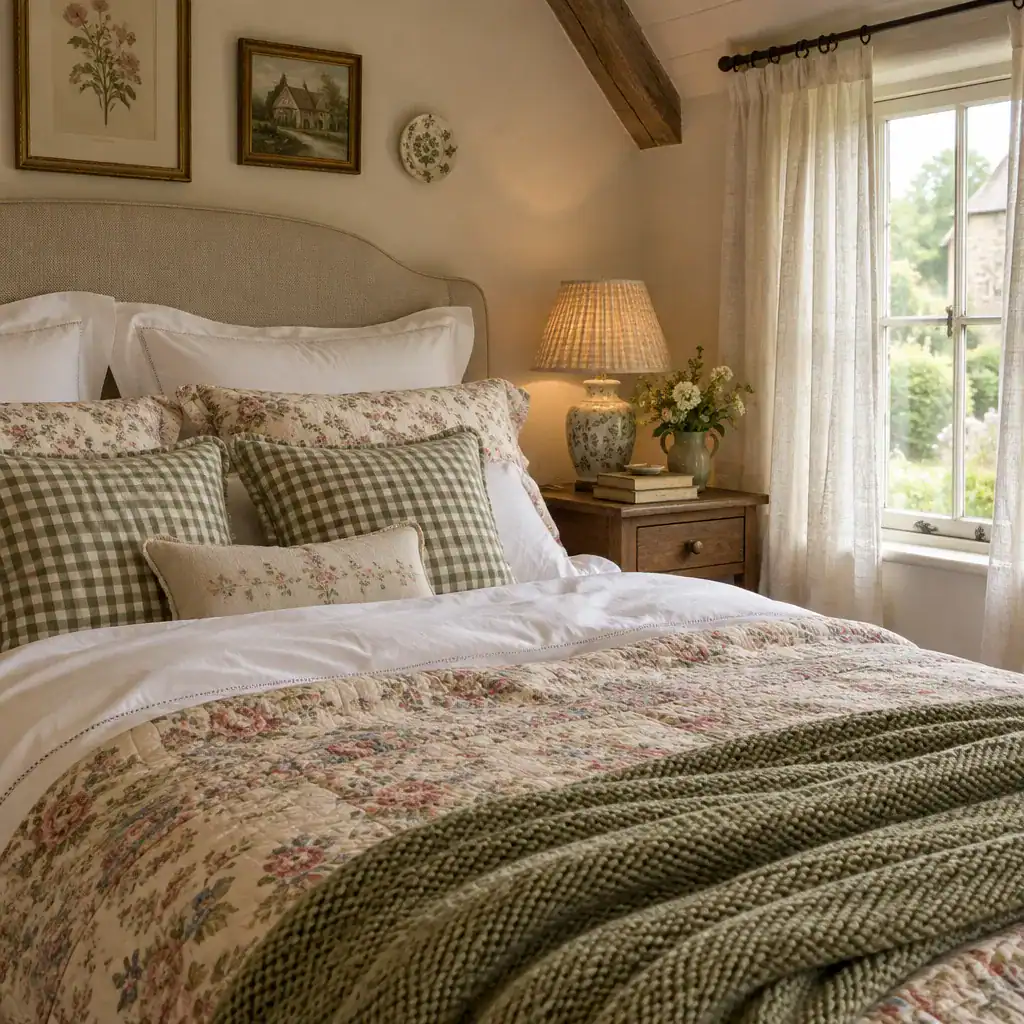
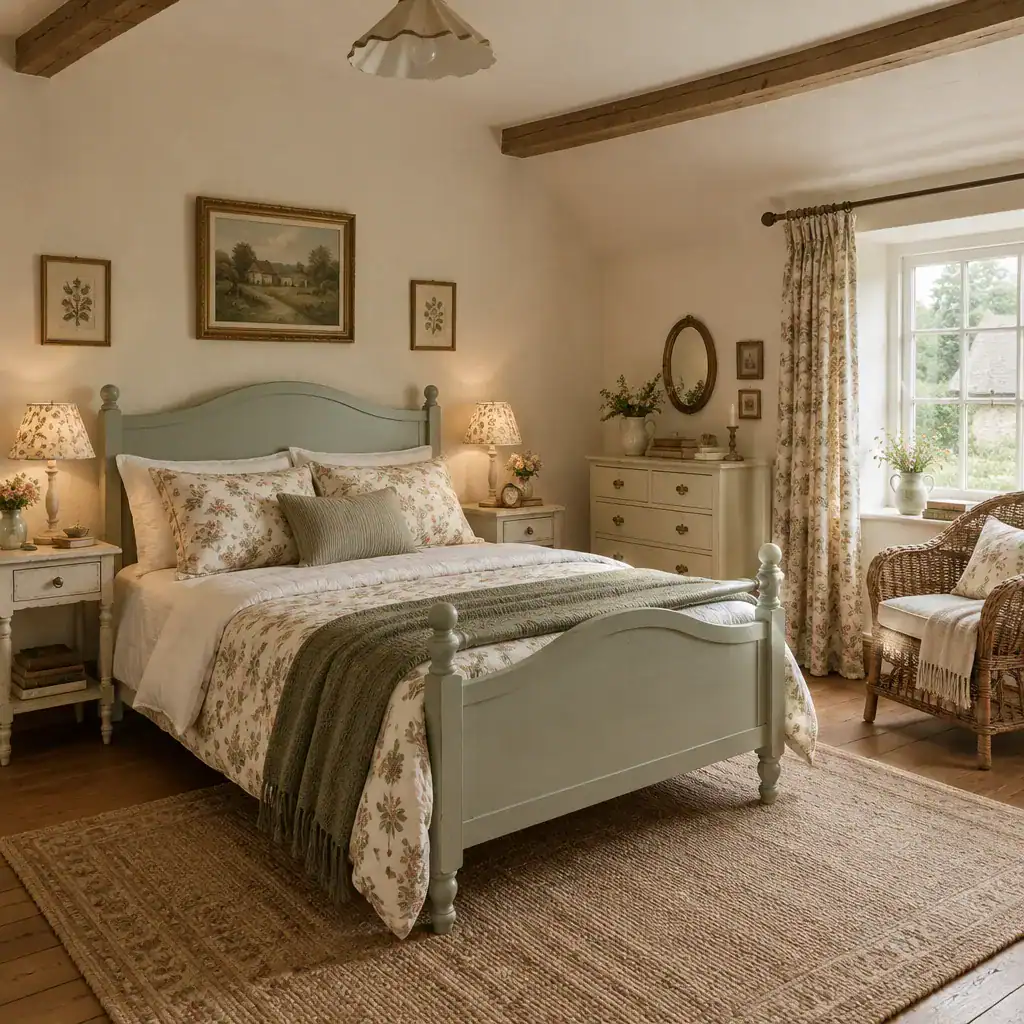
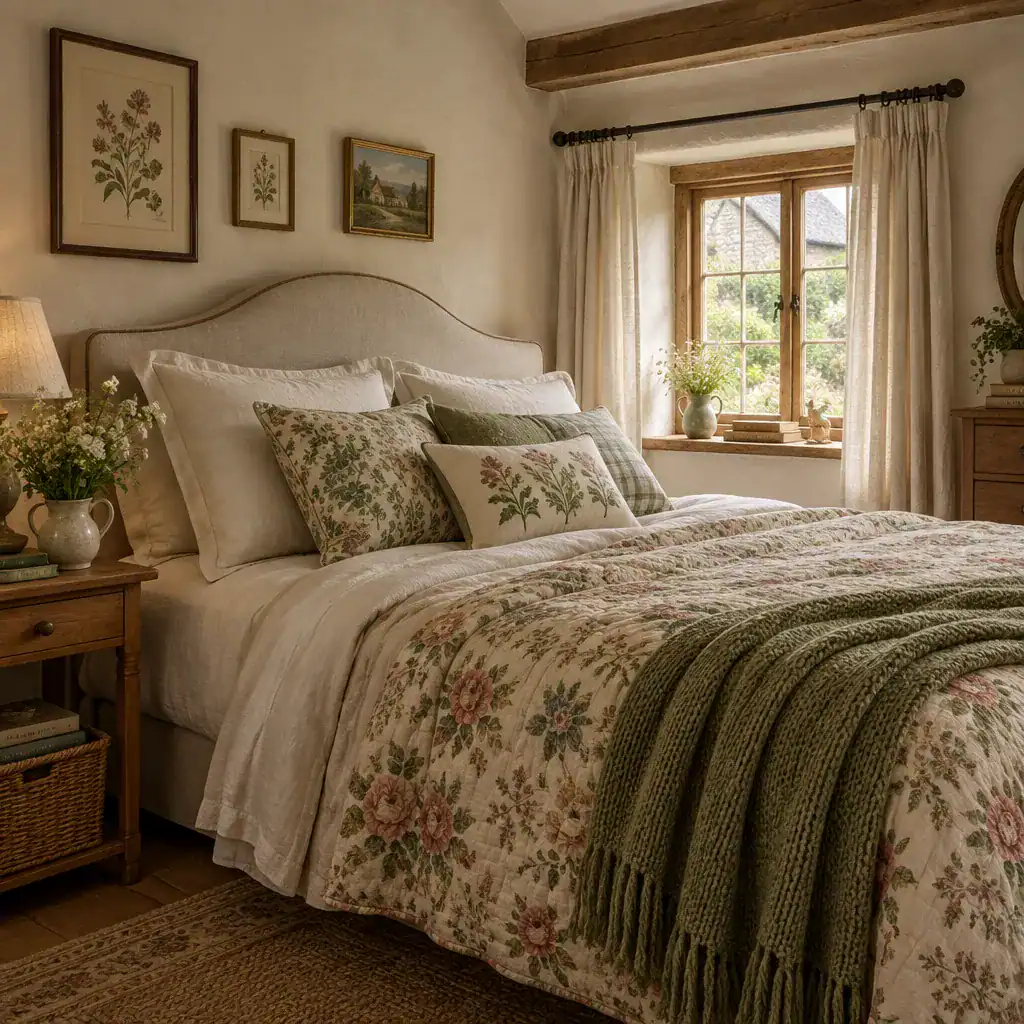
A bedroom is an ideal place to explore the softer side of English cottage decor. Start with bedding that feels inviting, such as floral sheets, a small-scale botanical quilt, a checked throw, or pillowcases in muted stripes. These patterns can be mixed when they share a related color family, allowing the bed to feel layered without becoming visually busy.
Wooden furniture, a painted bedside table, or a gently upholstered headboard can establish a comfortable foundation. Pale cream, dusty blue, warm green, blush, and softened yellow are all adaptable choices for walls and textiles, especially when balanced by natural wood or antique-looking metal accents. A bedside lamp, a small vase of greenery, a stack of books, and one or two framed pictures add personality while keeping the room restful.
English Cottage Decor Living Room
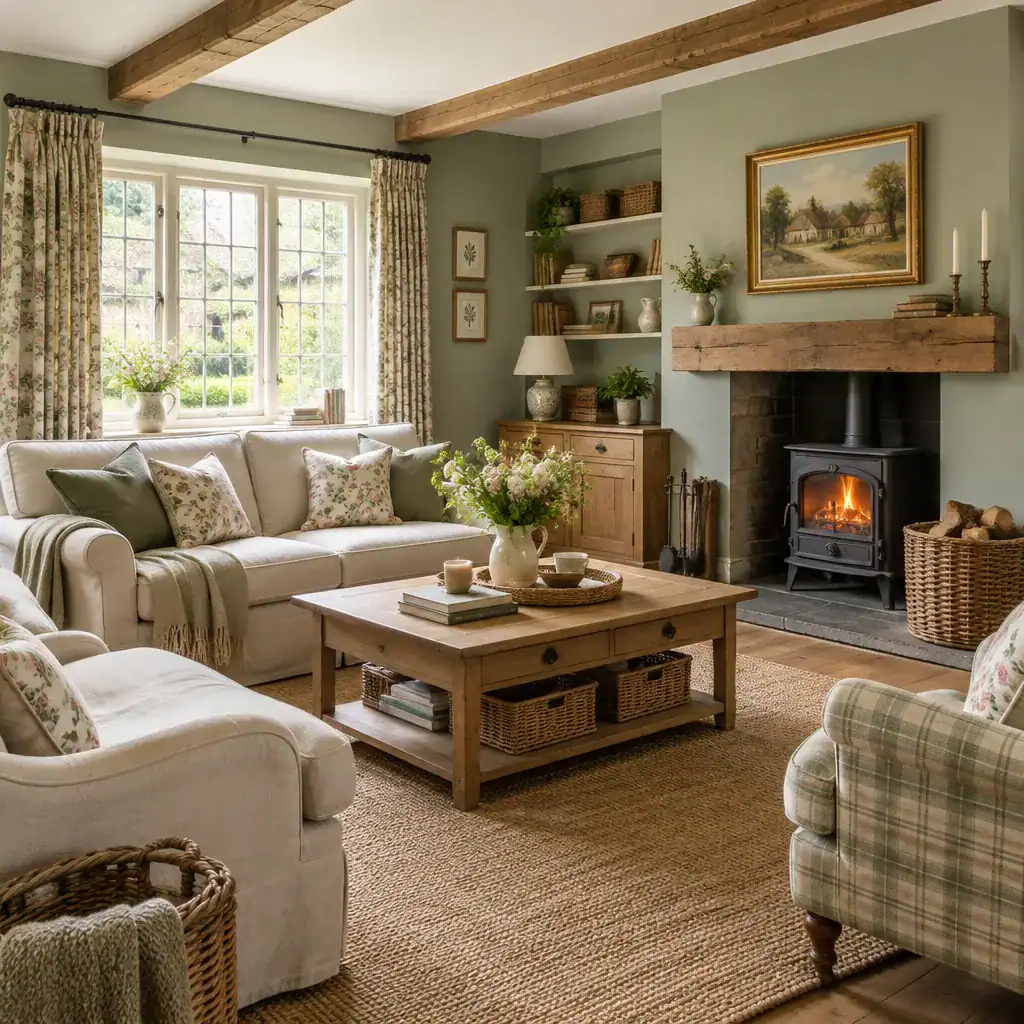
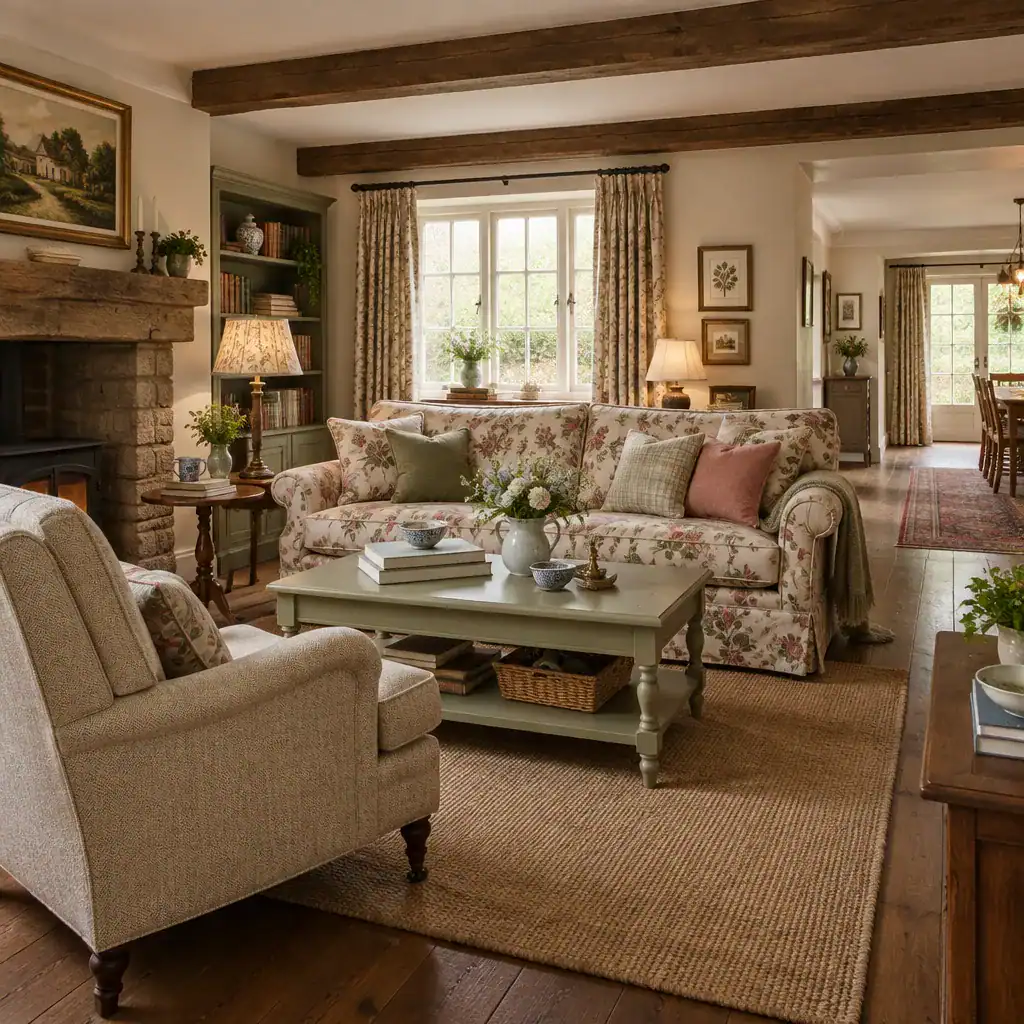
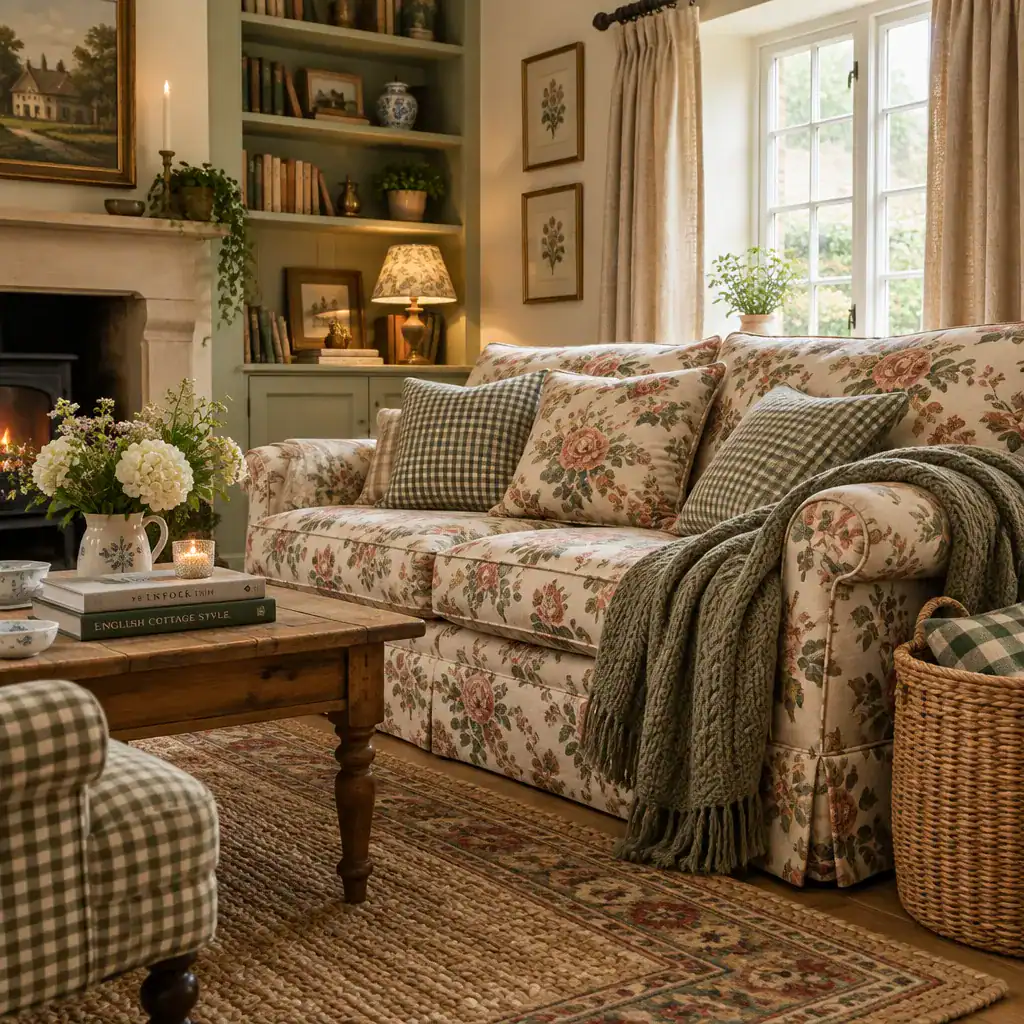
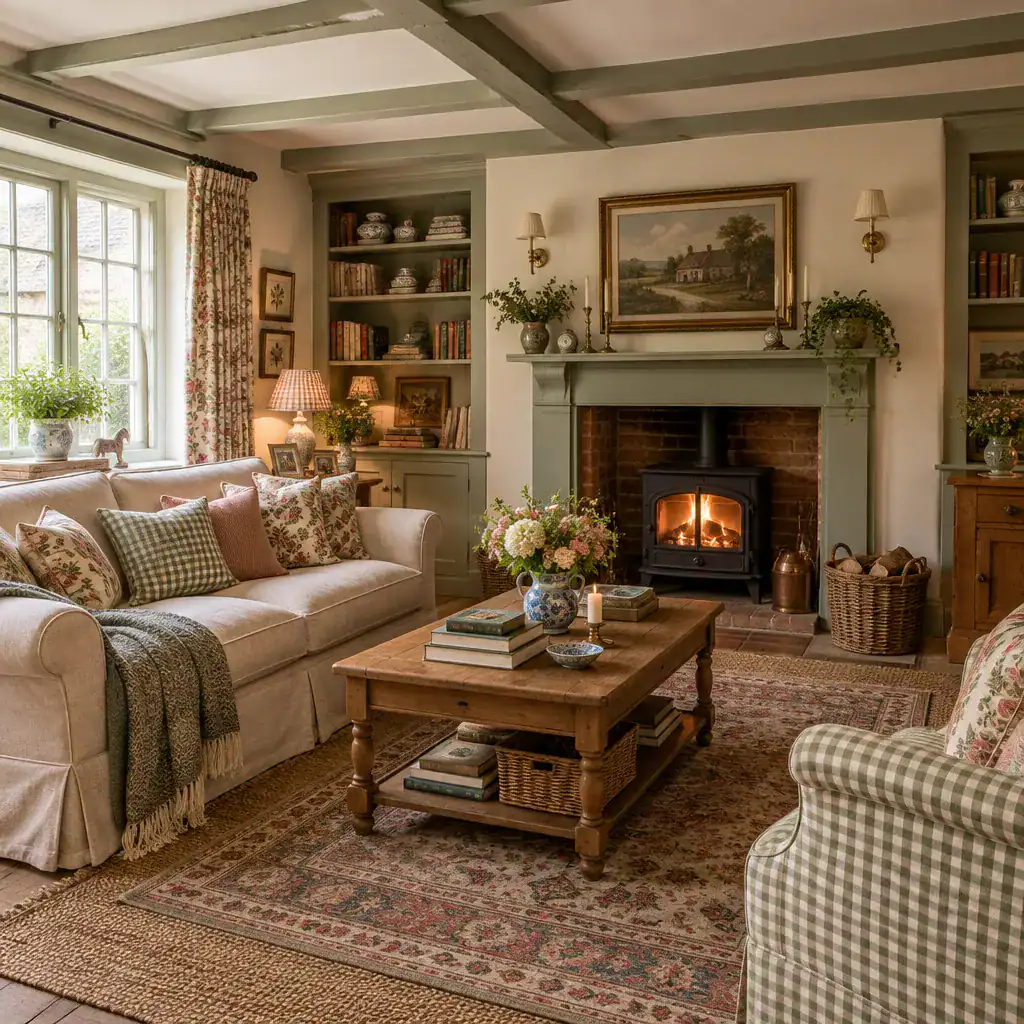
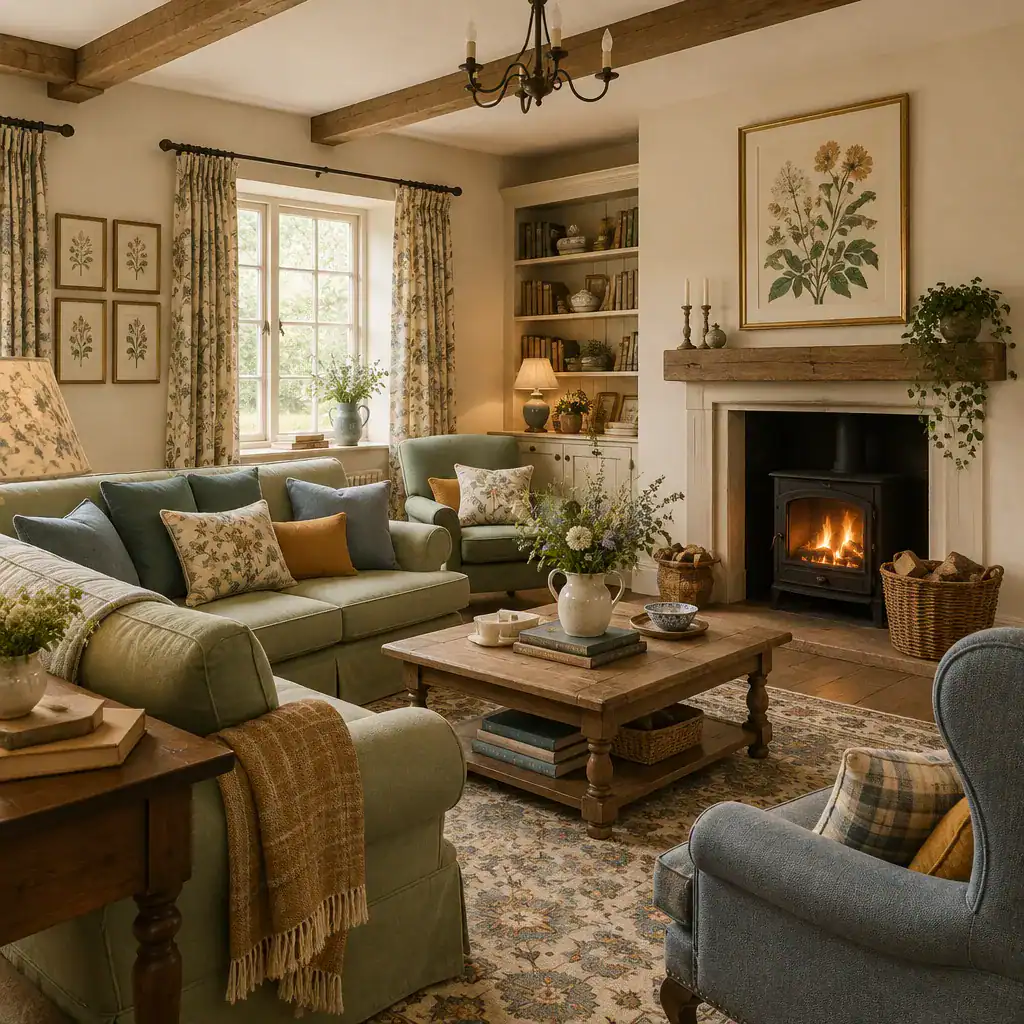
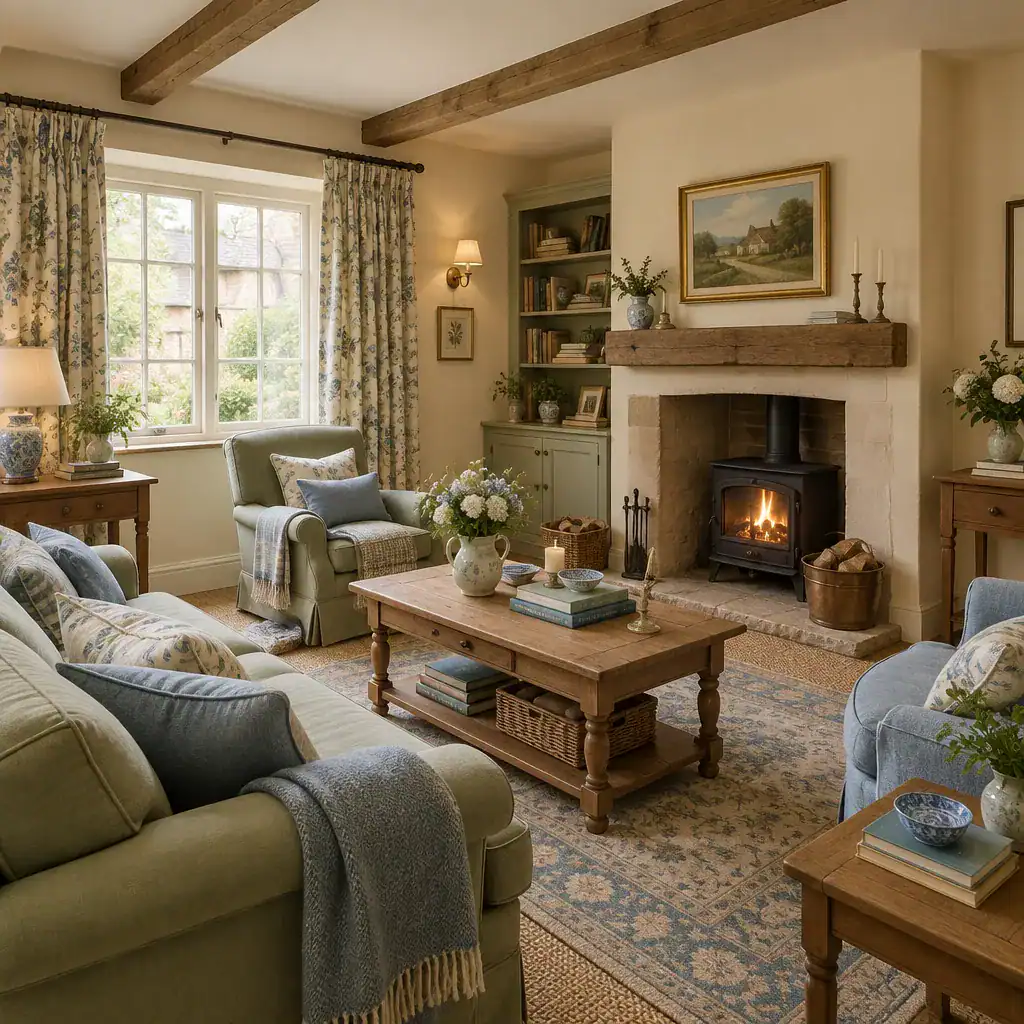
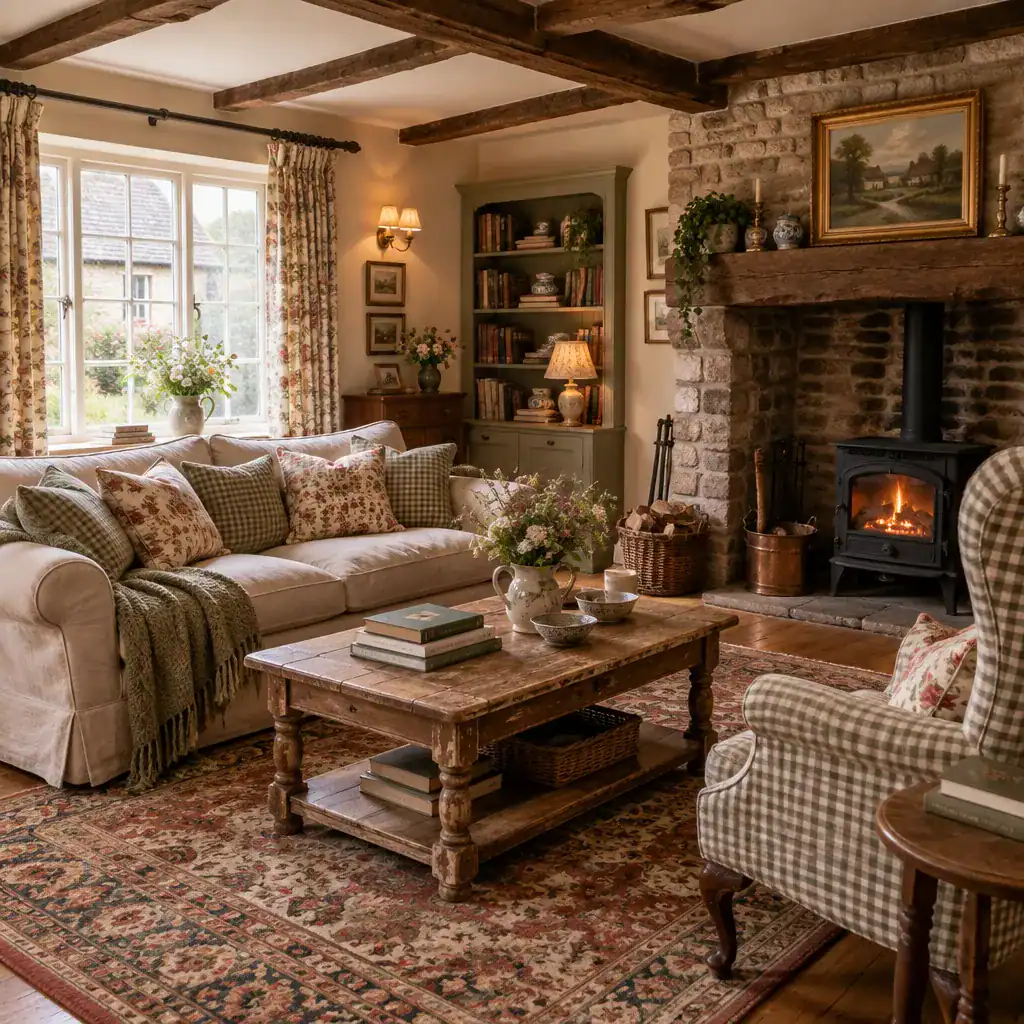
In the living room, English cottage decor becomes more social and generous. Comfortable seating is central: a relaxed sofa, a pair of upholstered chairs, or a combination of pieces with slightly different silhouettes can make the room feel lived in. Florals, checks, ticking stripes, and quiet plaids work especially well on cushions, throws, curtains, or occasional chairs.
A rug can anchor the seating area while wood finishes, books, baskets, ceramics, and framed art bring depth around it. Curtains in a lightweight fabric soften the windows, and a lamp beside a reading chair creates a welcoming evening mood. The key is to leave clear paths and useful surfaces for everyday life. A layered room should still be easy to move through, sit in, and maintain.
English Cottage Decor Wall
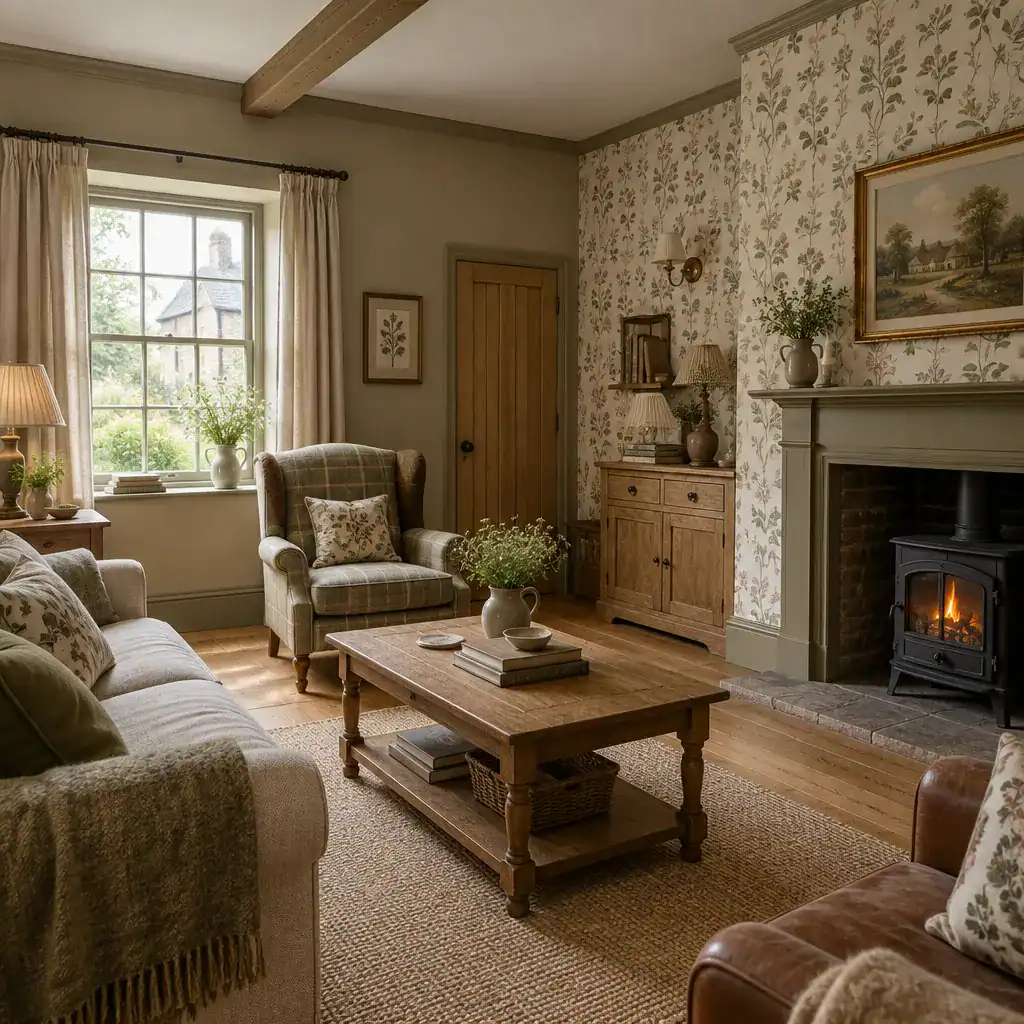
Walls provide the backdrop that ties English cottage decor together. Wallpaper can introduce immediate charm, especially in small florals, trailing botanicals, delicate stripes, or subtle heritage-inspired prints. In rooms with abundant textiles, a softly painted wall may be the better choice, giving patterned upholstery and bedding room to stand out.
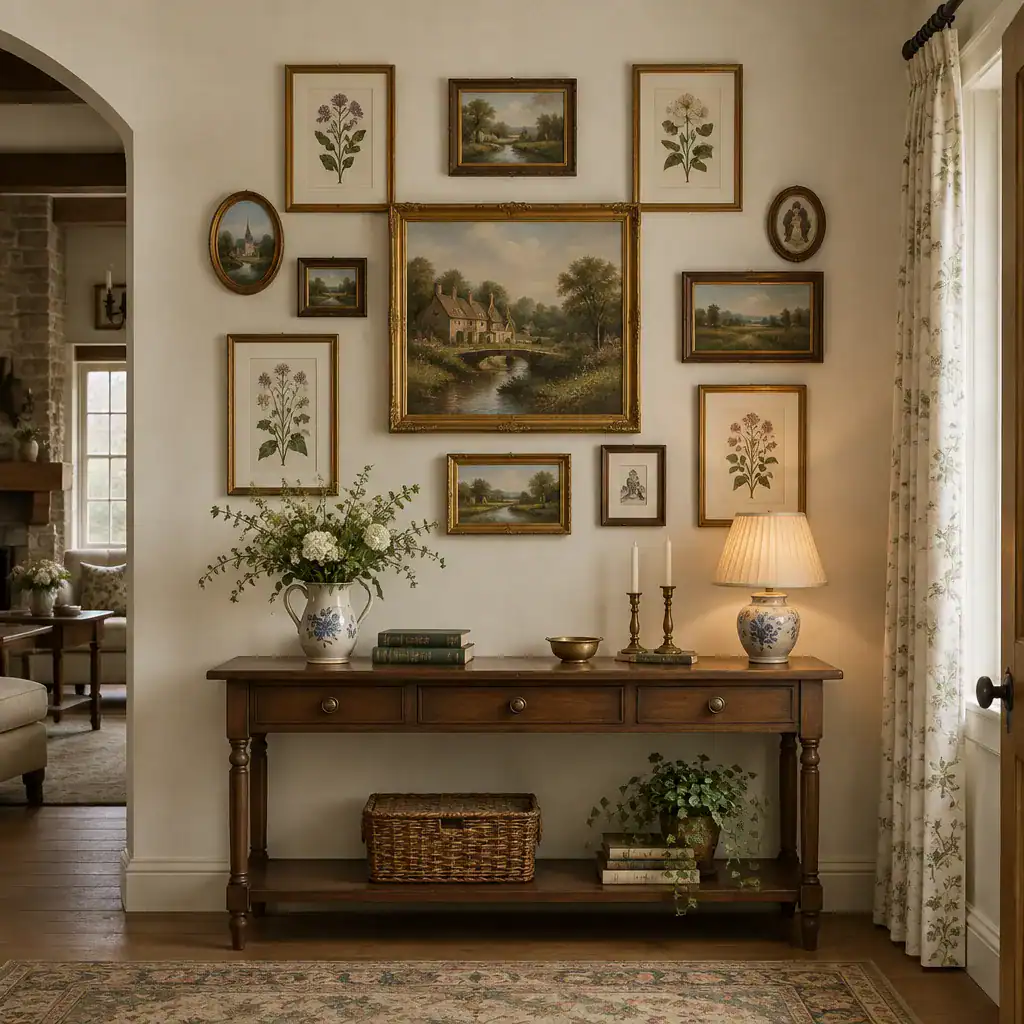
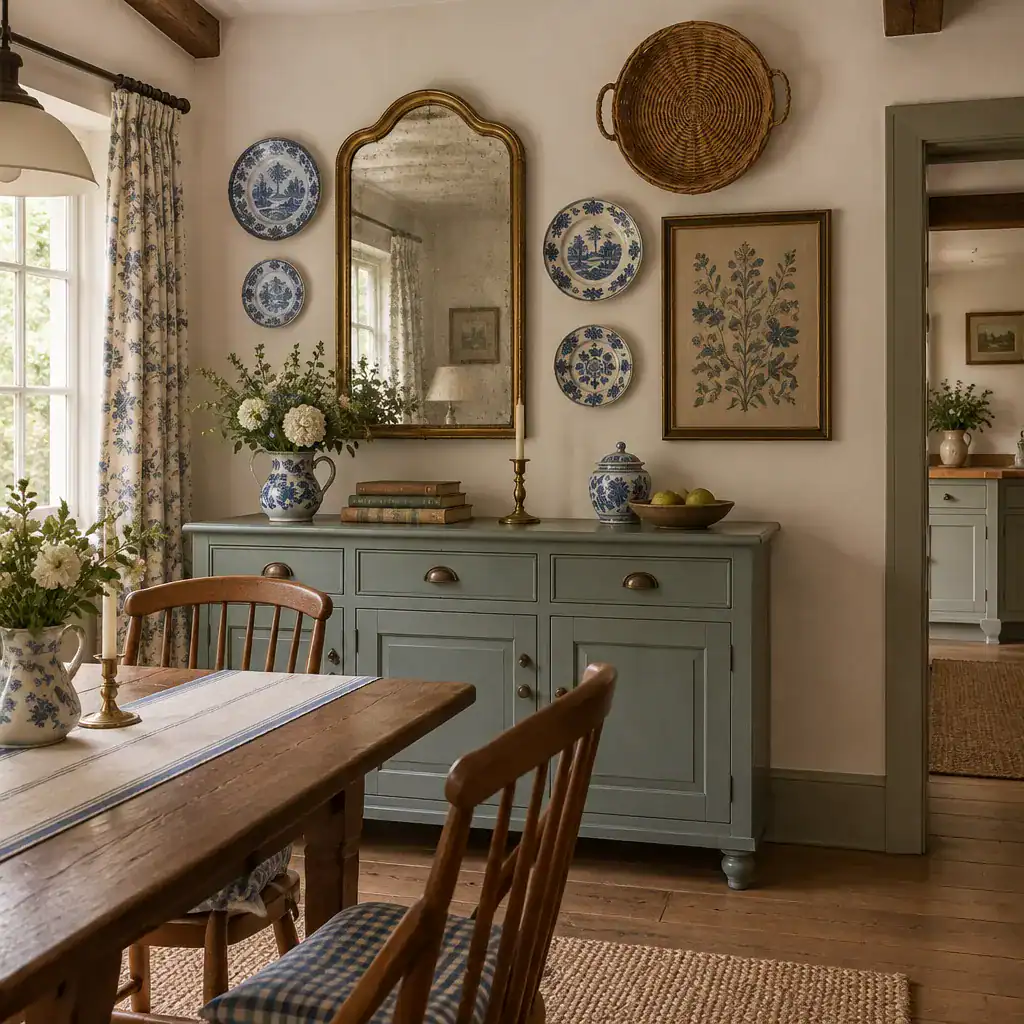
Framed landscapes, botanical prints, family photographs, small mirrors, and plate displays can all bring cottage character to a wall. Rather than filling every available space, select a few arrangements that echo the room’s palette and materials. A wood-framed picture may connect with a vintage side table, while a collection of blue-and-white plates can relate to nearby ceramics or cushions. The aim is for wall decor to extend the room’s story, not compete with it.
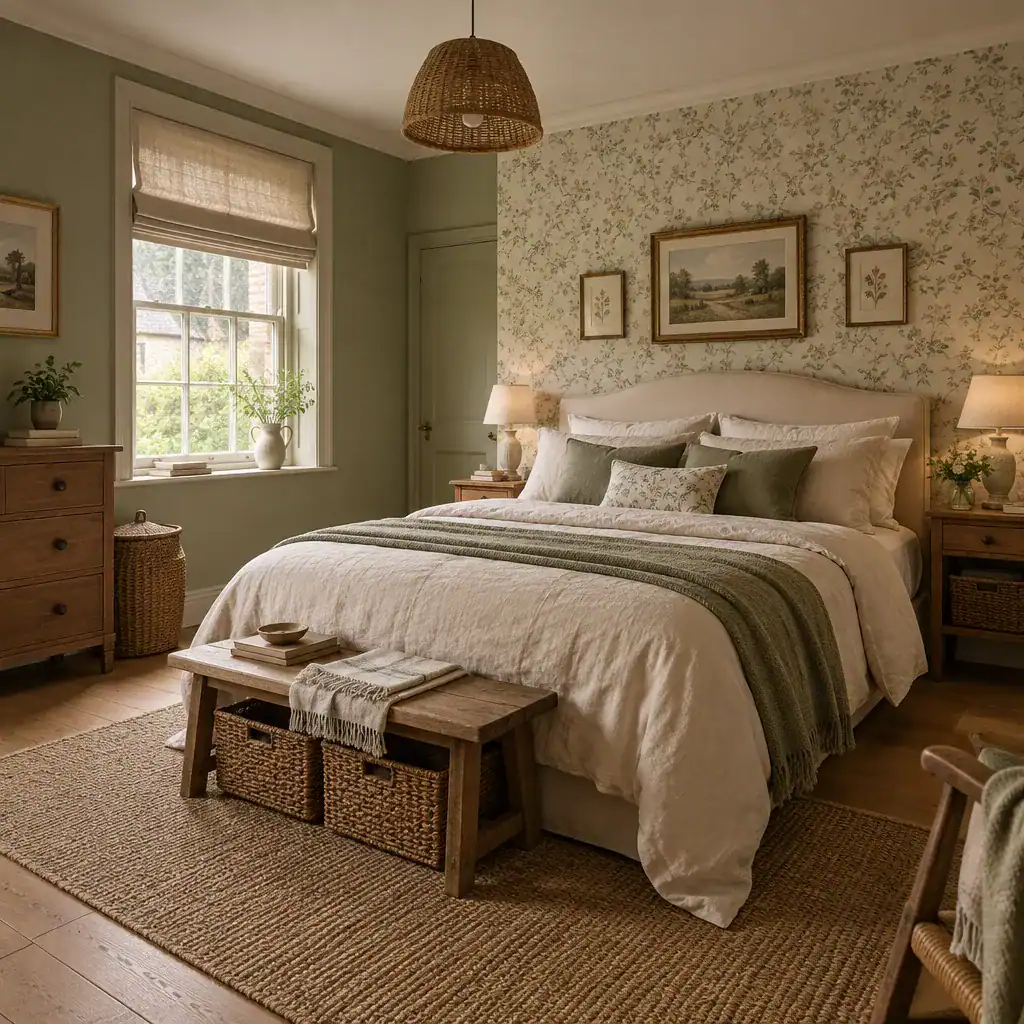
English Cottage Style Bedroom
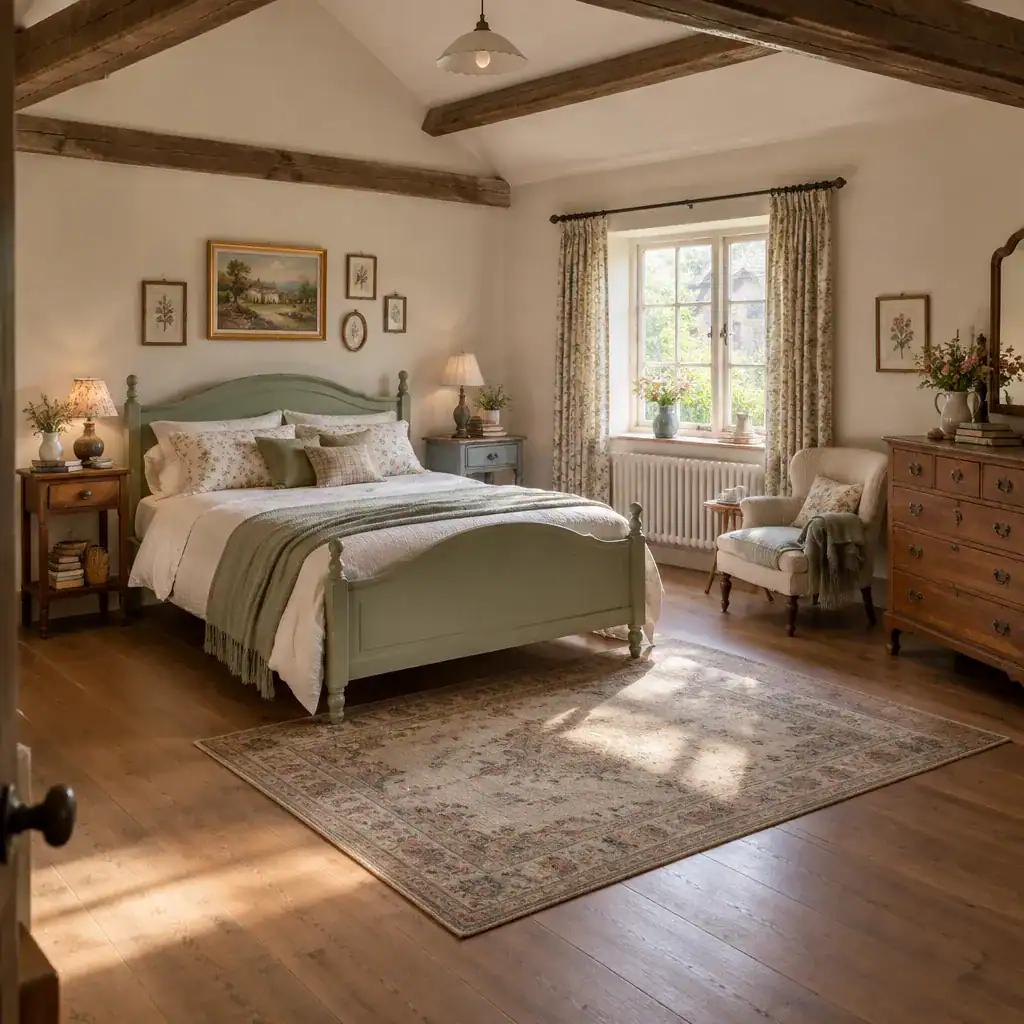
An English cottage style bedroom feels most convincing when its elements work as one scheme. The bed, window treatments, wall finish, lighting, storage, and accessories do not need to match, but they should share a common mood. For example, soft sage walls might be paired with floral bedding, a natural wood chest, cream curtains, and a ceramic lamp with a pleated shade.
Consistency can come from repeating colors, materials, or motifs in modest ways. A floral pattern on the quilt may be echoed by a small botanical print near the bedside. Brass, aged metal, or painted wood hardware can connect storage and lighting. Keeping the most prominent pieces calm allows a few vintage-inspired details to feel special rather than crowded.
English Cottage Style Living Room
A complete English cottage style living room combines comfort, function, and a collected appearance. Begin with a seating arrangement that encourages conversation and supports the way the household uses the room. A sofa facing a pair of chairs, a low table within easy reach, and a reading corner near a window can create an informal but intentional layout.
Layer patterns through textiles while maintaining a controlled direction in color and material. A floral cushion, checked armchair, plain linen curtain, and patterned rug can coexist if their tones relate. Natural finishes such as wood, woven fiber, pottery, and aged metal prevent the room from feeling overly polished. Display pieces, books, and functional storage add the final sense that the room has developed over time, even when it is newly decorated.
English Cottages Interiors Living Room
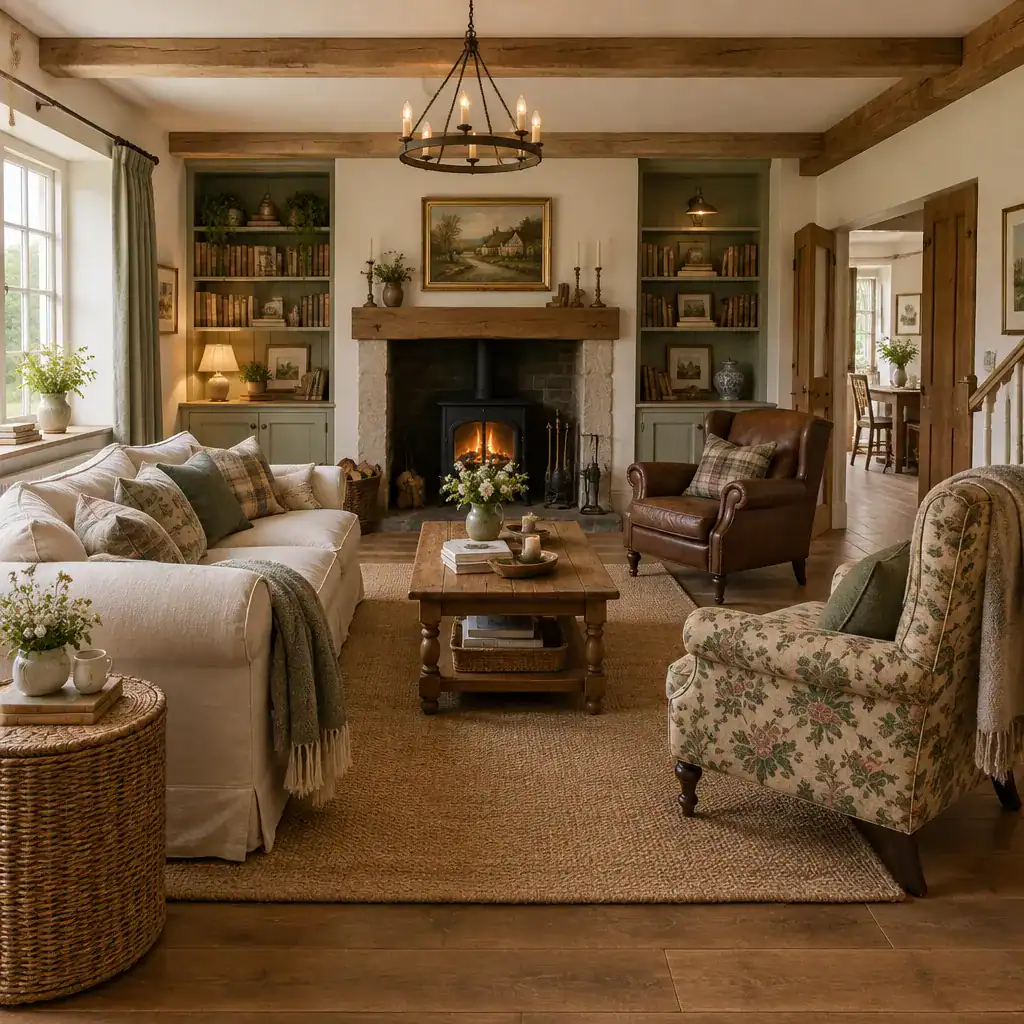
The appeal of English cottage interiors often lies in their sense of ease. In a living room, architectural character may be highlighted rather than hidden, while informal furniture groupings and mixed textures make the space feel approachable. A painted beam, a deep window ledge, a simple fireplace surround, or an existing wood floor can all become part of the visual foundation when present in the home.
Inherited-looking accessories, handmade ceramics, woven baskets, old books, and framed finds can add depth without requiring a room to look like a period set. Consider how the living room connects to adjoining spaces as well: repeated paint tones, similar wood finishes, or a recurring accent color can make the wider interior feel coherent. This broad cottage atmosphere is adaptable to many homes, provided it respects available light, existing features, and daily routines.
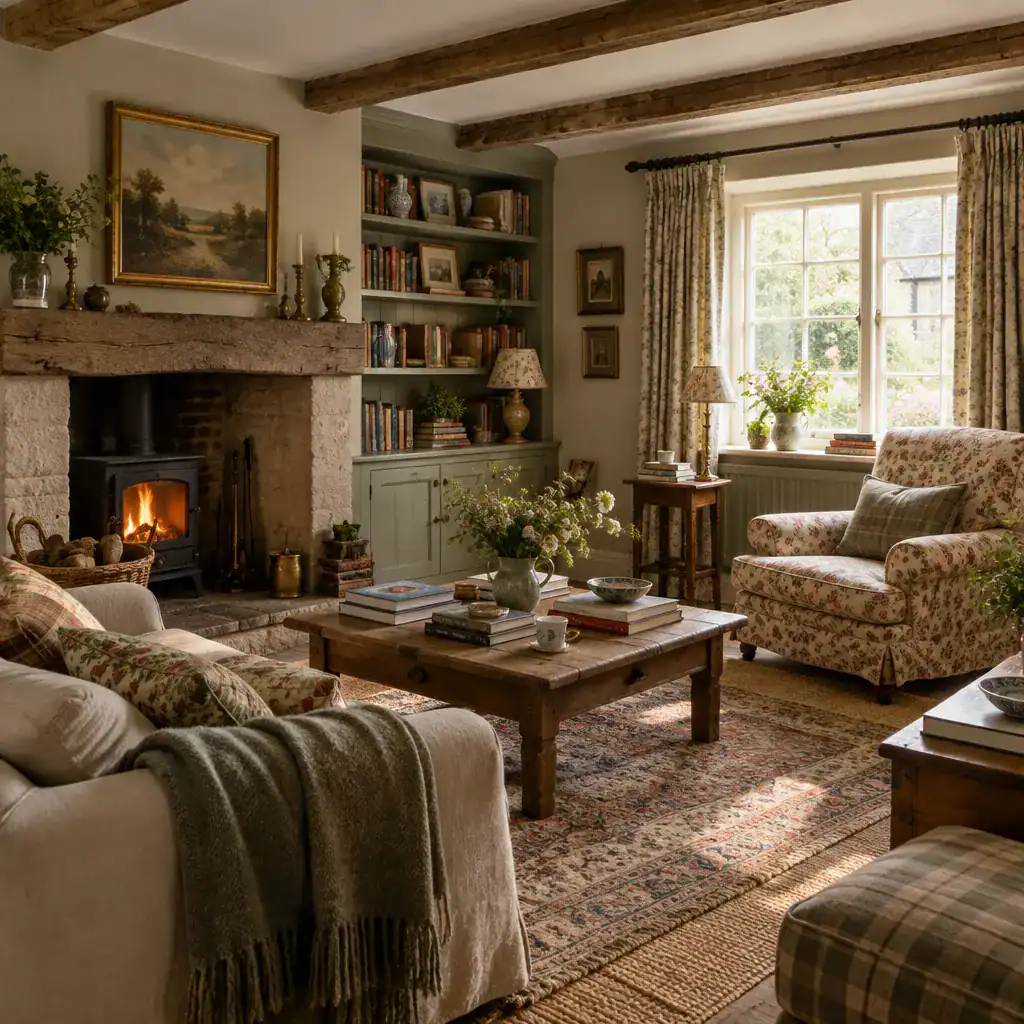
To create an English cottage look that feels natural, begin with a comfortable foundation and a coordinated palette. Add pattern and texture gradually, use walls to reinforce the mood, and introduce personal or vintage-inspired details with restraint. The result does not need to copy a single version of cottage style. It should respond to your home’s architecture, lighting, proportions, existing finishes, and the practical way you live in each room.