
A luxury contemporary cabin is more than a polished version of a traditional getaway. It is a carefully considered retreat where architectural clarity, tactile comfort, high-quality materials, and a close relationship with the landscape work as one. The goal is not excess, but an environment that feels composed, restful, and distinctly connected to its setting.
Contemporary cabins appeal because they pair the ease of modern living with the restorative character of a nature-focused escape. Clean forms, generous daylight, and uncluttered interiors can coexist with timber warmth, a glowing fire, and views of trees, water, or mountains. The following ideas explore architectural character, interior planning, material choices, lighting, and outdoor integration to help shape a refined cabin concept.
Defining the Luxury Contemporary Cabin Aesthetic
The strongest contemporary cabin aesthetic balances crisp geometry with the familiar sense of shelter that makes a cabin inviting. Simple volumes, low visual clutter, and restrained details create a calm foundation, while wood grain, stone, textured textiles, and soft light prevent the spaces from feeling cold. A luxury contemporary cabin should feel edited rather than sparse, with each material and architectural move serving the overall atmosphere.
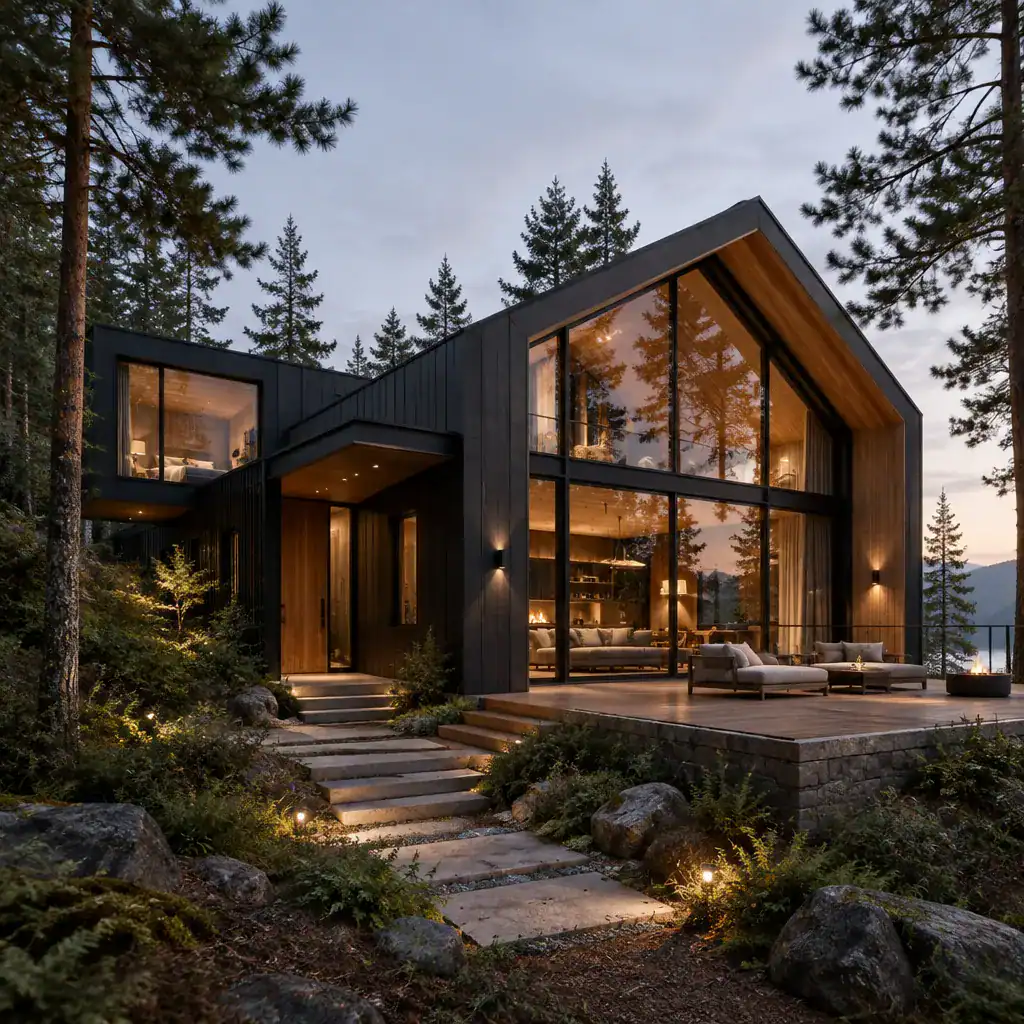
Premium character often comes from proportion and composition rather than elaborate ornament. A clean roofline, recessed entry, carefully aligned window openings, and a limited palette can make the building look intentional. Framed views are especially powerful: instead of glazing every wall indiscriminately, place openings to capture a stand of trees, a distant ridge, changing light, or a private garden.
The site should guide the identity of the home from the beginning. Orientation can respond to sunlight, prevailing views, privacy, and the terrain, while the cabin’s form can settle naturally into the landscape. This approach creates a retreat that feels rooted in its location rather than placed on top of it.
Exterior Architecture and Connection to the Landscape
Exterior architecture establishes the cabin’s first impression and its daily relationship with the outdoors. Gable-inspired roofs can reference classic cabin silhouettes in a sharper, more minimal way, while flat or gently sloped roof planes can emphasize a bolder modern profile. Layered geometric volumes can separate public and private functions, create sheltered corners, and keep a larger home from appearing overly bulky.
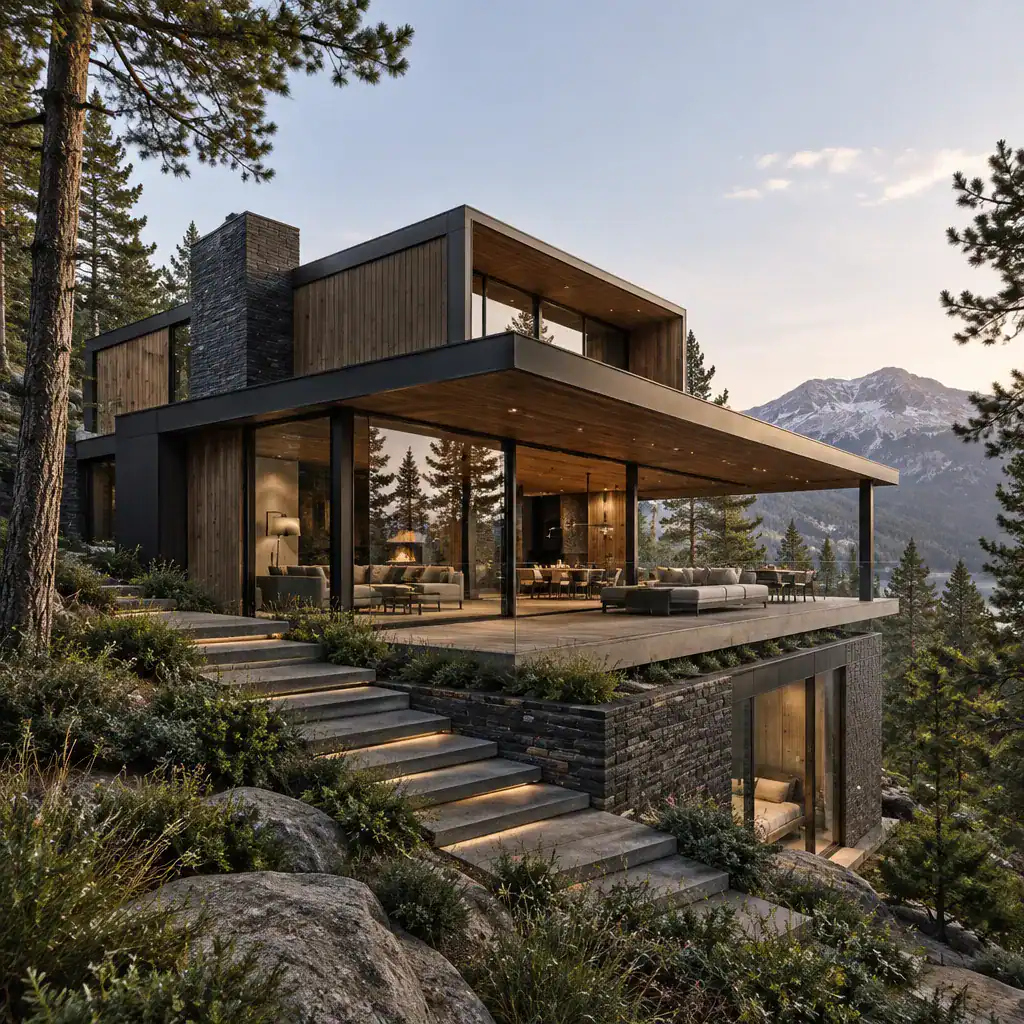
Covered entries, deep overhangs, terraces, and decks are useful transitions rather than decorative additions. They provide moments to pause before entering, offer protection in changing weather, and extend living areas toward the view. Large glazed openings can make interior spaces feel expansive, while screened glazing, timber battens, or strategically placed solid walls can preserve privacy and soften sun exposure.
Let the site set meaningful constraints before choosing finishes or accessories. Existing trees, slopes, rock formations, and natural approach routes can inform where the building sits and where outdoor gathering spaces belong. Dark cladding may help the structure recede among tree trunks, while warm timber and stone can connect it to the tones of the ground. The palette can remain distinctly contemporary without competing with the terrain.
Interior Planning for Comfort and Sophistication
An open plan works best when it remains purposeful. Living, dining, and kitchen zones can share light and views while being defined through furniture placement, ceiling changes, a kitchen island, or shifts in material texture. This creates a sociable setting without turning the interior into one visually busy room. In a luxury contemporary cabin, openness should support easy living as much as visual drama.
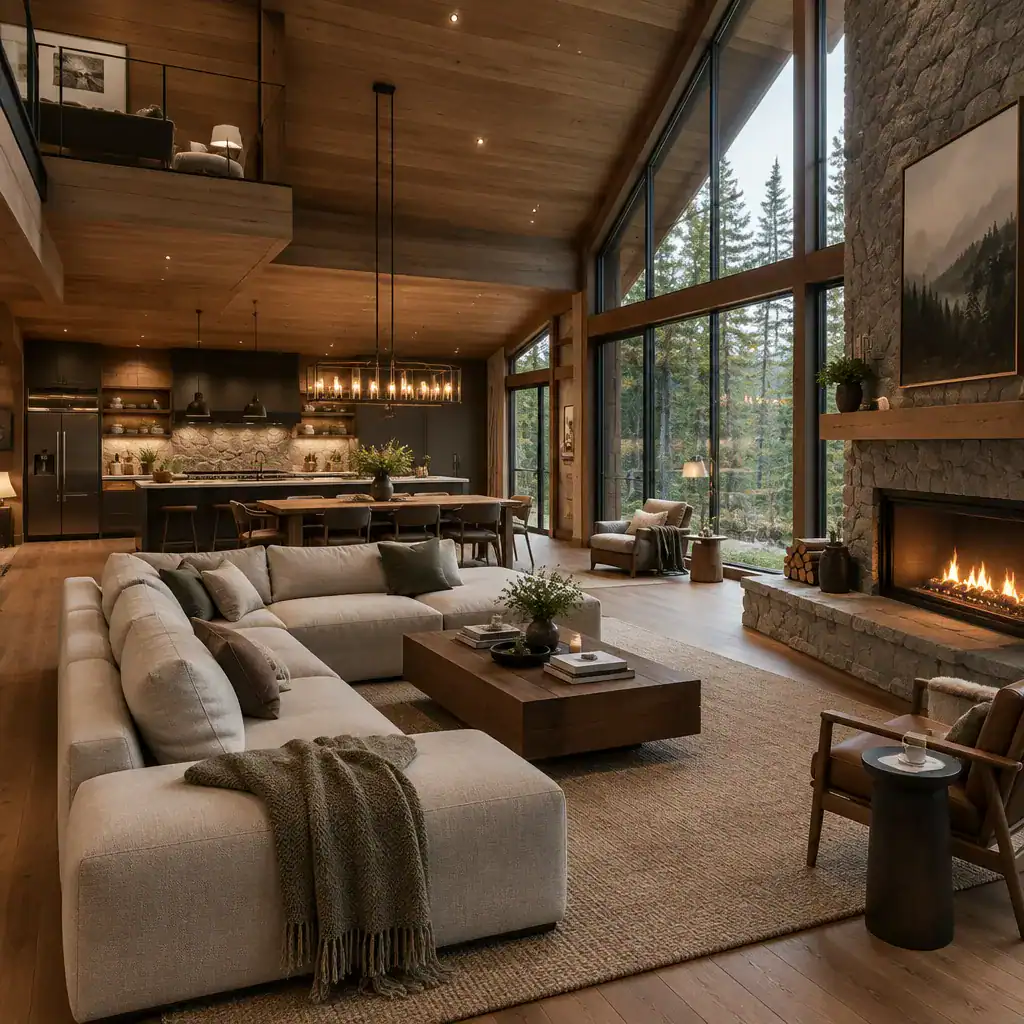
Give the main living area a clear focal point. A refined fireplace, sculptural stair, panoramic window, or carefully composed stone-and-timber feature wall can organize the room and create a memorable gathering point. The focal element should feel integrated with the architecture rather than added as a standalone statement.
Good planning considers circulation, privacy, storage, and sightlines together. Private sleeping zones benefit from separation from active gathering areas, while built-in storage keeps everyday objects from interrupting the calm interior. Hallways, doorways, and seating positions can be aligned with chosen views, making even movement through the cabin part of the experience. Layered rugs, upholstery, throws, and selected statement furniture then bring softness to the minimal backdrop.
Materials, Color, and Lighting That Create a Luxury Atmosphere
Material selection gives a contemporary cabin its depth and permanence. Timber introduces warmth and visual rhythm; stone adds weight and a grounded feel; dark metal brings crisp definition; glass opens the rooms to daylight and scenery; and textured fabrics soften hard architectural lines. There is no single ideal combination, since a woodland setting, a rocky site, and an open meadow can each suggest different material priorities.
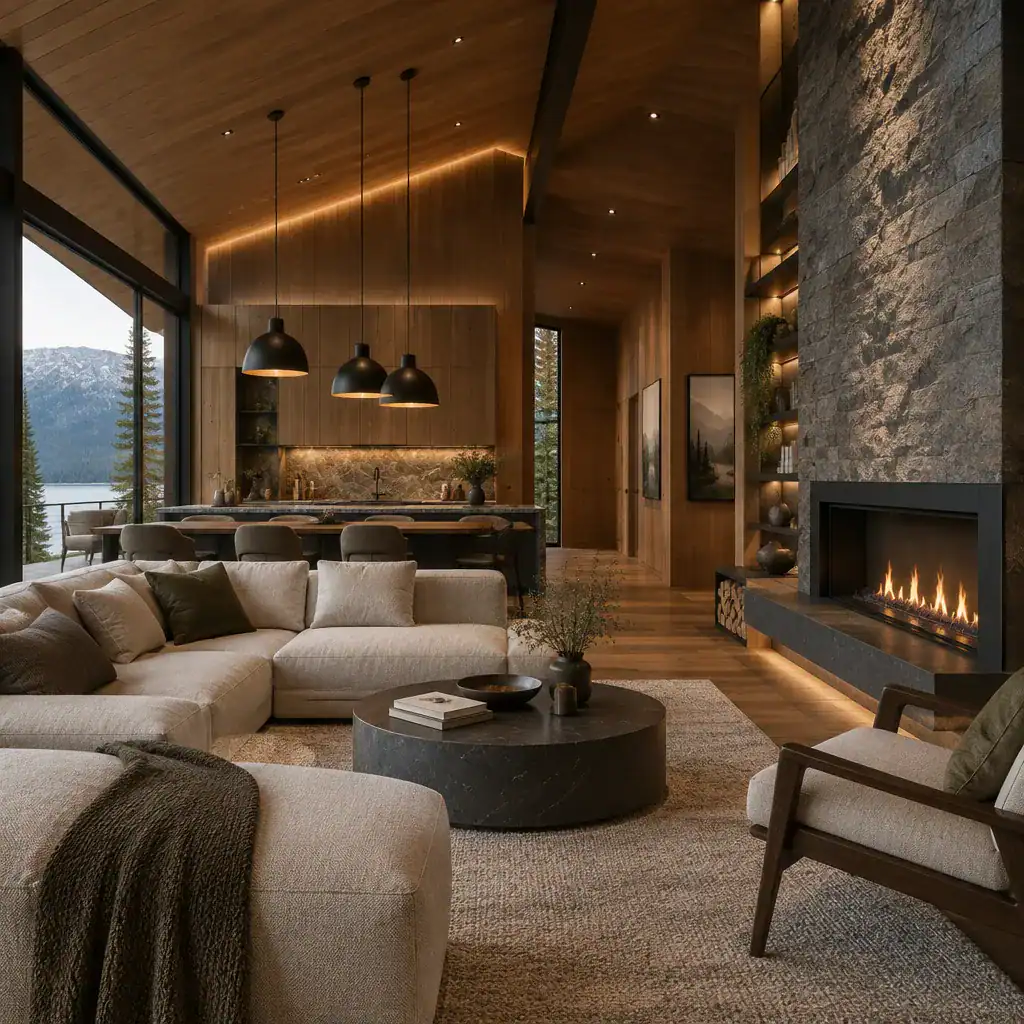
A controlled neutral palette creates an enduring atmosphere while allowing natural variation to remain visible. Warm oak, smoked timber, charcoal metal, soft gray stone, clay tones, and muted cream upholstery can feel rich without becoming overly decorative. Repeating related tones across cladding, flooring, cabinetry, hardware, and furnishings gives the entire retreat a cohesive visual language.
Lighting should be layered to reveal this material character after daylight fades. Ambient lighting establishes an overall glow, task lighting supports cooking, reading, and grooming, and accent lighting can highlight stone texture, art, shelving, or a fireplace surround. Exterior lighting should be equally restrained, illuminating paths, steps, entries, and seating zones without overwhelming the darkness of the setting. Consistent fixtures and warm light quality help the interior and exterior read as one considered environment.
Luxury Features That Strengthen the Retreat Experience
Luxury features are most successful when they make the retreat more private, convenient, restorative, or connected to the view. A spa-inspired bathroom, secluded bedroom suite, reading nook, wellness room, or sheltered outdoor lounge can all add value, but none should be treated as a universal requirement. Choose amenities that suit the habits of the people who will use the home and the qualities of the site.
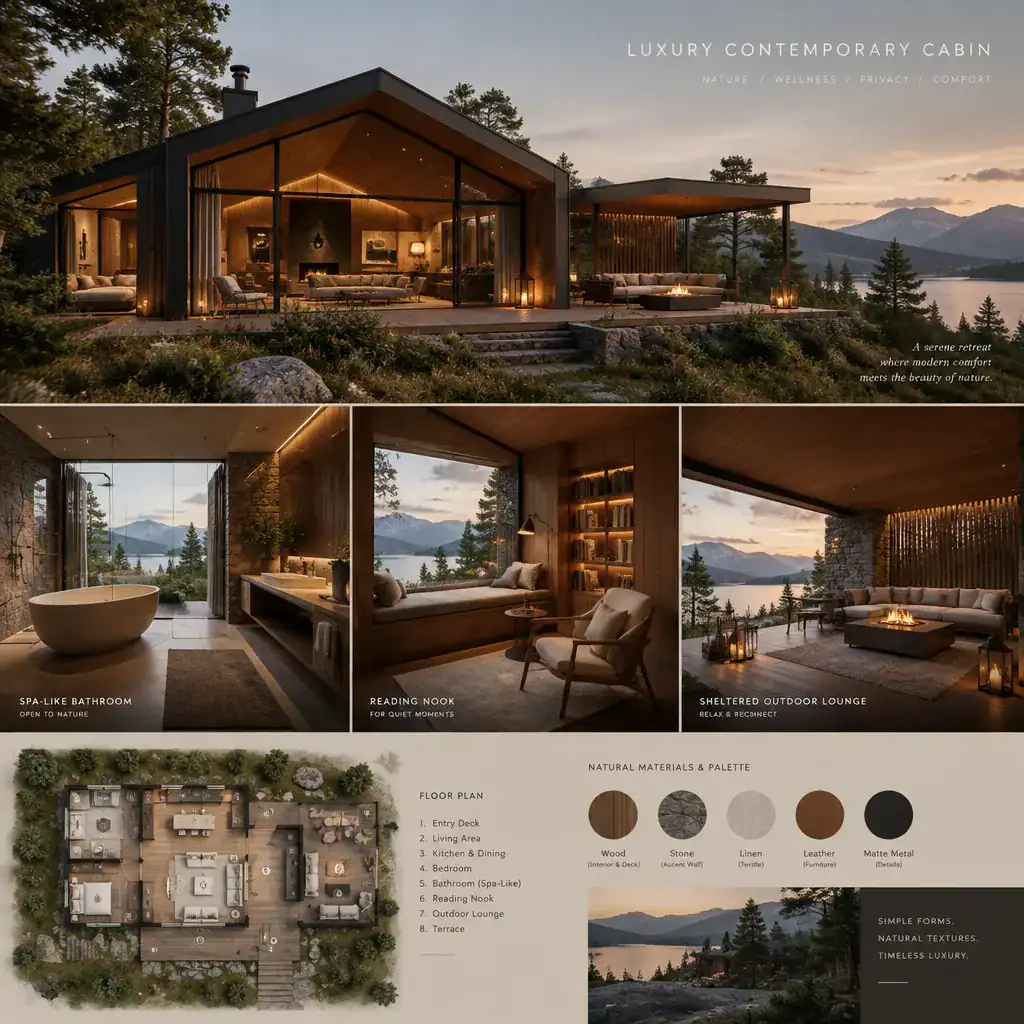
Indoor-outdoor transitions deserve particular attention. A terrace outside the living area can become an extension of everyday gathering, while a quieter deck beside a bedroom or bathroom can create a more personal escape. Depending on the site, a fire feature, built-in bench, covered dining area, or secluded seating zone can encourage longer moments outdoors while maintaining comfort and privacy.
Rather than filling every room with premium additions, select a small number of memorable experiences. A deep soaking space with a framed landscape view, a window seat for reading during rain, or a fireplace lounge that opens to a sheltered deck can define the emotional character of a luxury contemporary cabin. Focused choices make the design feel more personal and less crowded.
A successful contemporary retreat combines modern simplicity with warmth, comfort, and respect for its natural surroundings. Begin with a thoughtful response to the site, then develop clear spatial flow, consistent materials, layered lighting, and a few purposeful amenities. With those elements working together, an luxury contemporary cabin can offer both refined everyday comfort and a lasting sense of escape.