
A successful cottage home feels considered from the garden gate to the bedroom, with architectural details outside echoed by comfortable, everyday elements indoors. The goal is not to copy one fixed period or decorating formula, but to build on the character your home already has and choose details that feel warm, useful, and personal.
Visual continuity comes from shared materials, colors, textures, and proportions. A painted door can relate to kitchen cabinetry, a stone path can inspire a fireplace surround, and the softness of informal planting can continue through floral textiles or woven accessories. This guide explores the facade, entryway, main living spaces, and a practical way to coordinate each decision.
Cottage Exterior Ideas That Establish Character
Start with a facade that gives visitors a clear, welcoming arrival. A defined entry, a front door with a thoughtful color, simple divided-light windows, and modest roofline or trim details can create character without overwhelming a small home. In cottage exteriors interior planning, the most convincing results usually come from features that suit the home’s existing scale rather than from adding too many decorative elements.
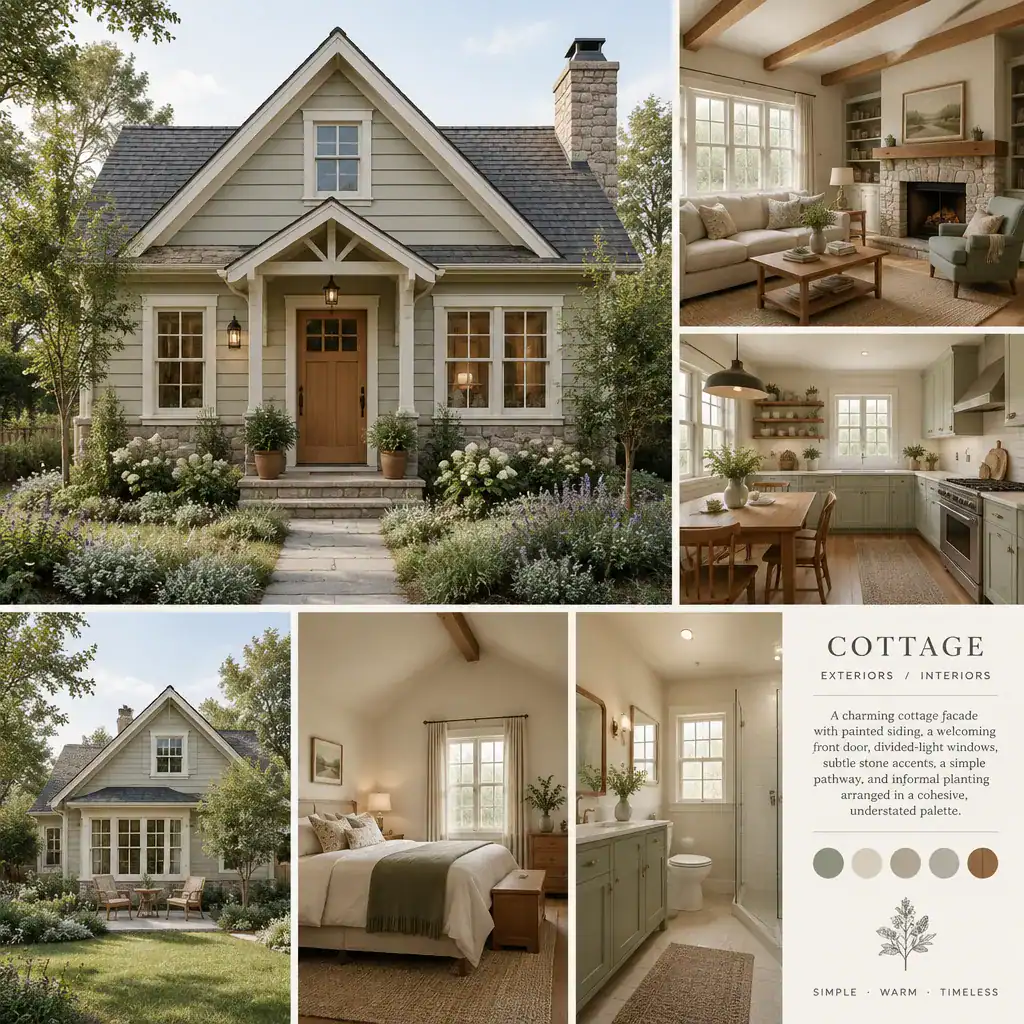
Painted siding is a versatile starting point, while natural-looking stone, brick accents, or timber details can add texture where they are compatible with the architecture. Choose one or two primary materials and let them do the work. For example, pale painted siding may pair well with a low stone foundation and a timber porch post, while a brick cottage may need only painted trim and a wooden door to feel complete.
Keep the color scheme restrained so the architecture remains visible. A base color, a complementary trim color, and one accent for the door or shutters are often enough. Soft white, muted green, warm gray, dusty blue, or earthy cream can highlight windows, eaves, and porch details without making the facade feel crowded.
Landscaping should support the same modest scale. A simple path of gravel, brick, or stone creates a natural approach to the entry, while layered shrubs, perennials, and loose planting soften hard edges. Repeating a garden material inside, such as a terracotta pot, woven basket, or leafy botanical print, helps the outdoor welcome feel connected to the rooms beyond the door.
Entryway and Transitional Spaces That Connect Outside and Inside
The entryway is where exterior character becomes interior comfort. Repeat a color from the front door, a wood tone from the porch, a dark metal hardware finish, or a natural texture from the garden to make the transition feel intentional. An entry does not need to be large to establish the calm, practical spirit associated with cottage exteriors interior design.
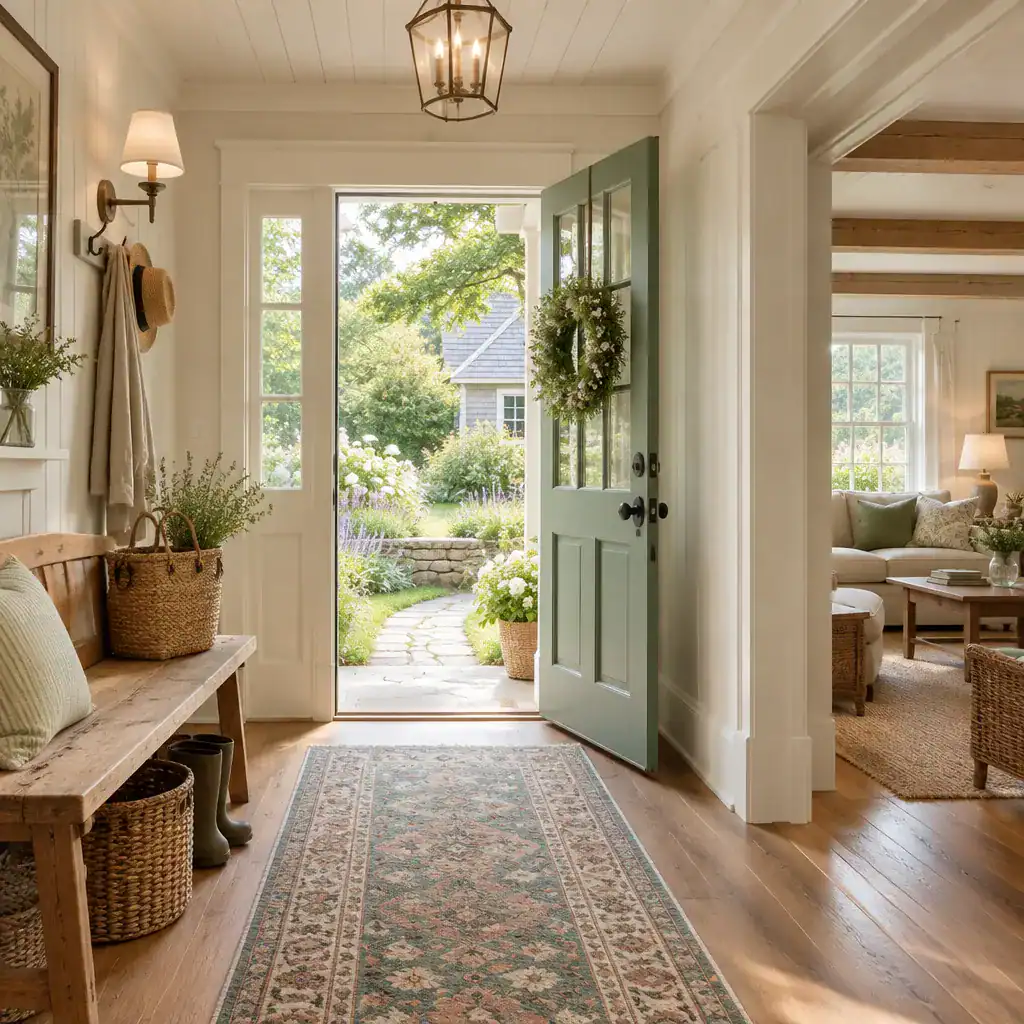
Plan storage around daily habits. Wall hooks can hold coats and bags, a bench offers a place to remove shoes, and woven baskets can contain scarves, pet supplies, or outdoor gear. If the space needs a cleaner appearance, use closed cabinetry or a small console with drawers, then keep only a few useful items visible.
Flooring and lighting can make the shift from porch to home feel smooth. Durable tile, brick, sealed wood, or a practical runner can handle traffic while relating to exterior finishes. Choose soft wall lighting, a modest pendant, or a table lamp to create a welcoming glow rather than a harsh threshold.
Finish with a limited number of personal details: a framed botanical print, a ceramic bowl for keys, a small mirror, or a vase of garden clippings. These touches reinforce cottage identity when they are useful or meaningful, not simply added to fill every surface.
Cottage Interior Ideas for Living Rooms, Kitchens, and Bedrooms
Living rooms work best when they favor comfort and a clear focal point. Use seating with relaxed proportions, layered cushions and throws, natural wood tables, and tactile materials such as linen, wool, cotton, or rattan. A fireplace, built-in shelf, or large window can anchor the room; arrange furnishings around it while leaving enough space for easy movement.
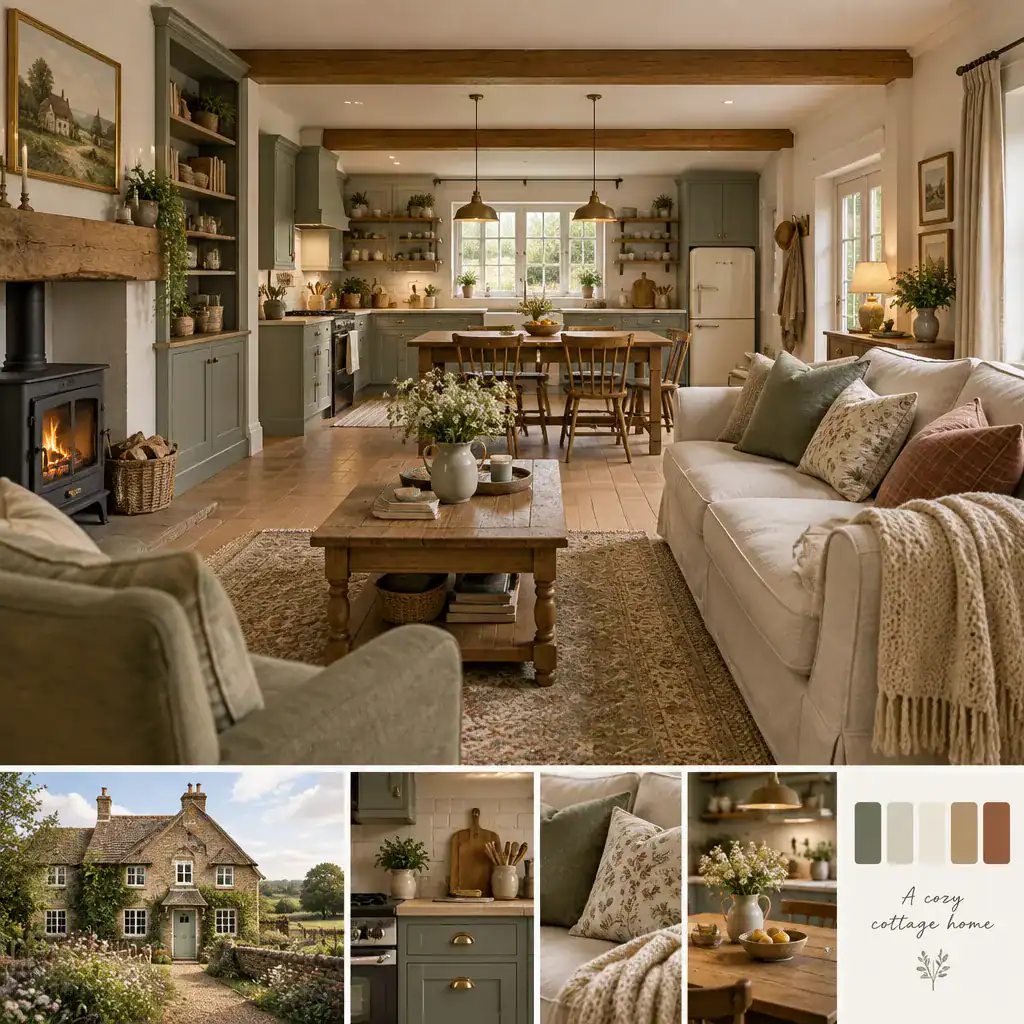
For kitchens, choose cabinetry and storage that feel approachable rather than overly formal. Painted cabinets, open shelves, or a few glass-front doors can display everyday ceramics while maintaining a lived-in look. Durable-looking work surfaces, simple pulls, wood accents, and aged-looking metal details can reference the home’s character without sacrificing modern convenience.
Bedrooms benefit from soft wall colors, tactile bedding, and furniture with uncomplicated profiles. A painted wood bed, bedside table, woven shade, and layered quilt can create warmth without requiring a fully themed room. Add one or two vintage-inspired or handmade accents, such as a small stool, framed textile, or ceramic lamp, to give the space personality.
Let every room feel related, but not identical. A muted green used on exterior trim might appear as a living-room cushion, kitchen tile detail, or bedroom blanket. Vary patterns, textures, and accent colors gently so the house feels collected over time while retaining an overall family resemblance.
How to Coordinate Cottage Exterior and Interior Details
Begin with a simple palette. Select an exterior base color, identify its undertone, and carry related shades into interior walls, textiles, trim, or accessories. A warm cream facade might lead to ivory walls and rust-colored cushions, while a soft blue-gray exterior can connect naturally with pale blue linens and weathered wood indoors. This approach makes cottage exteriors interior choices feel linked without forcing every room to match.
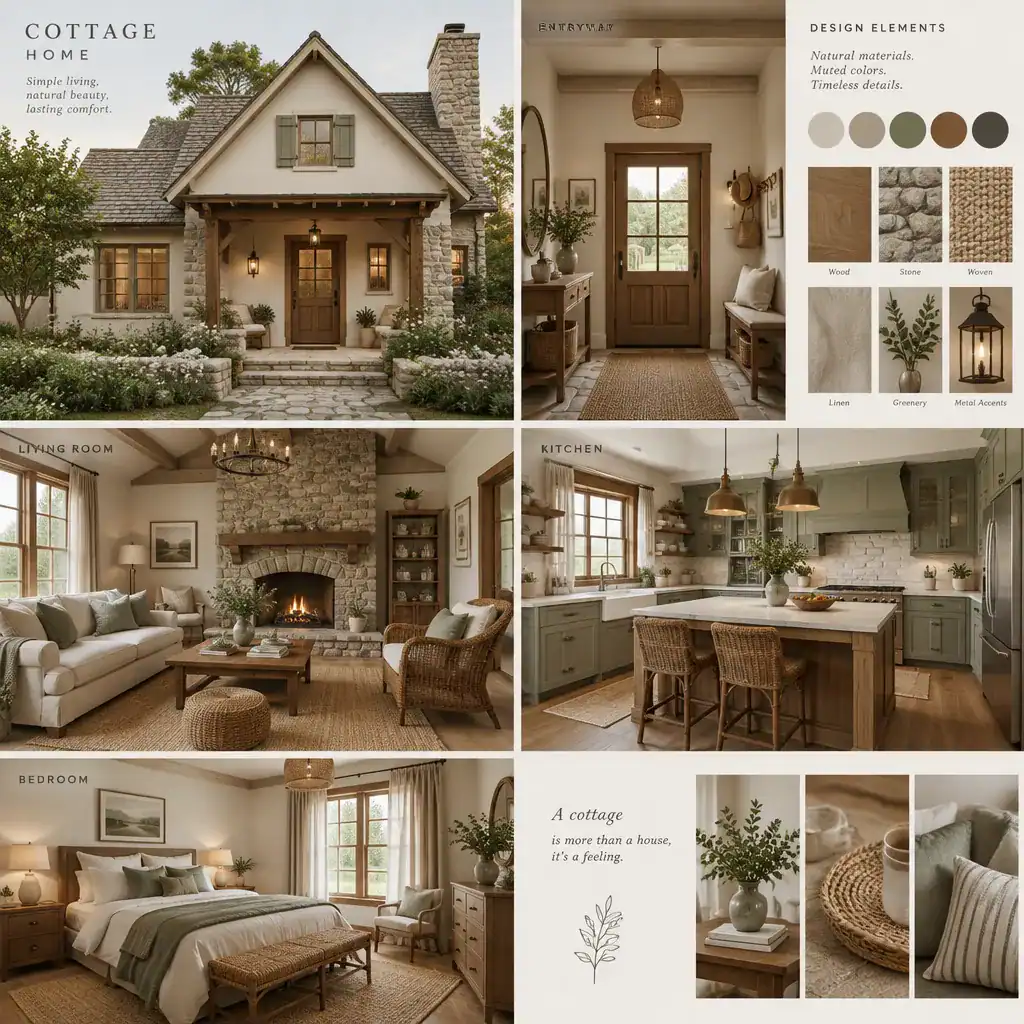
Repeat only a small number of materials and textures across connected areas. Wood can appear in porch posts, an entry bench, and kitchen shelving; woven fibers can move from an outdoor doormat to storage baskets and a living-room rug. Stone, ceramic, and aged-looking metal also work well as recurring notes when used with restraint.
Balance old-fashioned charm with current comfort. Decorative trim, vintage-style hardware, and patterned fabrics can coexist with strong task lighting, practical storage, supportive seating, and durable finishes. Cottage style should make everyday life easier and more welcoming, not turn rooms into displays that are difficult to use.
Review the home room by room before finalizing purchases. Ask whether the colors relate to the exterior palette, whether finishes repeat naturally, whether patterns are balanced, and whether furniture suits each room’s scale. This simple check helps cottage exteriors interior decisions remain cohesive while leaving room for individual character.
Cottage style is strongest when exterior character and interior comfort support one another. A restrained palette, natural textures, welcoming transitions, and practical details create a home that feels settled rather than staged. Start with the architecture already in place, then prioritize the facade, entry, or main room where a few coordinated updates will make the most visible difference.