
A successful modern ranch style house interior design brings contemporary clarity to the easy, grounded character that makes a ranch home appealing. This guide focuses on the decisions that create a unified result: layout, palette, materials, furniture, lighting, and the way each room relates to the next.
A modern ranch interior does not need to erase its original identity to feel current. Low rooflines, horizontal proportions, broad windows, and relaxed room connections can become the foundation for a fresher look. The goal is to make connected spaces feel intentional rather than separately decorated, using adaptable ideas that can be adjusted to your layout, priorities, and budget.
Define the Modern Ranch Interior Direction
The modern ranch direction is clean, comfortable, and uncluttered, with a strong connection to the home’s low-profile form. Before changing finishes, look for architectural qualities already present: open sightlines, wide windows, exposed wood, brick walls or fireplaces, and simple ceiling treatments can all inform the design rather than compete with it.
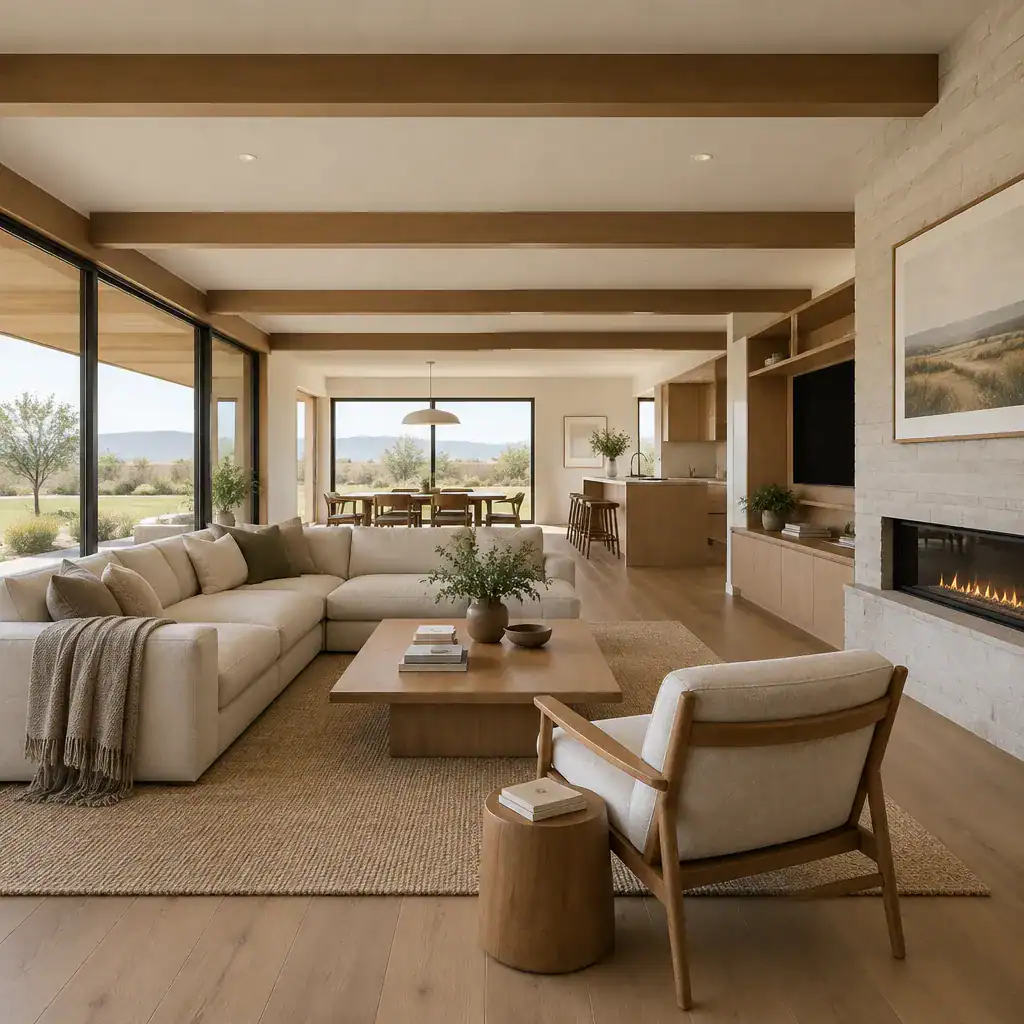
Decide which existing features deserve emphasis, which need softening, and which should be updated. A warm brick fireplace may become a focal point with simpler surrounding decor, while dark beams can be lightened or balanced with pale walls and restrained furnishings. If a dated feature has little architectural value, replace it with a simpler finish that supports the whole interior.
Create a short design brief before buying furniture or finishes. Include a few words that describe the desired mood, such as warm, open, tailored, and natural; list materials you want to repeat; and identify features to preserve. This brief gives every later choice a reference point and helps prevent a modern ranch style house interior design from becoming a collection of unrelated trends.
Build a Cohesive Palette and Material Scheme
Start with a calm base palette that can travel through adjoining rooms. Warm white, soft beige, muted greige, clay, taupe, or gentle gray can establish continuity, while controlled contrast from charcoal, black, deep brown, or bronze adds definition without making each room feel different.
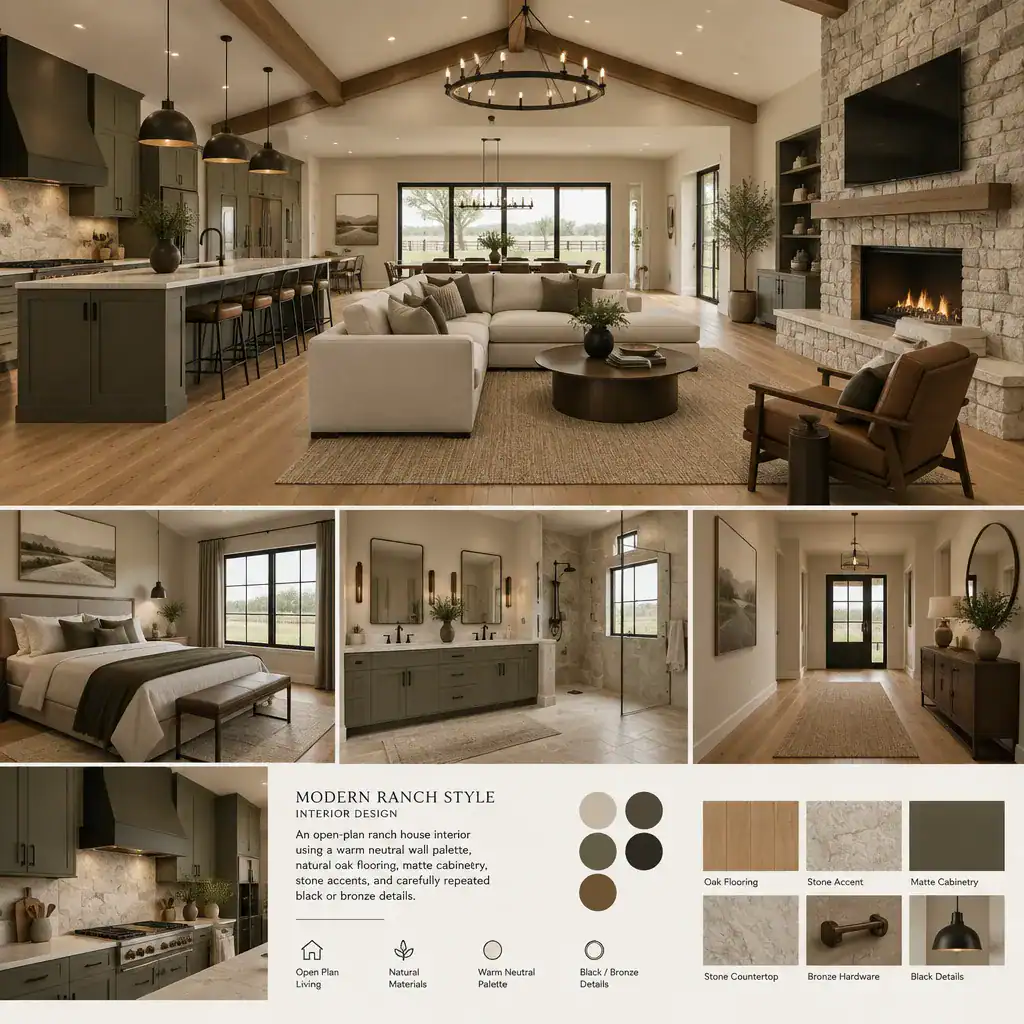
Pair natural materials with contemporary finishes so the home remains inviting rather than stark. Natural oak or other warm-toned wood, stone, textured tile, linen, wool, and leather work well beside matte cabinetry, streamlined hardware, and simple painted surfaces. Repeating a wood tone, metal finish, or stone undertone across rooms creates visual rhythm.
Coordinate flooring, wall treatments, cabinetry, counters, and hardware before selecting small decor. For example, a consistent flooring tone can connect the living room, dining area, and hall, while repeated black or bronze details can link cabinet pulls, light fixtures, and mirror frames. Keep accent colors selective, introducing them through upholstery, art, rugs, or a few decorative objects rather than adding a new dominant color in every space.
Plan Furniture Layouts Around Connection and Flow
Furniture should reinforce the ranch home’s natural flow between the entry, living room, dining area, and kitchen. Arrange major pieces to leave direct, comfortable movement paths and maintain views toward windows, outdoor areas, or other shared spaces. A layout that respects those sightlines will feel more open even when rooms are not fully open plan.
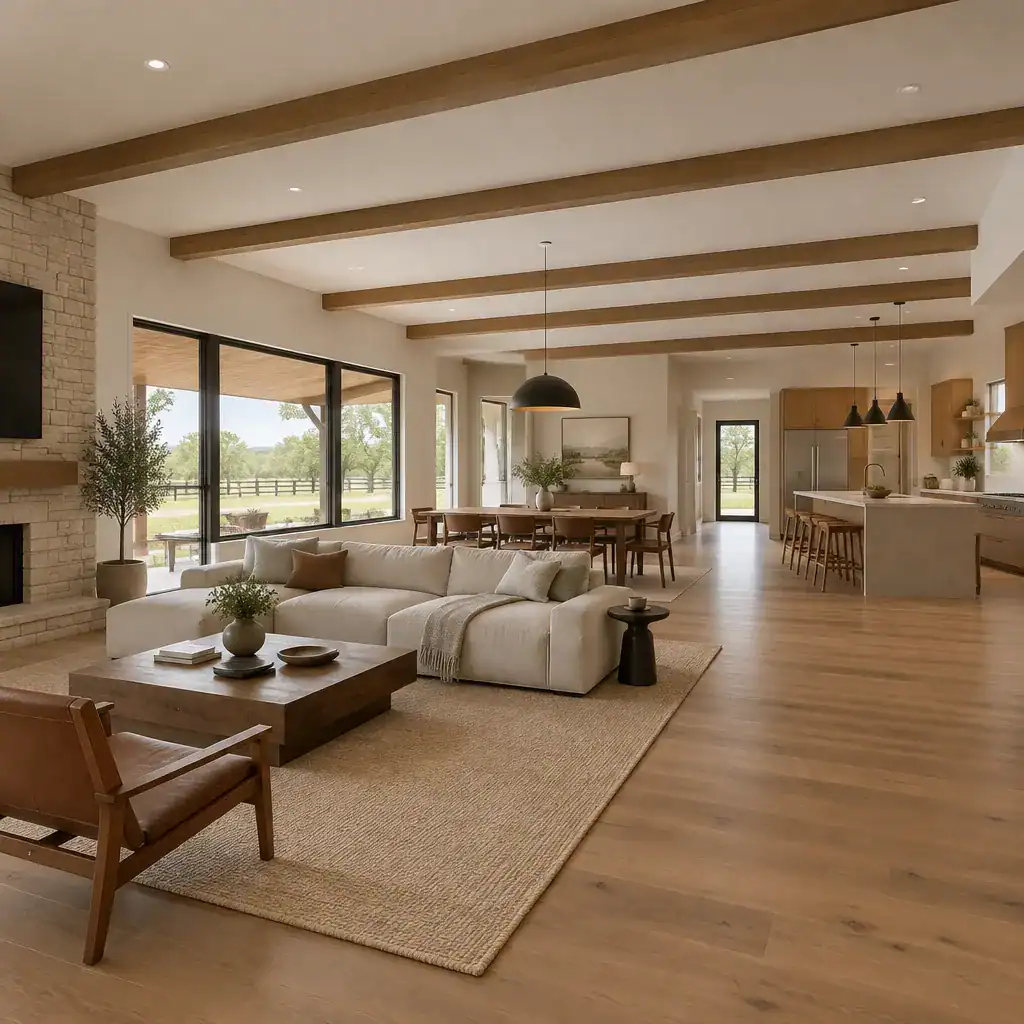
Choose scale carefully. Low-profile sofas, chairs with open bases, slimmer tables, and appropriately sized storage pieces often suit the long horizontal proportions of a ranch house. Balance these lighter elements with substantial anchors, such as a grounded sofa, a generous dining table, a fireplace surround, or a large rug, so the room does not feel visually insubstantial.
Define functional zones without installing unnecessary barriers. A rug can establish a seating area, a pendant can center the dining table, and seating orientation can distinguish conversation space from circulation. Material shifts, such as tile near an entry and wood in a living area, can also clarify purpose while preserving the connected feeling central to a modern ranch style house interior design.
Layer Lighting, Texture, and Contemporary Decor
Layered lighting makes a modern ranch interior useful and welcoming at different times of day. Begin with ambient light for overall illumination, add task lighting where people read, cook, work, or prepare, and use accent light to bring attention to art, texture, shelving, or an architectural focal point.
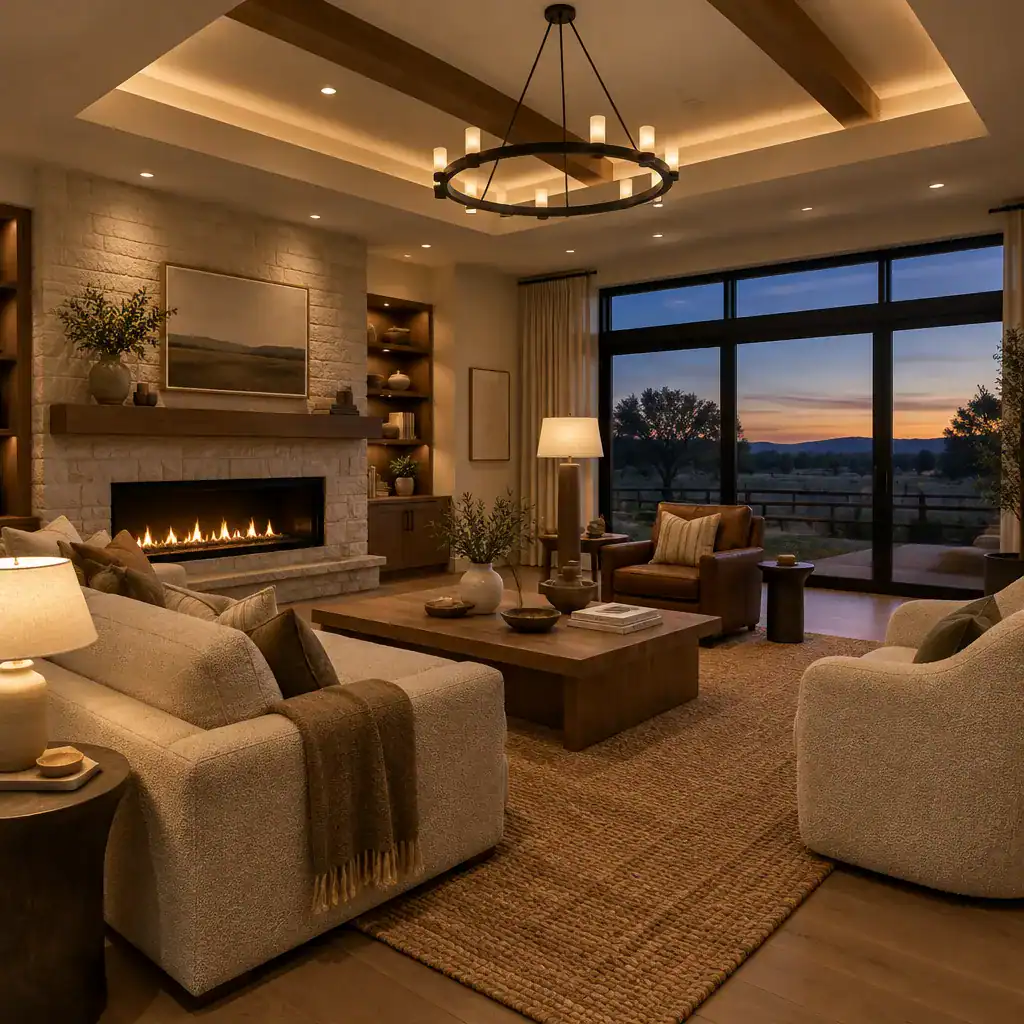
Treat pendant lights, wall fixtures, table lamps, floor lamps, and architectural lighting as related design elements. They do not need to match exactly, but they should share a common quality, such as similar metal tones, soft shapes, or clean lines. This coordination is especially helpful when living, dining, and kitchen areas are visible from one another.
Texture adds warmth to the simplified palette. Use rugs, curtains, upholstered seating, wood, woven baskets, ceramics, and artwork to create depth without relying on excessive color or ornament. Edit accessories carefully: a few meaningful pieces with breathing room feel more personal and composed than crowded surfaces filled with disconnected objects.
Apply the Design Across Key Rooms
Carry the same palette, materials, and sense of proportion through every key room, then adjust the mood according to how each space is used. This approach makes the house feel cohesive while allowing the living room, kitchen, bedroom, entryway, and bathroom to retain their individual functions.
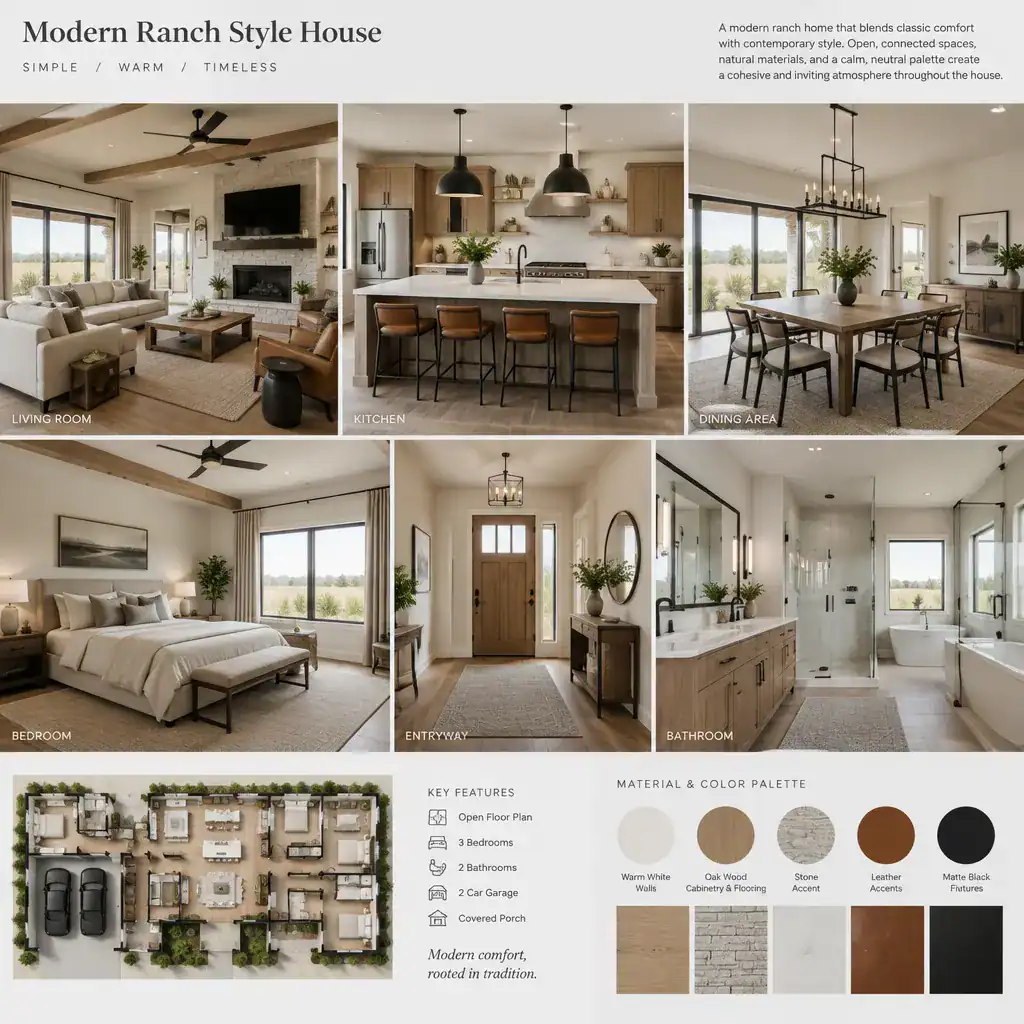
In the living room, prioritize comfortable seating, a strong focal point, and a clear relationship with adjacent spaces. A fireplace, a large window wall, or a considered media wall can anchor the composition, while a rug and seating arrangement define conversation without closing off the room. In the kitchen and dining area, coordinate cabinetry, counters, lighting, and dining furniture with the main interior palette so these highly visible spaces feel like a continuation of the living area.
In bedrooms, soften the shared language with layered bedding, quieter contrast, and tactile window treatments, while retaining familiar wood tones, metal finishes, or wall colors. Entryways and bathrooms offer compact opportunities for modern detail: a simple bench, an intentional mirror, durable tile, matte hardware, or a sculptural light can reinforce the broader direction. These small moments make an modern ranch style house interior design feel complete from the front door to the most private rooms.
Begin by responding to the ranch house’s architecture rather than chasing decorative trends in isolation. When palette, materials, scale, lighting, and transitions are consistent, the interior feels contemporary while still belonging to the home. Prioritize the changes that improve daily function and visual cohesion first, then build the remaining layers gradually and intentionally.