
A successful exterior update is less about finding one fashionable shade and more about planning a coordinated system. For a ranch home, the wall color, trim, roof, masonry, entry, and landscape all read together across a long, low facade. The most effective modern ranch house exterior paint plan starts by giving each of those elements a clear role.
The right palette depends on materials that are already in place, including the roof, brick or stone, window frames, driveway, and porch surfaces. This guide covers practical palette directions, ways to assign colors across the facade, and a testing process that helps you judge paint on your actual home rather than on a small online image.
Ranch houses often have broad rooflines and horizontal proportions that can look calm and current when color contrast is controlled. A carefully balanced palette can clarify the entry, connect mixed materials, and keep the exterior from appearing visually fragmented. Before buying, however, every candidate color should be viewed on the facade in local daylight and beside its permanent surroundings.
Start With the Ranch House Features That Paint Cannot Easily Change
Begin by inventorying what will remain. Note the roof color and texture, brick, stone, siding, window frames, garage door, front door, walkways, driveway, retaining walls, and porch or patio materials. These features have undertones that influence paint choices: a roof may lean warm brown, cool charcoal, or muted green, while masonry may contain several colors at once. Treat these existing elements as evidence for the palette rather than obstacles to cover up.
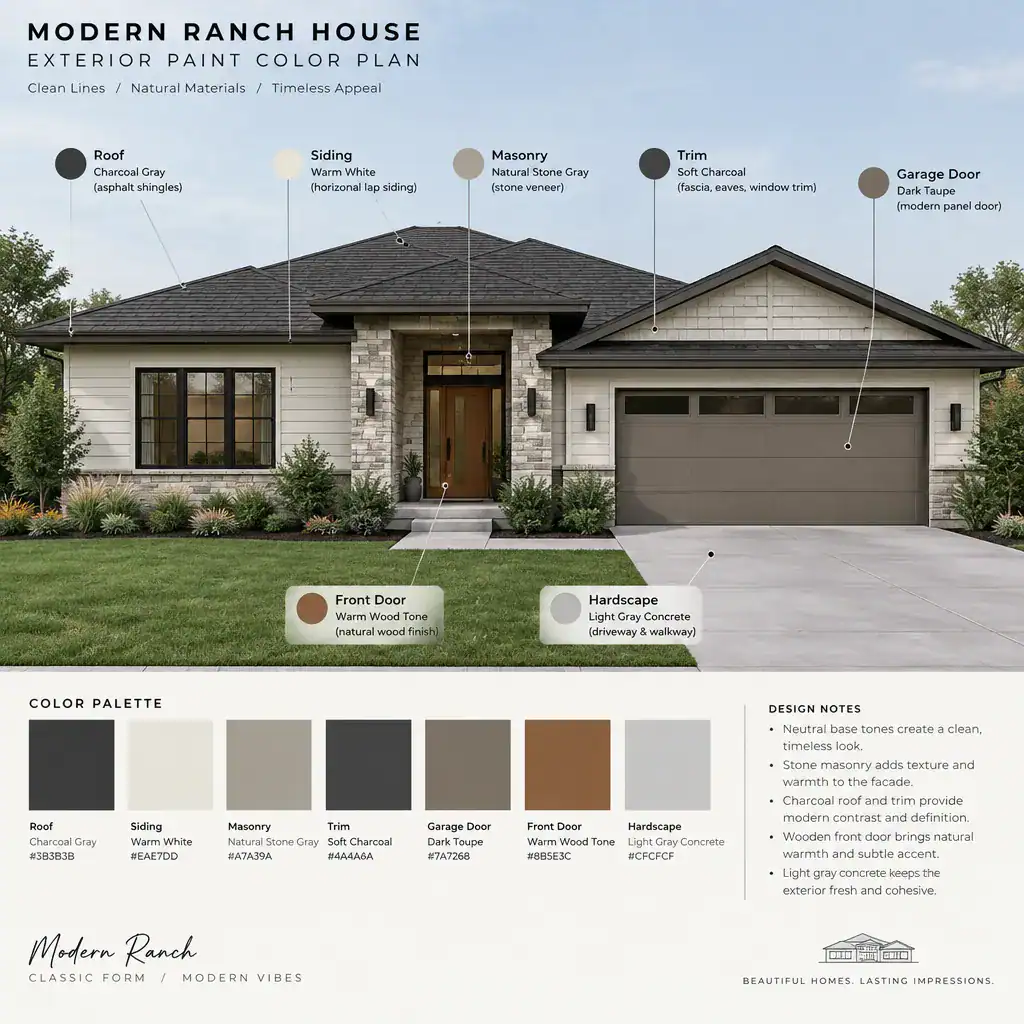
Next, decide whether the house reads mainly as siding, masonry, or an even mix of materials. A facade with one dominant material can usually support a simpler body-and-trim relationship. A house with stone on the front, siding on the wings, and wood at the entry needs colors that connect those zones without forcing every surface to match.
The ranch form also affects contrast. Because the home is spread horizontally, a very dark body with bright trim can make the roofline feel heavily outlined, while too many color breaks can chop up the elevation. Consider a quieter main body color and reserve stronger contrast for a few useful lines, such as the fascia, recessed entry, or door. Separate permanent materials from repaintable items before finalizing the palette: siding, trim, fascia, shutters, garage doors, and doors may be flexible, but roofing, masonry, and hardscape usually set the boundaries.
Modern Exterior Paint Palette Directions for a Ranch House
Palette direction is a useful starting point because it establishes the overall relationship between the home and its fixed materials before individual color names enter the discussion. Choose a direction that supports the roof, masonry, and setting, then test variations within that family. This keeps modern ranch house exterior paint decisions focused and prevents unrelated samples from accumulating.
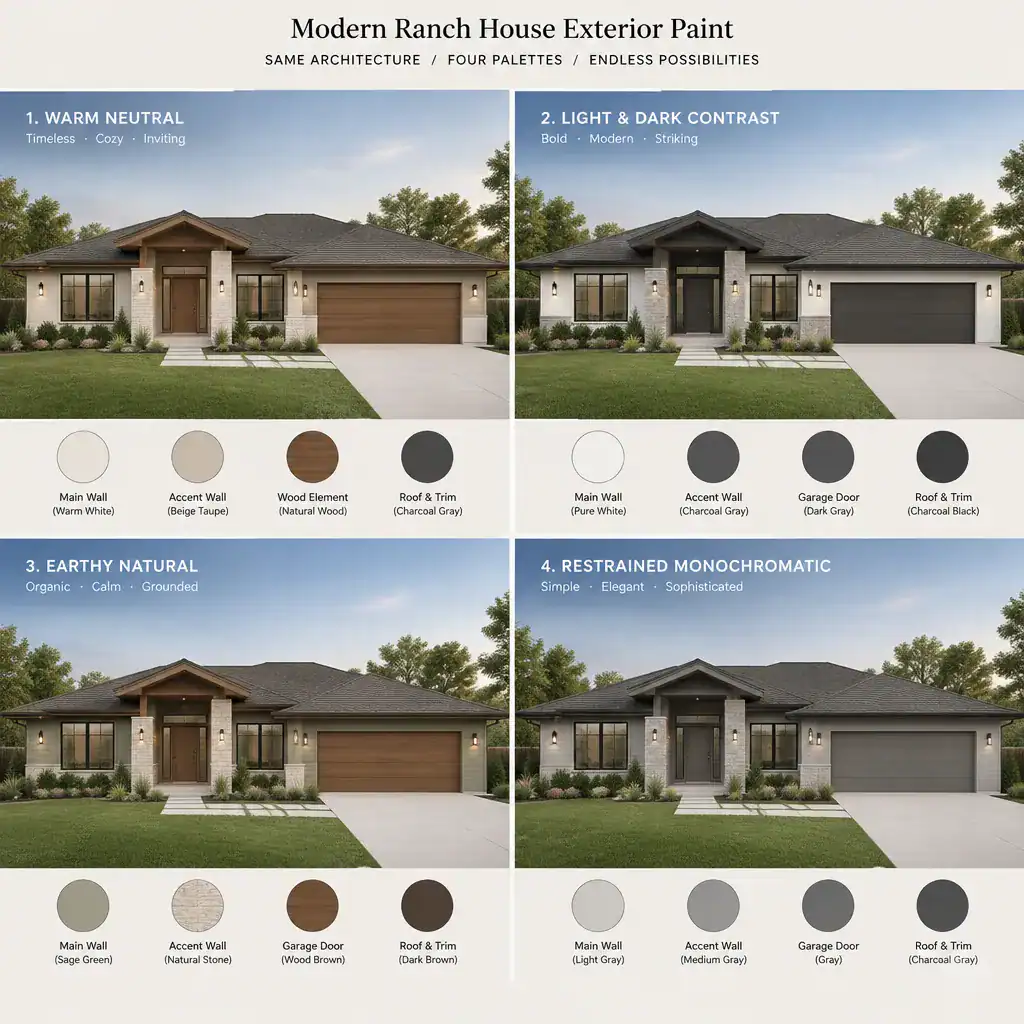
A warm neutral palette can use a soft greige, sand, mushroom, or muted taupe body with trim that is slightly lighter or deeper rather than stark white. A dark brown, charcoal, or muted black entry door can provide definition, especially when the roof or stone includes similar depth. This approach works well when the house has warm brick, tan stone, or wood details and needs an updated look without sharp contrast.
A high-contrast palette begins with a light facade, such as an off-white, pale greige, or softened gray, then uses dark accents selectively on the fascia, window frames, garage door, or entry. The key word is selectively. Dark elements can sharpen a ranch house’s architectural lines, but using them on every edge may make the low elevation look busy. Let one or two structural features carry the contrast.
An earthy palette is especially useful around natural stone, stained wood, mature trees, or landscape-forward sites. Think subdued olive, clay, mineral gray, weathered tan, or deep brown, with trim chosen from a related undertone. These colors tend to create continuity between the house and its surroundings without requiring literal green or brown everywhere.
A restrained monochromatic palette relies on value, texture, and finish instead of numerous colors. For example, the body, trim, and garage may sit within a narrow gray-beige range, while stone, wood grain, and a darker door add quiet variation. This can feel especially cohesive on a simple ranch elevation, where a limited palette allows the proportions and materials to do the work.
Coordinate the Main Exterior Color With Trim, Door, and Roof
Use the main body color as the anchor, then assign supporting roles to trim, fascia, shutters when they exist, garage doors, and the front door. Trim can be close in value to the body for a calm, contemporary effect, or it can be lighter or darker to define edges. Fascia deserves separate attention because it sits directly below the roof and can either bridge the roof-to-wall transition or make the roofline look disconnected.
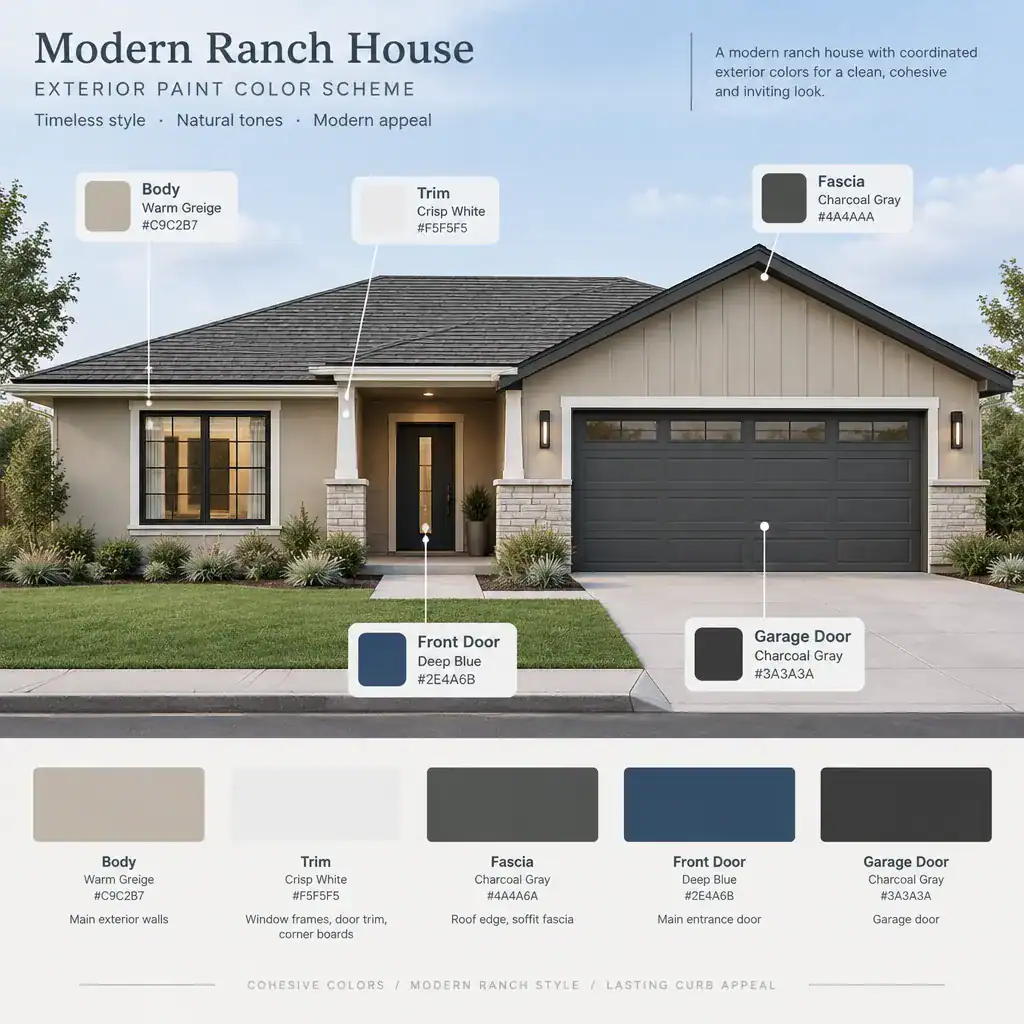
The front door is a natural focal point, but it should still belong to the larger composition. A door color can echo a dark roof, window frame, metal light fixture, or a subtle tone in the stone. If it introduces a completely unrelated bright hue, it may look pasted onto the facade rather than intentional. Garage doors typically occupy a large visual area, so matching or closely relating them to the body color often keeps attention on the entry instead.
Check undertones before pairing colors. A cool blue-gray body can clash with orange-red brick or a warm brown roof, while a creamy trim may look yellow beside a cool charcoal roof. Compare samples directly with each fixed material instead of trusting labels such as “gray” or “white.” For a modern ranch house exterior paint scheme, contrast is most effective when it points to the entry and a few architectural lines, not when it outlines every window, eave, and decorative detail.
Test Exterior Paint Colors Before Committing
Test colors at a useful scale. Small chips and digital renderings can suggest a direction, but they cannot reliably show how a color will behave across a large exterior wall. Paint large sample boards or sample areas and place them on more than one side of the house, especially a sun-exposed wall and a shaded wall. Keep each candidate separate enough that you can see its full character.
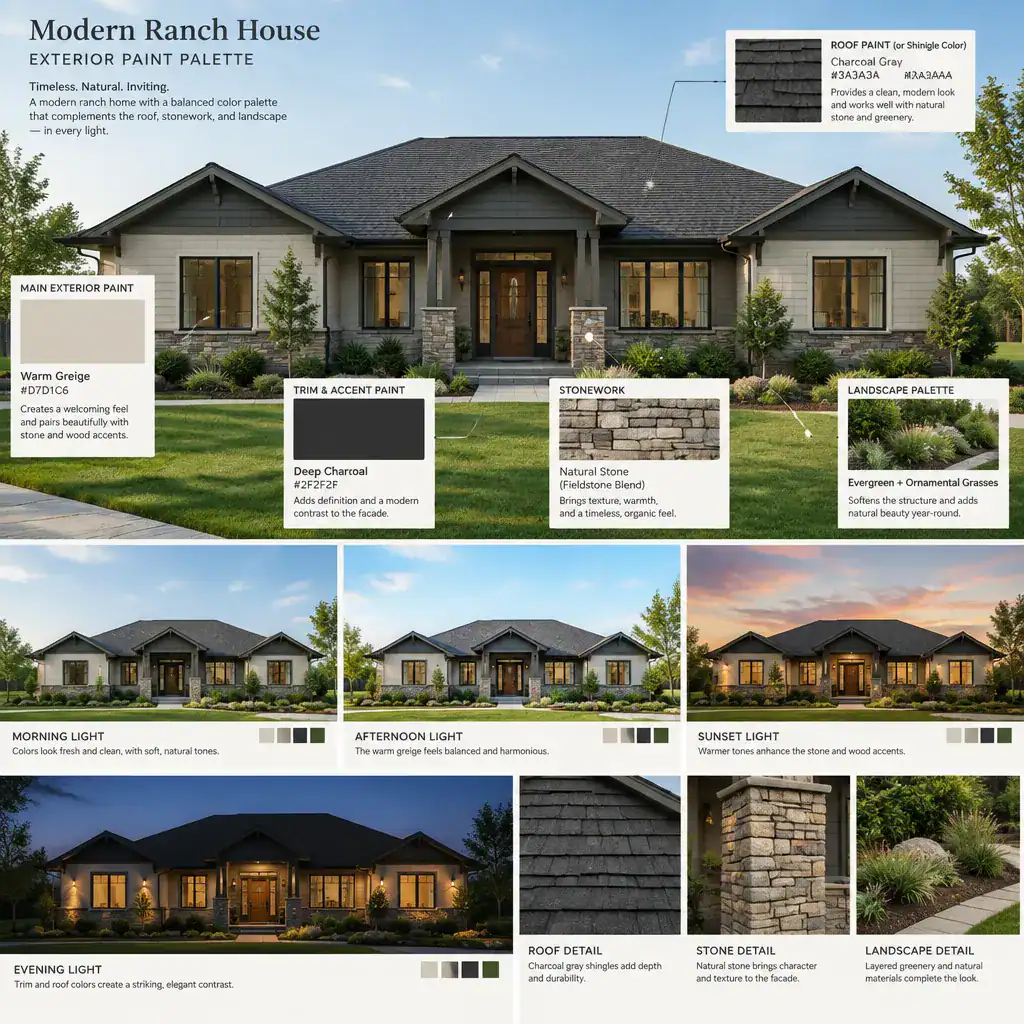
Observe the samples in morning, midday, late afternoon, and overcast conditions. View them beside the roof, brick or stone, landscaping, driveway, and neighboring exterior surfaces. A color that appears balanced in direct sun may turn much cooler in shade, while a pale neutral may become brighter than expected against dark masonry. This field check is more valuable than choosing from a screen alone.
Also compare the planned finish and sheen with the material and condition of the surface. Siding, trim, metal, masonry, and previously coated areas may show sheen and texture differently. Before proceeding with modern ranch house exterior paint, confirm that surface preparation, product selection, and application requirements are appropriate for the existing substrate. The paint manufacturer or a qualified painting professional can help verify compatibility where the surface condition is uncertain.
Common Exterior Paint Planning Mistakes to Avoid
One common mistake is selecting a color from a phone, computer, or tiny swatch without checking a physical sample on the property. Screens vary, and small samples do not reveal how light, texture, and surrounding materials affect the color. Another is using too many accent colors across the facade, trim, garage, and entry. A ranch house generally benefits when the eye can quickly understand the primary body color, the supporting trim relationship, and one intentional focal point.
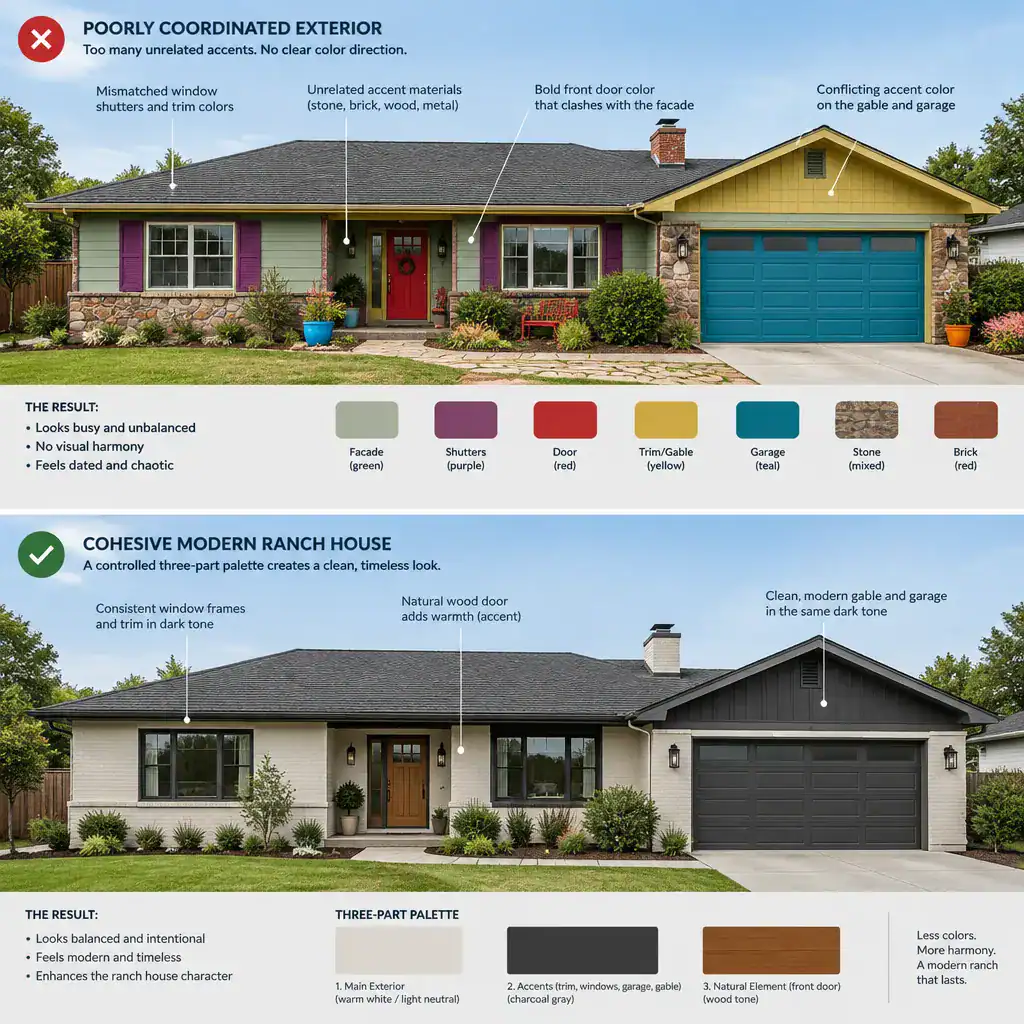
Ignoring fixed materials is equally risky. Brick, stone, roofing, stained wood, and concrete are not neutral backdrops; each contributes color and undertone. Trying to impose a disconnected palette over them can make even individually attractive colors feel mismatched. Instead, pull the palette toward undertones already present on the site.
Finally, do not choose a paint system based only on color. Existing coatings, peeling areas, weather exposure, wood movement, metal surfaces, and masonry condition all affect what preparation and products may be suitable. A cohesive design needs a durable execution plan as well as a good palette. This is why modern ranch house exterior paint planning should include a condition review before a final purchase.
The process is straightforward: inspect the features that cannot easily change, choose a palette direction that works with them, assign clear roles to body, trim, garage, and entry colors, then test large samples before painting. The most modern-looking result usually comes from coordination and restraint, not from a particular trendy color name.
Before purchasing, make sure your chosen palette relates to the roof and masonry, the body color remains the visual anchor, the trim contrast is purposeful, the door has a connected accent role, and samples have been viewed in changing conditions. Confirm surface compatibility and preparation needs as well. With that final check, modern ranch house exterior paint can feel considered, durable, and appropriate to the home rather than merely new.