
Modern ranch style house exteriors offer a useful starting point for homeowners who want a fresher street presence without losing the easygoing character of a single-story home. This guide focuses on the visual decisions that make the biggest difference: honoring long, low proportions, simplifying geometry, and pairing contemporary materials with a facade that still feels welcoming and grounded.
Ranch houses are especially well suited to exterior updates because their straightforward forms can accommodate cleaner lines, larger openings, and more intentional material contrast. The most successful plans consider facade composition, cladding, entry details, windows, lighting, and landscape as connected choices. Each update should also respond to the home’s existing structure, its site, the scope of the renovation, and practical local requirements.
Core Features of a Modern Ranch House Exterior
The defining feature of a ranch house is its horizontal silhouette, and a modern update should make that quality more deliberate rather than disguise it. A low-pitched roof, long roof overhangs, extended window lines, and a broad one-story facade can all create a calm visual rhythm. When additions or new porch elements are planned, keep their scale low and visually connected to the main roofline.
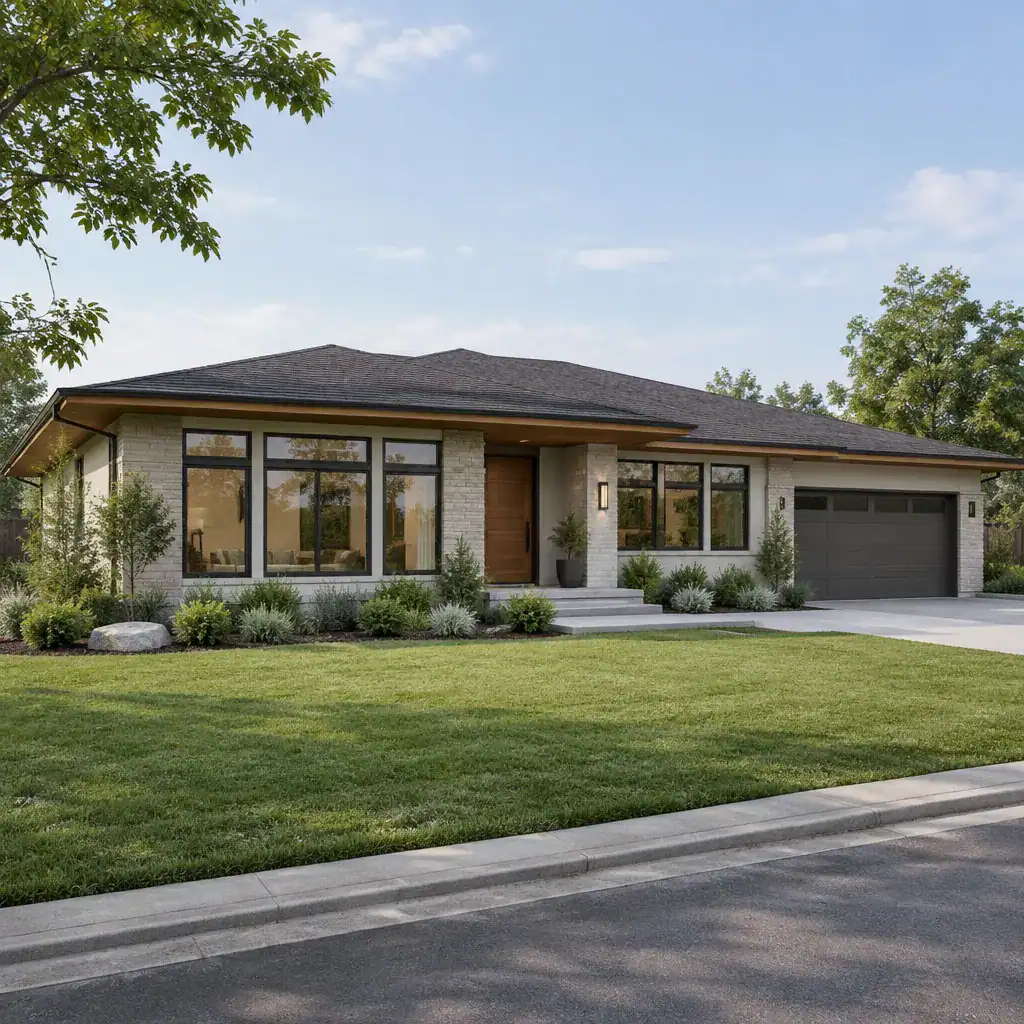
Simple roof forms, grouped windows, restrained trim, and uncluttered wall planes are central to modern ranch style house exteriors. Rather than adding many decorative features, use repetition to organize the facade: align window heads where possible, repeat one frame color, or carry a cladding material across a defined section. Contrast can then highlight a recessed entry, a projecting volume, or the base of the home without fragmenting the overall composition.
A genuinely modernized ranch is more than a traditional facade fitted with a contemporary light fixture or black door. Its roofline, openings, materials, and exterior details work together. If the trim is minimal but the facade still has competing colors, ornate shutters, and unrelated accents, the result may feel pieced together. Start with the home’s main masses and make decorative choices secondary to that structure.
Material and Color Combinations for a Contemporary Ranch Facade
A coordinated material palette gives a simple ranch form depth while keeping it visually quiet. Painted horizontal siding paired with warm natural wood can soften crisp contemporary detailing. Masonry combined with smooth panels can make an entry or chimney mass feel substantial, while dark cladding with lighter trim creates a clearer graphic outline. The strongest combinations use materials to support the shape of the house, not merely to add variety.
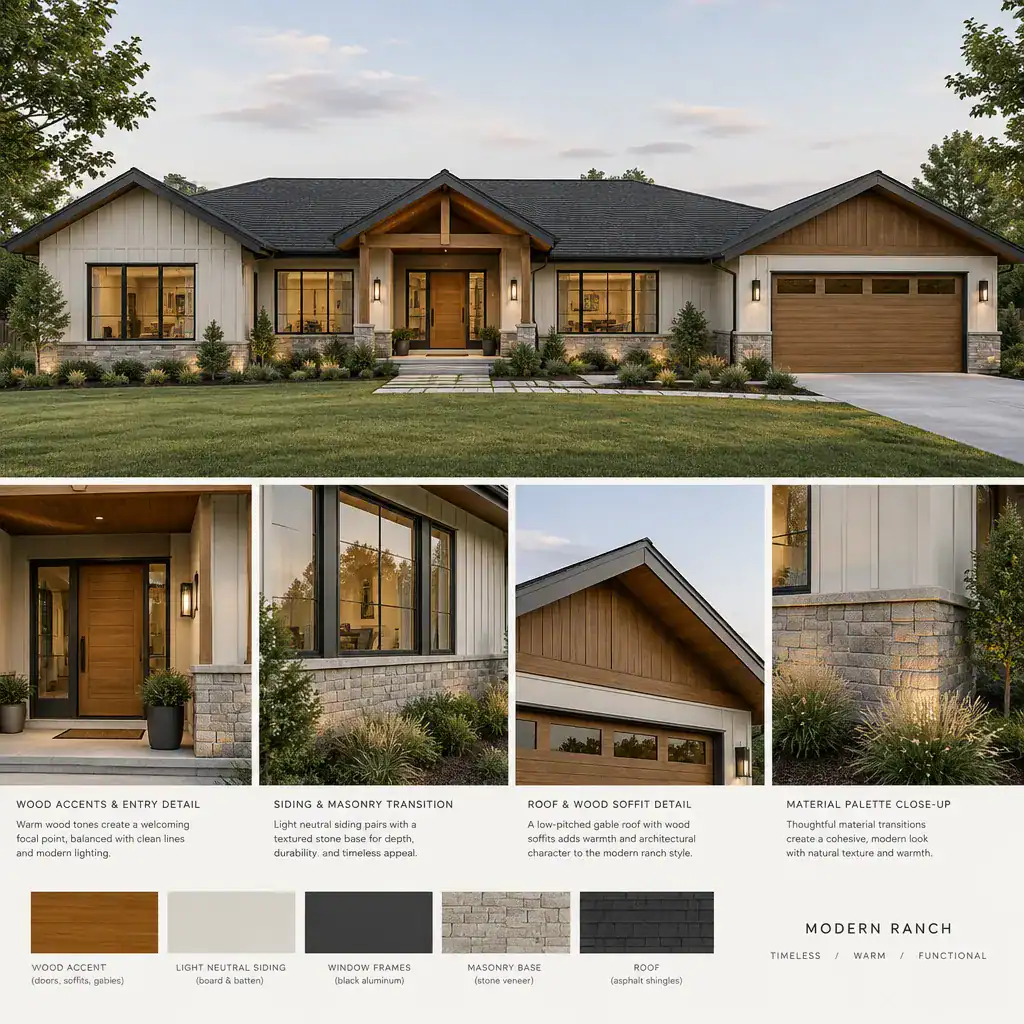
Use material transitions to define meaningful areas, such as an inset front door, a sheltered porch, a window grouping, or a garage volume. Establish one dominant material for most of the facade, one supporting material for secondary planes, and one accent finish for a door, metalwork, or small feature wall. This limited hierarchy helps modern ranch style house exteriors feel considered instead of overly busy.
Appearance is only one part of material selection. Review the existing wall construction, roof drainage, sun exposure, moisture conditions, and maintenance needs before deciding on cladding or finishes. A wood accent may need protection in a harsh exposure, while masonry, siding, and panel products should be detailed appropriately for the local climate. Sample colors outdoors as well, since daylight can make a neutral paint read warmer, cooler, lighter, or darker than expected.
Entry Doors, Windows, and Lighting That Strengthen Curb Appeal
The front door should provide a clear point of arrival without competing with the ranch home’s low profile. A simple oversized slab door, a door with narrow vertical glazing, or a recessed entry in a contrasting material can create focus. Extend the effect through a modest porch ceiling, a clean canopy, or a short wall that frames the approach rather than turning the entrance into a tall, separate feature.
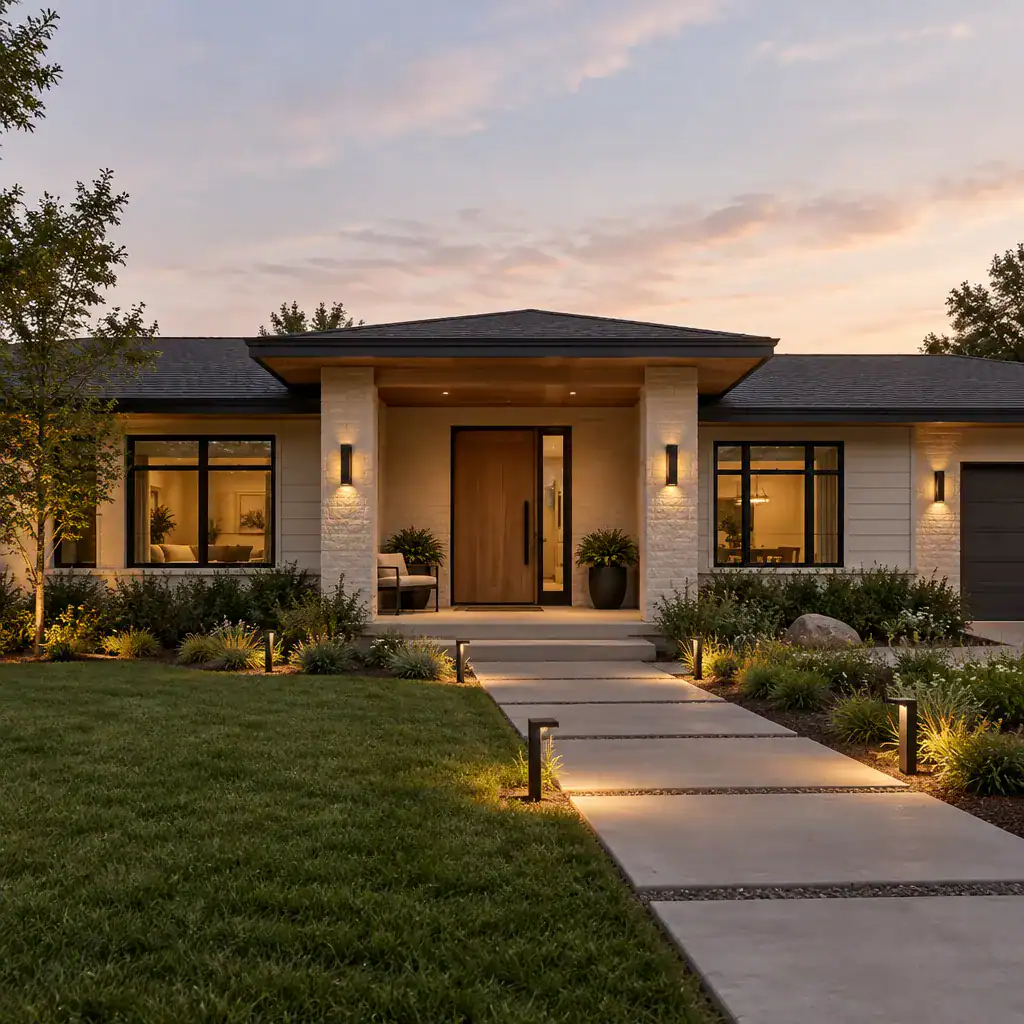
Windows reinforce cohesion when their proportions and frame colors are consistent across the facade. Broad horizontal groupings suit the architecture particularly well, while taller windows can add balance near an entry or a more solid wall area. Avoid treating every opening as an isolated decision; review spacing, alignment, and frame finish together from the street.
Layered lighting makes the approach safer and more inviting after dark. Use entry lighting to identify the door, low path lights to guide movement, and subtle wall-wash or soffit lighting only where it clarifies a useful architectural feature. Choose sconces, pendants, and posts with shapes that repeat the home’s geometry, such as slim linear forms or simple cylinders, and coordinate their finish with window frames, door hardware, or metal accents.
Landscaping and Outdoor Details for a Complete Modern Ranch Look
Landscape design can reinforce a ranch house’s horizontal form when planting stays low, layered, and intentional. Group low shrubs, ornamental grasses, groundcovers, and seasonal perennials in broad drifts that lead the eye across the facade. Keep larger shrubs and small trees far enough from windows and entries that they do not hide the architecture or interrupt the view of the long roofline.
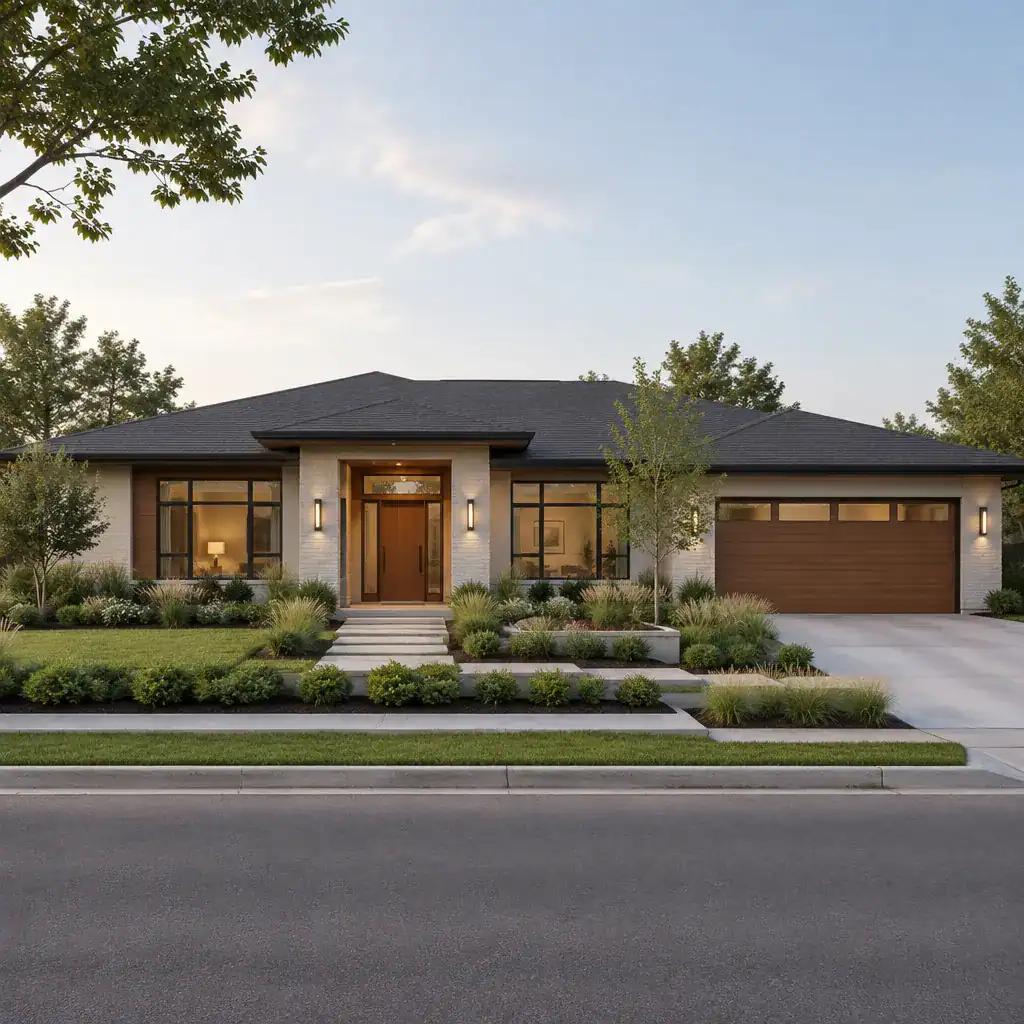
A clean walkway, restrained edging, and a clear transition between driveway, porch, and patio help the site feel as composed as the home. Concrete, stone, or pavers can work well when their color relates to the facade palette. Native or climate-appropriate plants are also practical choices because they can suit local growing conditions while giving the front garden a more natural sense of place.
Small visible accessories deserve the same coordination as major finishes. Select fencing, mailbox hardware, house numbers, planters, and address lighting in complementary colors and straightforward forms. In modern ranch style house exteriors, these elements are most effective when they quietly repeat the primary palette instead of introducing several additional finishes.
How to Choose the Right Modern Ranch Exterior Direction
Begin by documenting what is already working: the roofline, existing facade materials, window pattern, front-door location, driveway, mature planting, and views from the street. This review reveals which qualities are worth emphasizing and which areas need visual simplification. A small exterior palette board is useful before choosing individual products because it shows whether siding, masonry, roofing, frames, and accents belong to one visual system.
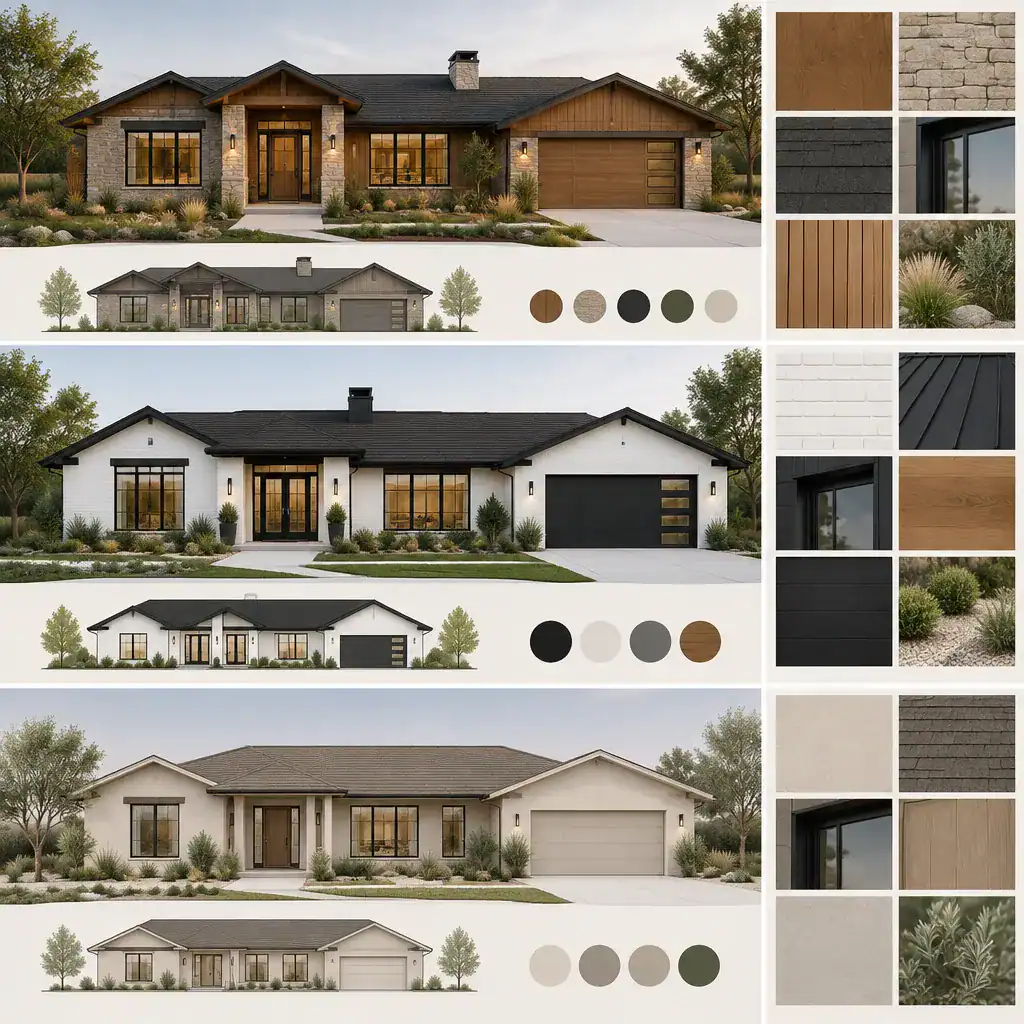
A warm modern direction often combines light neutral siding, wood tones, softened dark metal, and natural stone or brick. A sharper high-contrast direction might use dark cladding, pale wall surfaces, black frames, and a crisp geometric entry. A softer natural-material direction can rely on muted earth tones, masonry, weathered wood-inspired finishes, and low-key planting. Each can suit a ranch house when it preserves the building’s broad, grounded shape.
Before finalizing changes, assess the complete facade from across the street and at different times of day. Morning, midday, and evening light can alter the balance between materials, glazing, shadows, and landscape. This full-view check helps prevent a finish, fixture, or planting choice from looking stronger in isolation than it does as part of the finished composition.
A successful modern ranch exterior balances long horizontal proportions with a controlled material palette and carefully coordinated details. Treat the facade, entry, windows, lighting, and landscape as one composition, and each improvement will have a clearer purpose. Adapt visual ideas to the home’s structure, climate, site conditions, and applicable local requirements so the finished exterior is both cohesive and appropriate to its setting.