
A ranch home already has an easygoing advantage: its one-level layout encourages daily life to unfold in connected, accessible rooms. Pair that simplicity with country style, and the result can feel grounded, welcoming, and comfortably lived in rather than overly decorated. A successful country ranch house interior brings together warm colors, honest materials, practical furniture, and personal details in a way that supports everyday routines.
This guide focuses on the choices that create a cohesive result, from the palette and wood finishes to textiles, lighting, furniture placement, and transitions between rooms. The aim is not to recreate a themed farmhouse scene, but to build a relaxed home with lasting country character.
Define the Country Ranch Interior Style
The best country ranch interiors feel informal, comfortable, and closely tied to natural materials. Think of rooms with soft upholstered seating, warm wood, useful storage, woven textures, and enough open space for easy movement. The style should invite people to settle in, whether they are gathering in the living room, cooking in the kitchen, or coming through the front door with groceries.
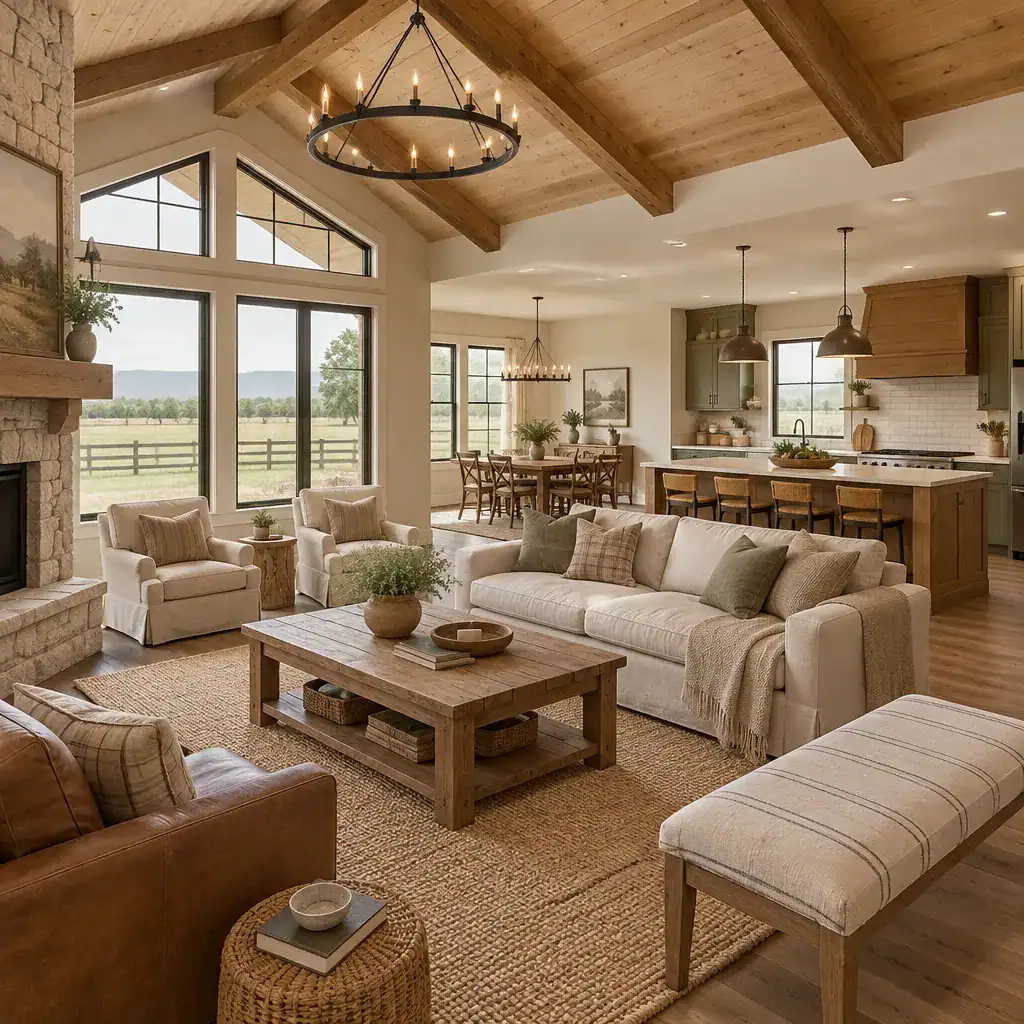
A refined look is different from filling every wall and shelf with rustic signs, distressed objects, or novelty decor. Instead, let a few meaningful accents do the work. A sturdy wood table, a vintage-inspired ceramic pitcher, framed landscape art, or a woven basket can add personality without making the room feel crowded. Keep practical forms at the center: comfortable sofas, durable tables, straightforward cabinetry, and lighting that serves the room.
To make the style consistent, repeat a small family of materials and finishes throughout the home. For example, pair medium-toned oak or pine with warm painted surfaces, aged brass or black metal hardware, and neutral fabrics. This restrained balance keeps the country influence present while allowing the ranch home’s simple layout and natural light to remain prominent.
Build a Warm and Flexible Color Palette
Start with warm neutrals that can travel easily through connected ranch spaces. Cream, soft ivory, warm white, oatmeal, sand, mushroom, and muted taupe work well on walls, large rugs, upholstery, and window treatments. These colors create a calm backdrop for wood furniture and make living, dining, and kitchen areas feel like parts of the same home rather than separate decorating projects.
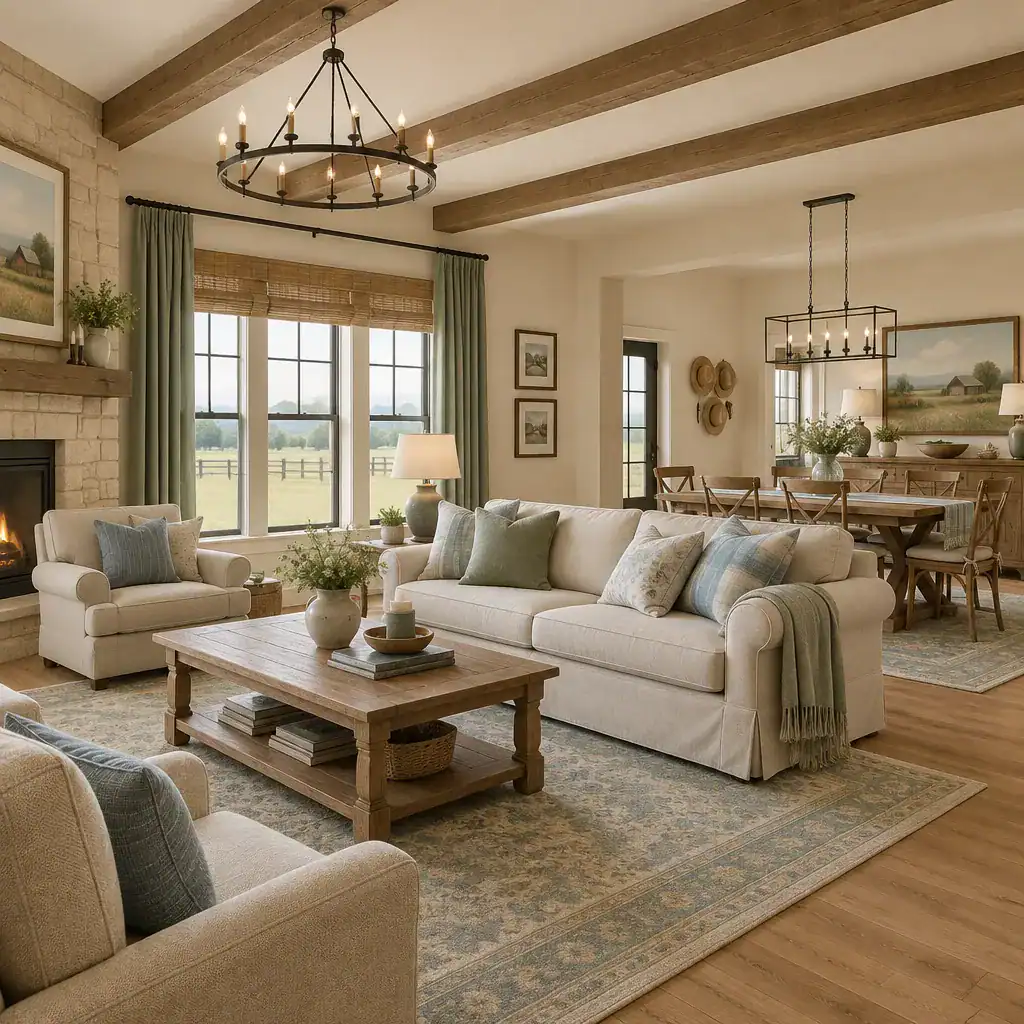
Add country-inspired color through accents that are easy to update. Muted sage, dusty blue, clay red, faded mustard, and soft charcoal can appear in throw pillows, a painted sideboard, artwork, pottery, or a patterned runner. Choose two or three accent tones and repeat them lightly from room to room. A sage cushion in the living area, for instance, can connect with green dishware in the kitchen and a small botanical print in the entry.
Avoid introducing many unrelated bright colors in adjoining rooms, particularly in an open layout. Too many accents can break the visual flow and make a country ranch house interior feel fragmented. A limited palette leaves more room for the variation already provided by wood grain, textiles, plants, and personal objects.
Use Natural Materials and Comfortable Textures
Wood is often the anchor material in country ranch design. It can appear in flooring, ceiling beams, cabinetry, a dining table, open shelving, or a simple coffee table. The wood does not have to match exactly from piece to piece; subtle variation makes a home feel collected over time. What matters is that undertones work together, such as combining honey, medium brown, or weathered natural finishes instead of mixing sharply orange, gray, and red woods without a connecting element.
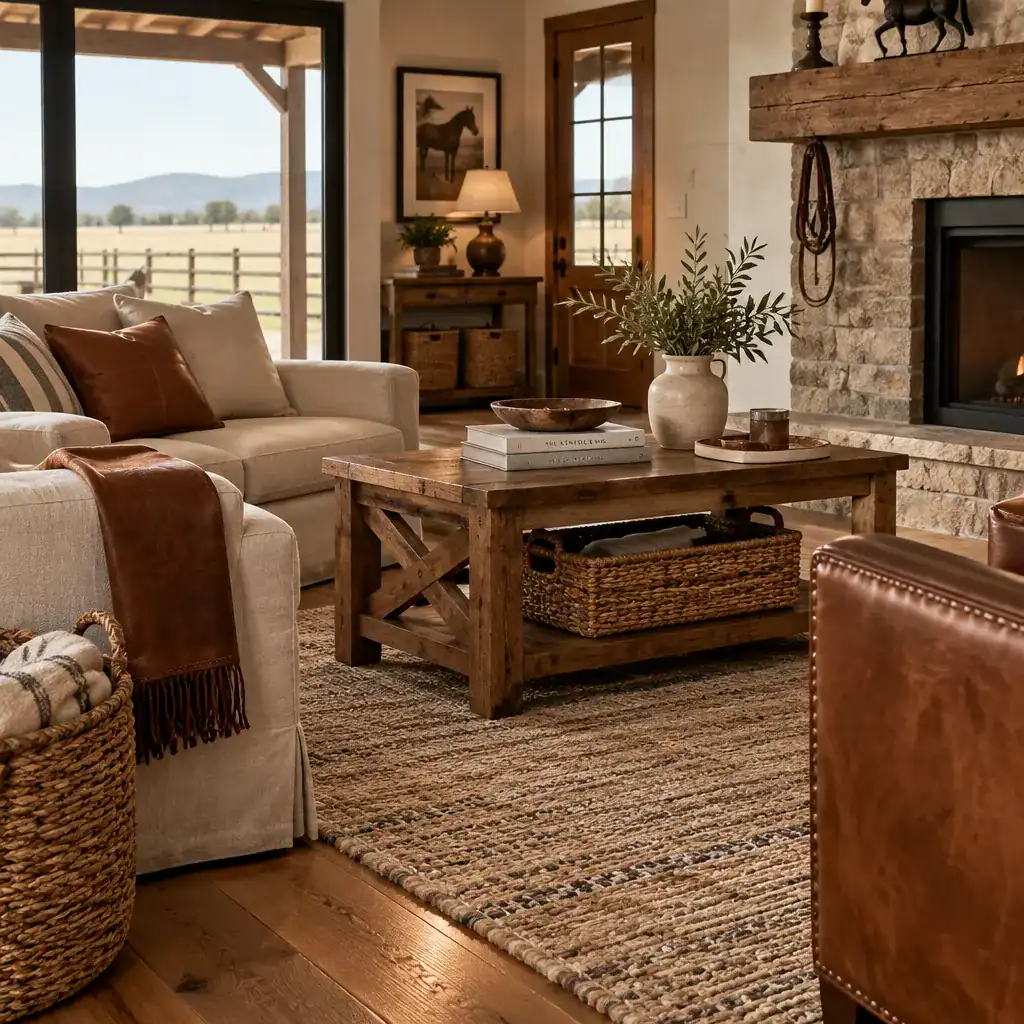
Layer texture to make neutral rooms feel warm rather than plain. Linen or cotton upholstery, wool-look throws, leather accents, woven shades, jute or flatweave rugs, and baskets all add depth. Balance these tactile items with smoother surfaces such as painted walls, glazed ceramic lamps, a stone-look counter, or a simple metal light fixture. This combination keeps the interior from looking visually flat.
Choose finishes that suit real life. Washable slipcovers, performance fabric, sealed wood surfaces, durable rugs, and easy-clean worktops are sensible choices for active households. In a country ranch house interior, durability supports the relaxed atmosphere because residents can use the rooms comfortably instead of treating them like display spaces.
Plan the Main Living Areas for Easy Ranch-Style Flow
Arrange the living room around conversation and relaxation while leaving clear paths to adjacent rooms. A sofa and two chairs facing a coffee table often create an inviting center, while a console behind the sofa can define the seating area without blocking views. In a more compact room, use a loveseat with a pair of smaller chairs or a sectional that follows the room shape without narrowing the main walkway.
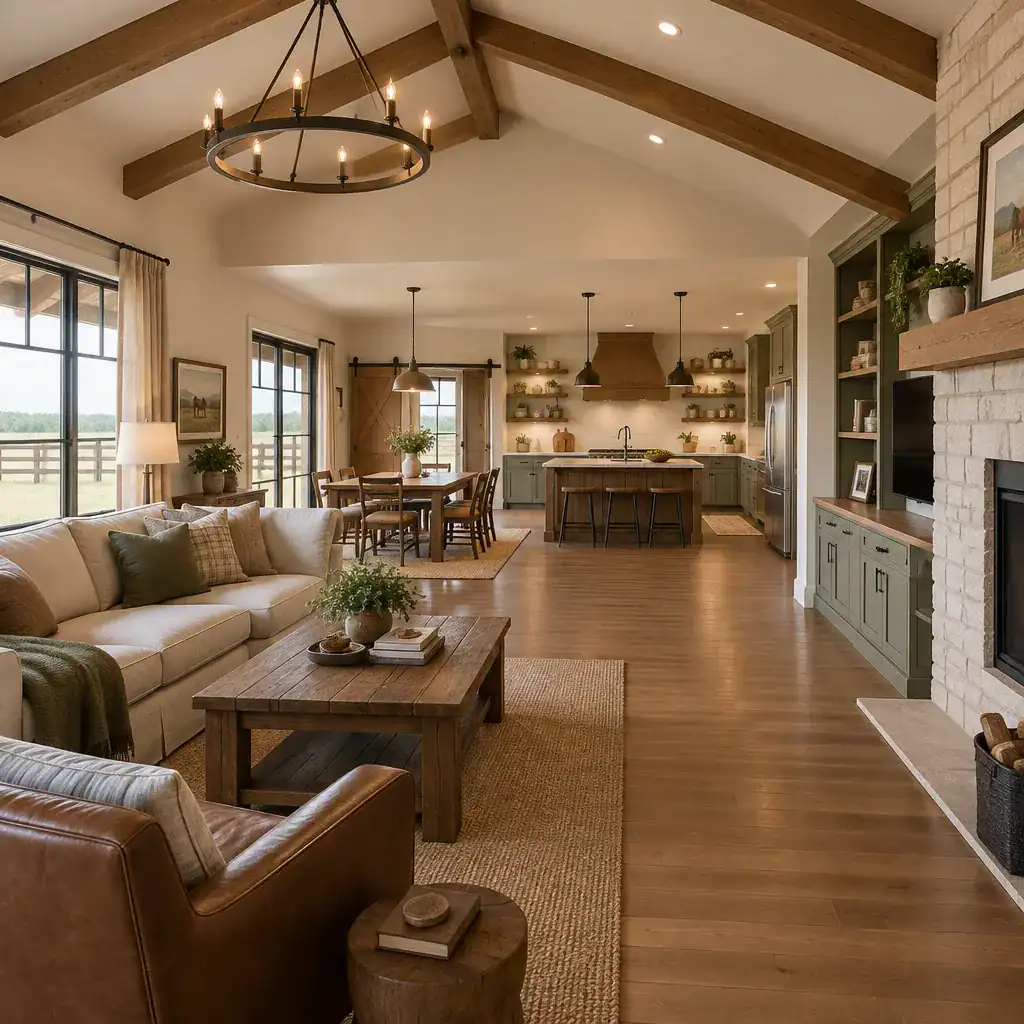
Build continuity between the living room, dining area, and kitchen with repeated materials. The same wood tone can appear in a coffee table, dining chairs, and kitchen shelving. Similar lamp shades, metal finishes, or neutral textiles can also create a quiet visual link. Furniture should match the room proportions: oversized pieces can make a single-level home feel obstructed, while appropriately scaled seating preserves comfortable circulation.
Storage is essential to the uncluttered country look. Use a closed cabinet for media items, baskets for blankets and toys, a sideboard for dining supplies, or built-ins for books and serving pieces. These functional additions prevent everyday objects from overtaking surfaces, so the home retains its calm and welcoming character.
Add Country Character Through Kitchen, Bedroom, and Entry Details
A country kitchen works best when it is simple and useful. Painted or natural-wood cabinets, uncomplicated door profiles, practical work surfaces, and understated knobs or pulls can establish the look without relying on excessive decoration. Open shelves or a glass-front cabinet can display a small collection of everyday dishes, wood boards, or pottery, but leave enough enclosed storage to keep the kitchen easy to maintain.
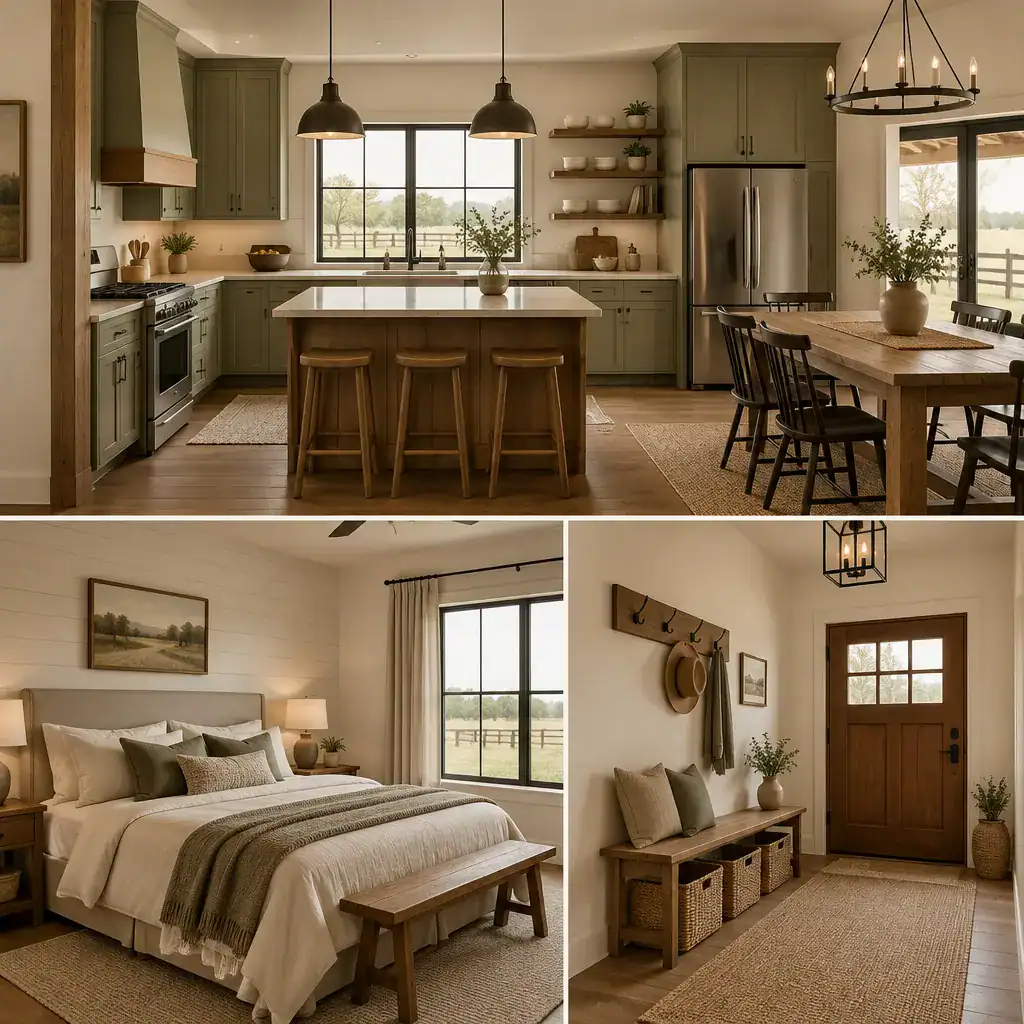
In the bedroom, focus on rest rather than display. Layer neutral bedding with a quilt, striped coverlet, or soft throw; add a wood nightstand or bench; and use curtains or woven shades to soften the windows. Keep decorative objects limited to a few purposeful pieces, such as a reading lamp, framed art, and a small tray. This restrained approach gives the room the calm, settled feeling expected from a country ranch house interior.
The entry should support daily routines from the moment people arrive. A wood bench provides a place to remove shoes, wall hooks handle bags and jackets, and baskets corral smaller items. A narrow console with a lamp or mirror can make the space feel finished. Repeat the same wood tone, woven texture, or metal finish used in nearby rooms so the entry introduces the home’s design direction rather than feeling disconnected from it.
Choose Lighting and Decor Without Overcrowding the Home
Layered lighting makes a ranch interior more adaptable throughout the day. Begin with ambient lighting from ceiling fixtures, then add task lighting where it is needed, such as reading lamps beside seating, pendants over a kitchen work area, or a lamp on an entry console. Accent lighting, including a small lamp on a sideboard or a picture light over artwork, can add warmth during the evening and draw attention to selected details.
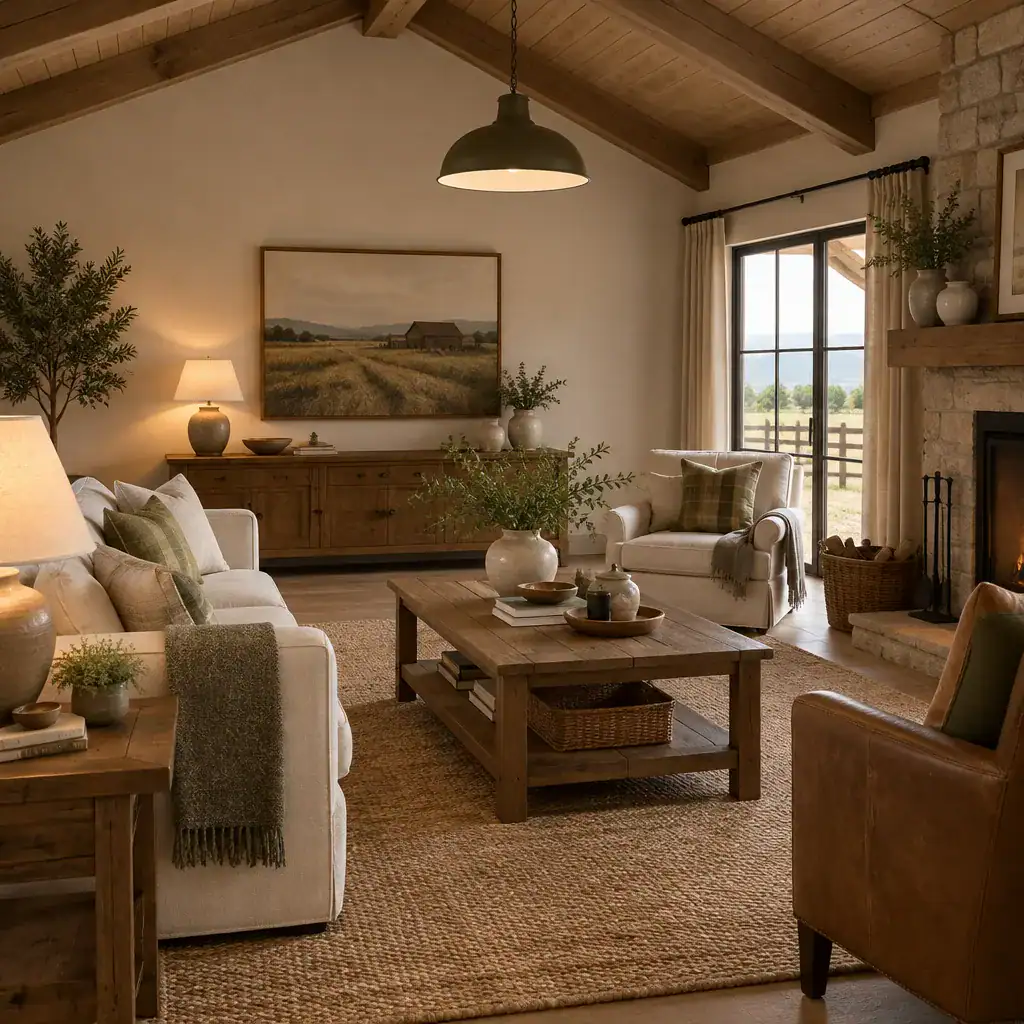
Choose fixtures with uncomplicated shapes and finishes that complement the rest of the house. Aged brass, bronze, black metal, ceramic, and natural woven shades can all suit a country palette. Rather than using many different fixture styles, select a related mix that feels coordinated across public rooms.
Decor should add character without hiding useful furniture or architectural features. A landscape painting, handmade ceramics, a vintage mirror, a healthy plant, and a few textiles can tell a more convincing story than shelves packed with themed objects. Edit surfaces regularly, leaving breathing room around decorative pieces so wood grain, natural light, and the home’s comfortable proportions remain visible.
A successful country ranch interior is built on warmth, comfort, practical flow, and consistent material choices. Begin with a restrained palette, durable foundational furniture, and a small collection of wood and textile finishes that work together. Once those elements are in place, add personal art, heirlooms, and collected accents gradually to create a home that feels individual, useful, and naturally welcoming.