
A traditional cottage kitchen is valued for its warmth, simplicity, and easy sense of welcome. Rather than looking overly formal or newly staged, it combines useful work areas with tactile finishes and familiar details that make daily routines feel comfortable. The most successful version is not a collection of decorative props; it is a kitchen planned around the way the household cooks, stores, eats, and gathers.
Before choosing paint, tile, or accessories, consider the room’s footprint, traffic flow, storage needs, natural light, and the architectural details worth retaining. Once those practical decisions are clear, cabinetry, surfaces, lighting, and finishing touches can work together to create a relaxed, enduring result.
Defining Features of a Traditional Cottage Kitchen
The appeal of a traditional cottage kitchen lies in the balance between hardworking function and informal visual warmth. It often feels assembled over time, with modest proportions, natural materials, and objects that are used rather than simply displayed. The goal is a room that supports cooking and conversation while still feeling personal and settled.
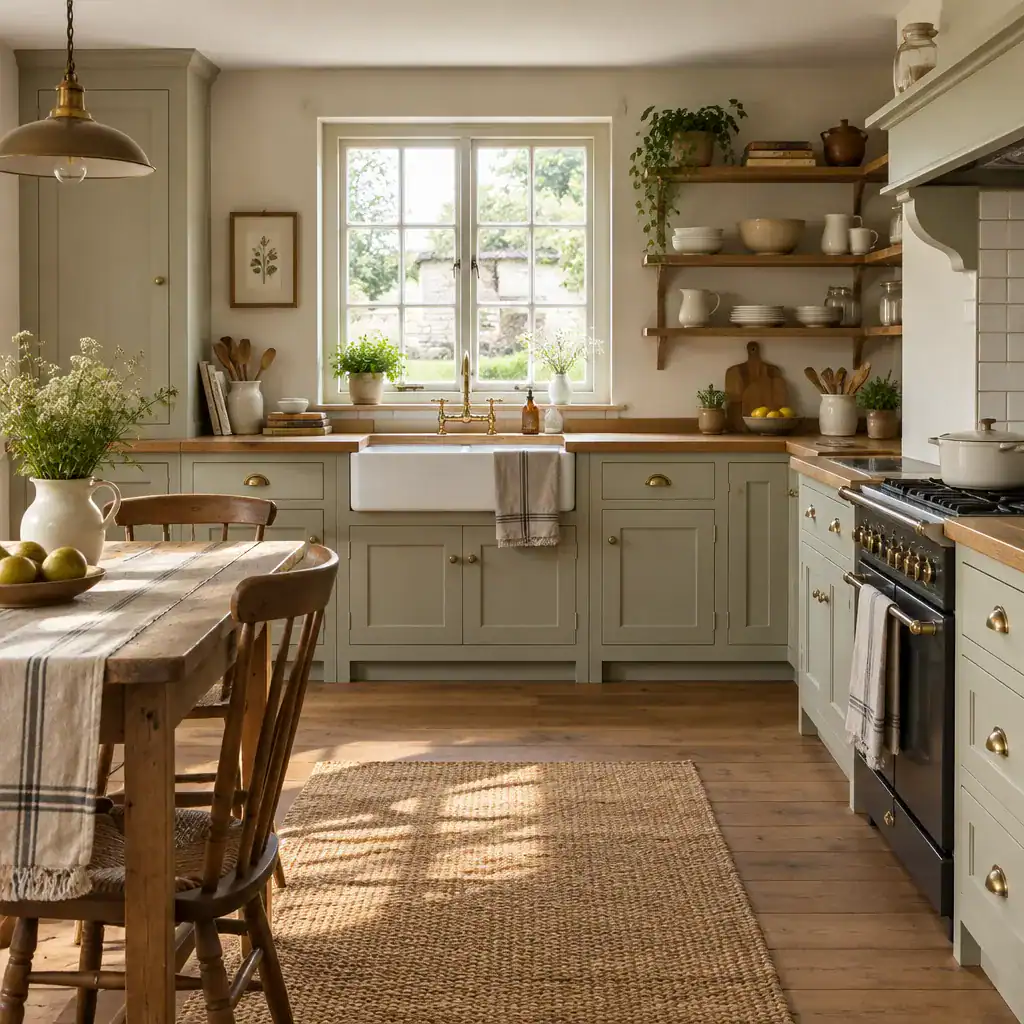
Cabinetry can set the tone through framed doors, shaker-inspired fronts, simple beadboard details, or softly painted finishes. These are design directions rather than requirements: a plainer cabinet style may suit a smaller room, while a more detailed profile can complement an older home. Open wooden shelves can lighten a wall and keep everyday dishes close at hand, while a freestanding table, dresser, or cupboard introduces the furniture-like quality associated with cottage interiors.
Craftsmanship can appear in visible wood grain, handmade-looking ceramic tile, traditional joinery, or aged hardware. Keep the lived-in effect intentional by giving each item a purpose and leaving enough visual breathing room. A few well-used boards, crockery pieces, and textiles will feel more convincing and more manageable than crowded shelves and overloaded countertops.
Choosing the Layout, Cabinetry, and Storage Approach
Layout should begin with movement, not decoration. In a compact kitchen, a single-wall or galley plan can keep appliances and preparation space within easy reach, provided walkways remain clear. An L-shaped arrangement often creates efficient work zones in a small or medium room and can leave space for a table. In an open-plan setting, cabinetry and an island or peninsula can define the cooking area without losing the relaxed connection to dining or living spaces.
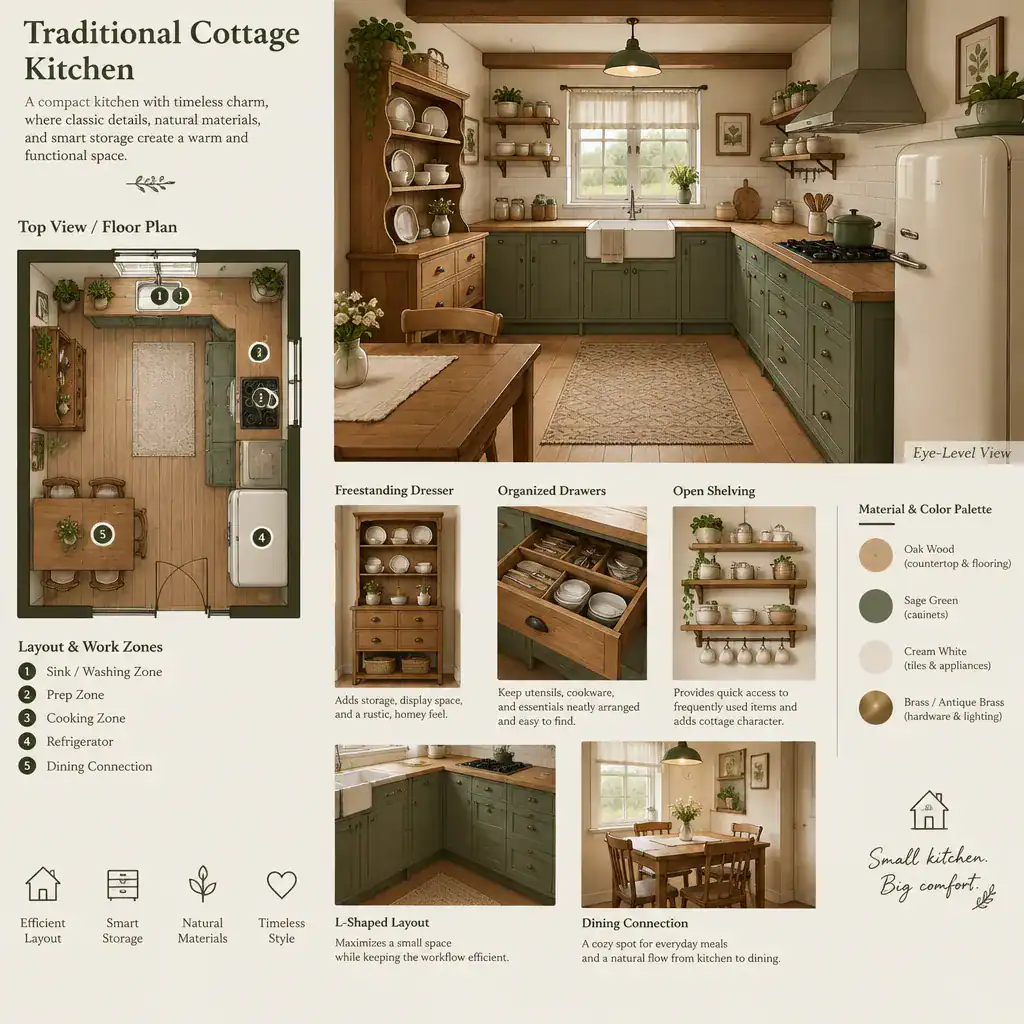
Position the sink, cooktop, refrigerator, and main preparation surface according to the household’s routine. Place frequently used cookware near the cooktop, bins and dishwasher near the sink, and everyday food supplies close to the preparation area. This practical organization lets a traditional cottage kitchen retain its easygoing look without becoming inconvenient during busy meals.
Storage can combine fitted and freestanding pieces. Tall cupboards make efficient use of height, deep drawers improve access to pans and dishes, and a pantry-style zone keeps dry goods contained. Open shelves are helpful for frequently used items but need regular editing. A freestanding dresser can provide closed storage and display space at once, especially near a dining connection. Where possible, preserve a useful chimney breast, alcove, exposed beam, or original cupboard, then improve its accessibility with thoughtful shelving, lighting, or internal organizers.
Selecting Colors, Materials, and Architectural Details
A restrained, nature-inspired palette helps cottage details feel calm rather than overly themed. Warm white, cream, muted green, soft blue, dusty earth tones, and gentle gray can all work well, depending on the home’s light and existing finishes. A pale scheme can brighten a small room, while a deeper painted cabinet color can add depth when walls and worktops remain lighter.
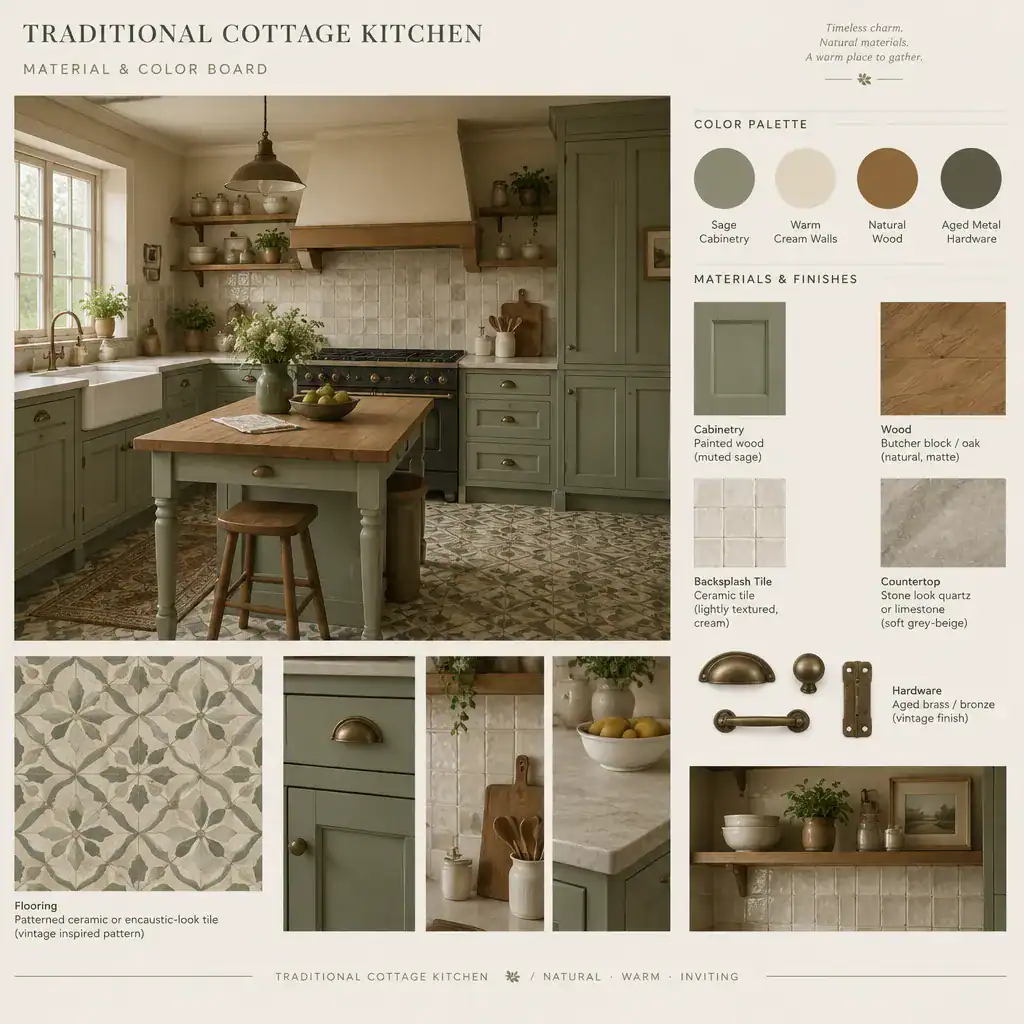
Materials bring the texture that gives the room lasting character. Wood adds warmth through shelves, flooring, stools, or a worktable. Stone or stone-look counters can provide a grounded surface, while ceramic tile introduces subtle variation around a backsplash. Painted cabinetry softens the composition, and aged or unlacquered-looking metal can add contrast through handles, taps, rails, and lighting. Choose finishes for their daily demands as well as appearance, particularly near water and heat.
Consider the backsplash, countertop, flooring, sink, hardware, and trim as a connected composition. For example, a textured ceramic backsplash may pair well with a quieter counter, while patterned flooring may call for simpler cabinet color and plain wall tile. A farmhouse-style or apron-front sink can become a focal point, but an understated sink can work equally well when the cabinetry or trim already carries more detail. Mixing finishes creates depth when they share a common undertone, scale, or level of visual softness.
Lighting, Textiles, and Decorative Finishing Touches
Layered lighting keeps the room useful from morning preparation through evening meals. General ceiling lighting provides overall visibility, task lighting brightens counters and the sink, and accent lighting adds warmth to shelving, a dresser, or dining area. A simple pendant over a table or island can supply character, while discreet under-cabinet lighting improves safety without interrupting the traditional mood.
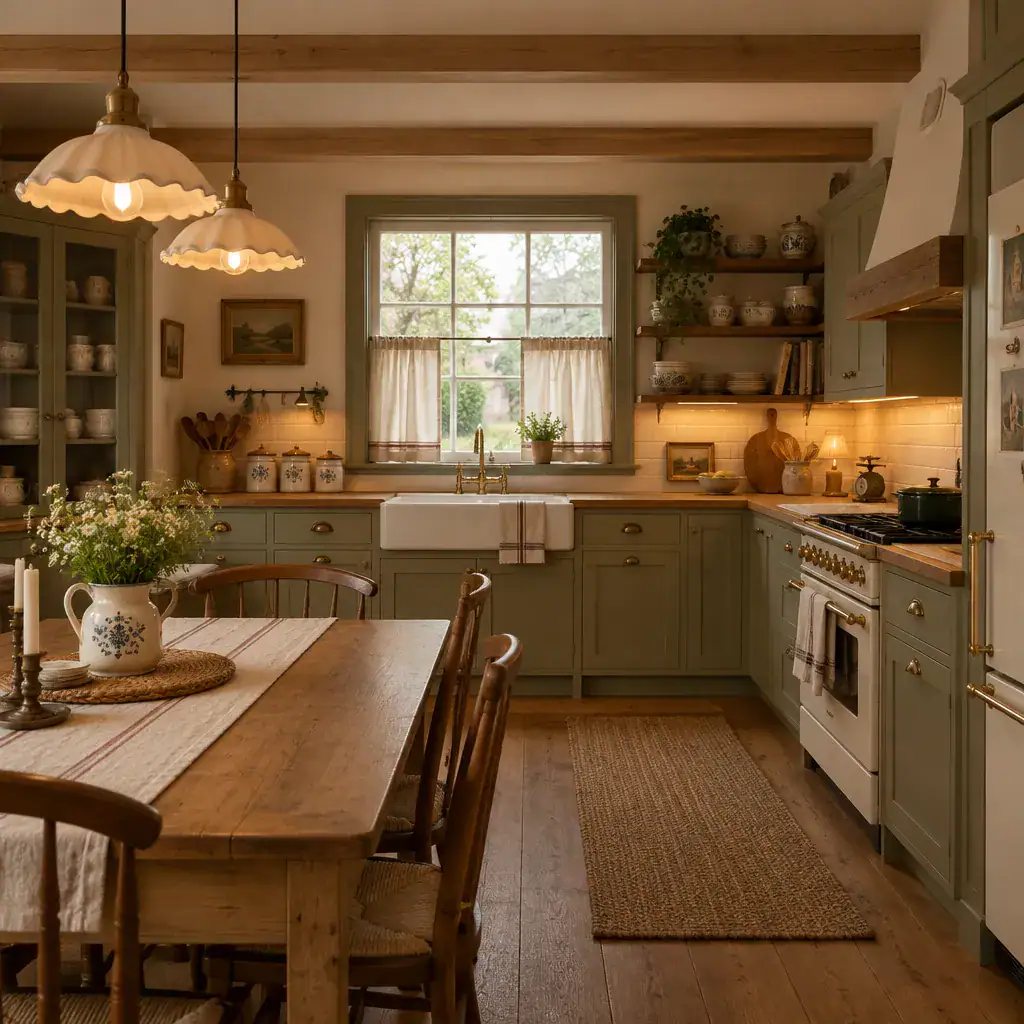
Textiles soften hard kitchen surfaces and offer an easy way to introduce pattern. Linen café curtains, a washable runner, chair cushions, tea towels, and table linens can bring in checks, stripes, florals, or small-scale prints. Limit the number of competing patterns, and select washable fabrics in locations exposed to food, moisture, or frequent use.
Functional accessories are often the most effective decoration in a traditional cottage kitchen. Ceramic storage jars, wooden boards, a utensil crock, a small cookware display, and stacks of everyday dishware contribute warmth because they serve a purpose. Baskets can conceal less attractive supplies while adding natural texture. Edit these pieces regularly so shelves stay dust-manageable and work surfaces remain available for cooking.
How to Keep the Cottage Look Practical and Cohesive
Prioritize durable, maintainable choices in the hardest-working areas. Select counters that suit the level of cutting, spills, and heat exposure in the household, use a backsplash that can be wiped easily near the cooktop, and choose floor finishes that handle tracked-in dirt and regular cleaning. Cabinet paint, wood finishes, and hardware should also be selected with frequent handling in mind, especially around the sink and pantry zones.
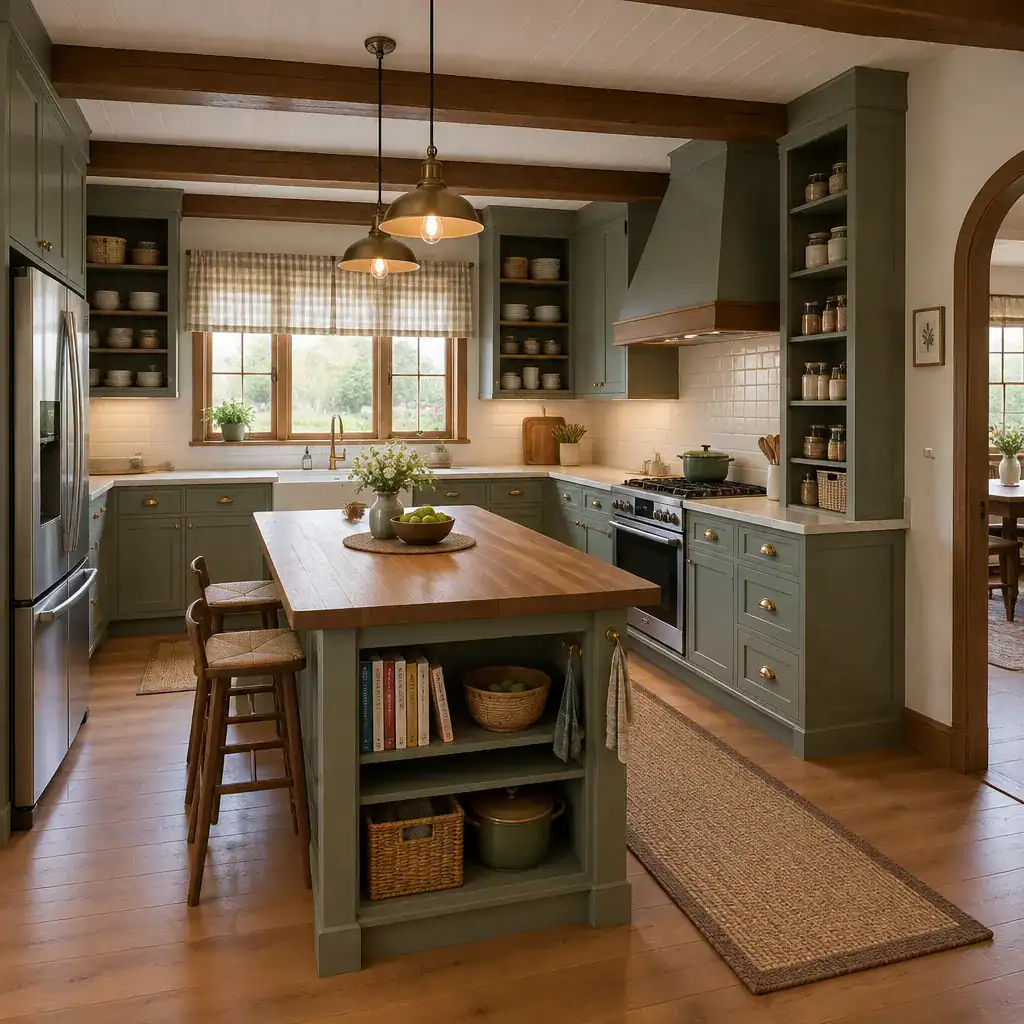
Modern appliances do not need to undermine the look. They can be integrated behind coordinated cabinet fronts, placed within a tall cupboard bank, selected in a finish that relates to the hardware, or allowed to provide a deliberate quiet contrast. The key is to avoid scattering unrelated finishes across the room. A well-organized traditional cottage kitchen can include contemporary convenience while still feeling rooted in the home.
Before finalizing the plan, review how people move through the room, whether drawers and doors open without conflict, and whether frequently used storage is easy to reach. Check that task lighting reaches every main work surface, cleaning routines are realistic, and the major finishes feel connected. Finally, choose character details that suit the house and the household. A few meaningful, useful elements will create more authenticity than copying every accessory from an inspiration image.
A successful traditional cottage kitchen brings together warmth, practical planning, tactile materials, and carefully chosen details. Start with a layout that supports everyday life, then build character through cabinetry, surfaces, lighting, and objects that earn their place. This approach creates a kitchen that feels welcoming and timeless while remaining easy to use and maintain.