
A modern stone cottage brings together the enduring character of natural masonry and the calm clarity of contemporary design. Rather than treating stone as a purely rustic feature, this concept uses it as a grounding element for a home that feels warm, edited, and connected to its setting. The following ideas cover exterior character, interior atmosphere, material coordination, lighting, and the outdoor spaces that make the whole composition feel complete.
These homes appeal to owners who want tactile, timeworn-looking texture without a heavily traditional result. The key is harmony: the stone facade, roof shape, window design, interior finishes, and landscape should all appear to belong to the same visual story. Whether you are planning a new build, updating an existing cottage, or assembling a mood board, these principles can be adapted to your site, budget, floor plan, and daily routines.
Define the Modern Stone Cottage Exterior
Natural stone can give a cottage an immediate sense of permanence, depth, and connection to place, while simple architectural forms prevent the exterior from becoming overly rustic. A clear gabled volume, an uncluttered entry, and carefully controlled additions create a familiar cottage silhouette with a more current expression. Let the stone provide the visual richness, then keep surrounding architectural details deliberate and quiet.
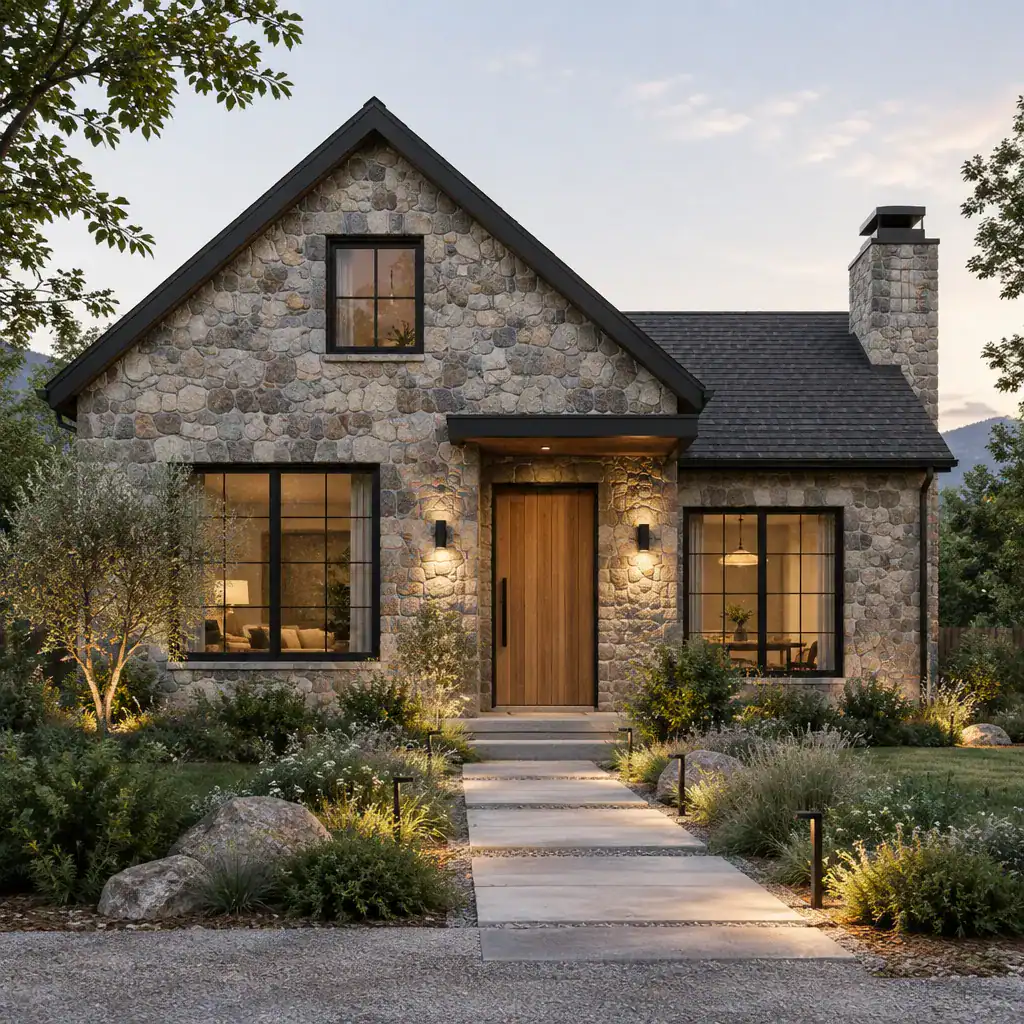
Restrained trim, clean window proportions, and a roof form that suits the scale of the house are especially important. Dark-framed or softly toned windows can introduce crisp definition against uneven stone surfaces, while broad, well-positioned openings can make the facade feel more contemporary. A simple gable roof often reinforces the cottage identity; the goal is not to erase its charm, but to avoid excess ornament.
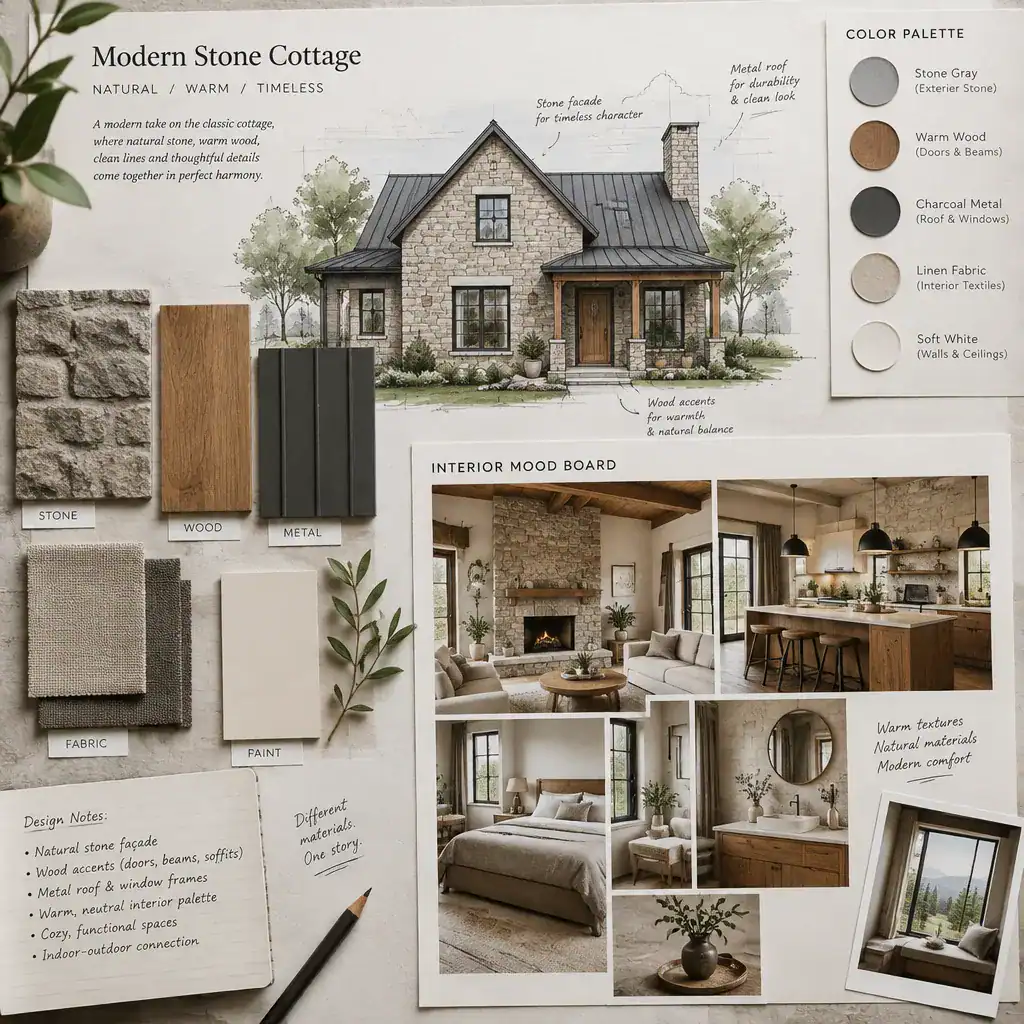
Stone color, surface texture, and joint appearance strongly shape the mood. Varied gray and taupe stone may feel calm and architectural, while warmer sand, buff, or brown tones can create a softer, more welcoming look. Irregular pieces offer a hand-laid character, whereas more consistently cut stone can feel refined and ordered. Coordinate the front door, window frames, and exterior fixtures with these undertones. A restrained timber door, minimal metal hardware, and softly cast entry lighting will feel integrated rather than added as unrelated features.
Create a Warm and Refined Interior Palette
Inside a modern stone cottage, begin with the undertones already present in the exterior stone. Warm whites, muted clay, soft mushroom, gentle taupe, and earthy gray can establish a relaxed backdrop, while natural wood brings a necessary sense of softness. Limiting accent colors helps the home remain restful and lets stone, timber, and daylight become the defining visual elements.
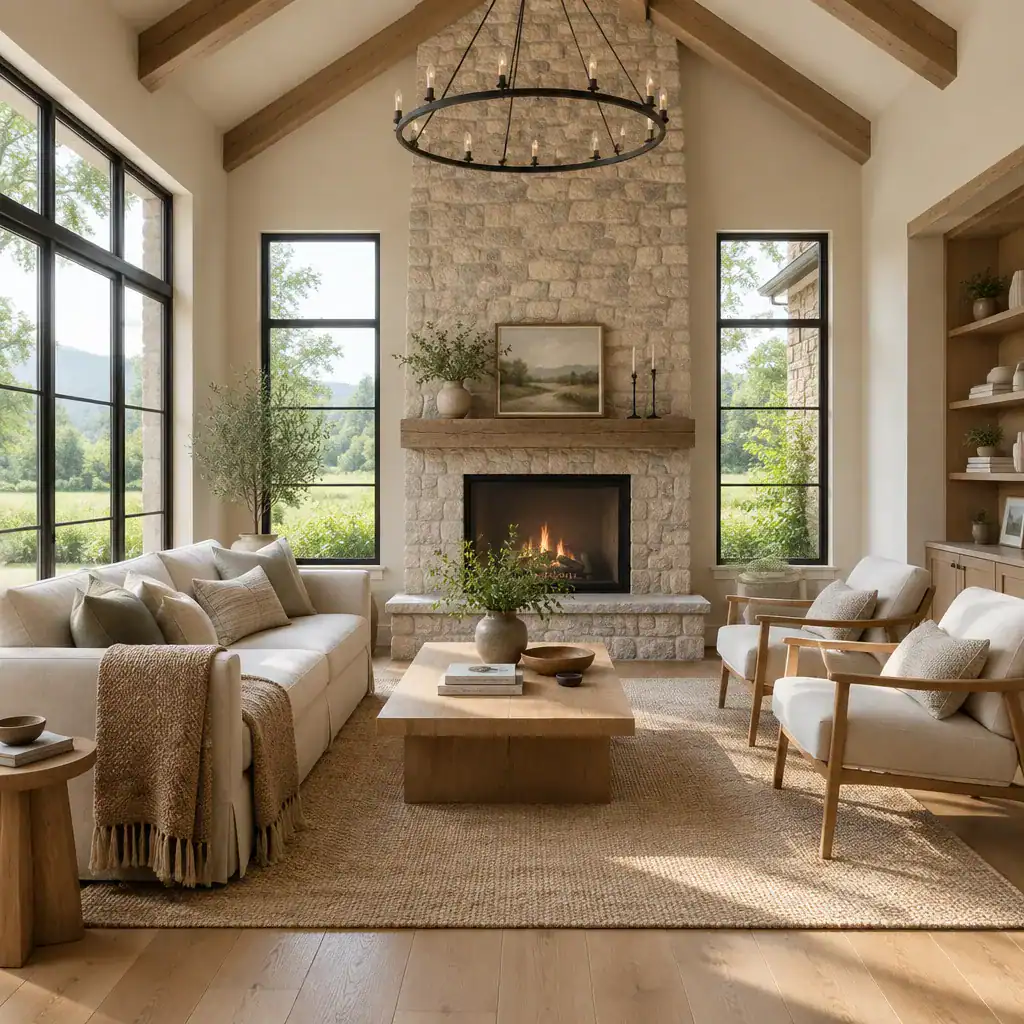
Plaster-like walls, wood flooring or joinery, linen upholstery, and woven textiles add warmth without making rooms visually heavy. A subtle stone fireplace or a carefully placed stone accent can echo the exterior facade, especially when balanced by smooth painted walls and clean-lined furniture. Choose pieces with simple profiles and comfortable textures instead of relying on ornate cottage motifs.
Repetition creates connection. If the exterior includes warm oak at the entry, a similar wood tone in shelving, ceiling details, or cabinetry can carry that idea indoors. Echoing one or two stone shades in a rug, pottery, or upholstery also helps the transition feel natural. Leave open visual space around these materials, then add cozy layers through textiles and personal objects rather than filling every surface with decoration.
Coordinate Materials, Windows, and Lighting
A controlled material scheme gives a stone cottage its layered yet coherent character. Assign each material a clear role: stone supplies texture and permanence, wood adds warmth, metal provides definition, glass opens views and daylight, and textiles soften the rooms. This approach makes the palette feel intentional, even when it includes contrasting surfaces.
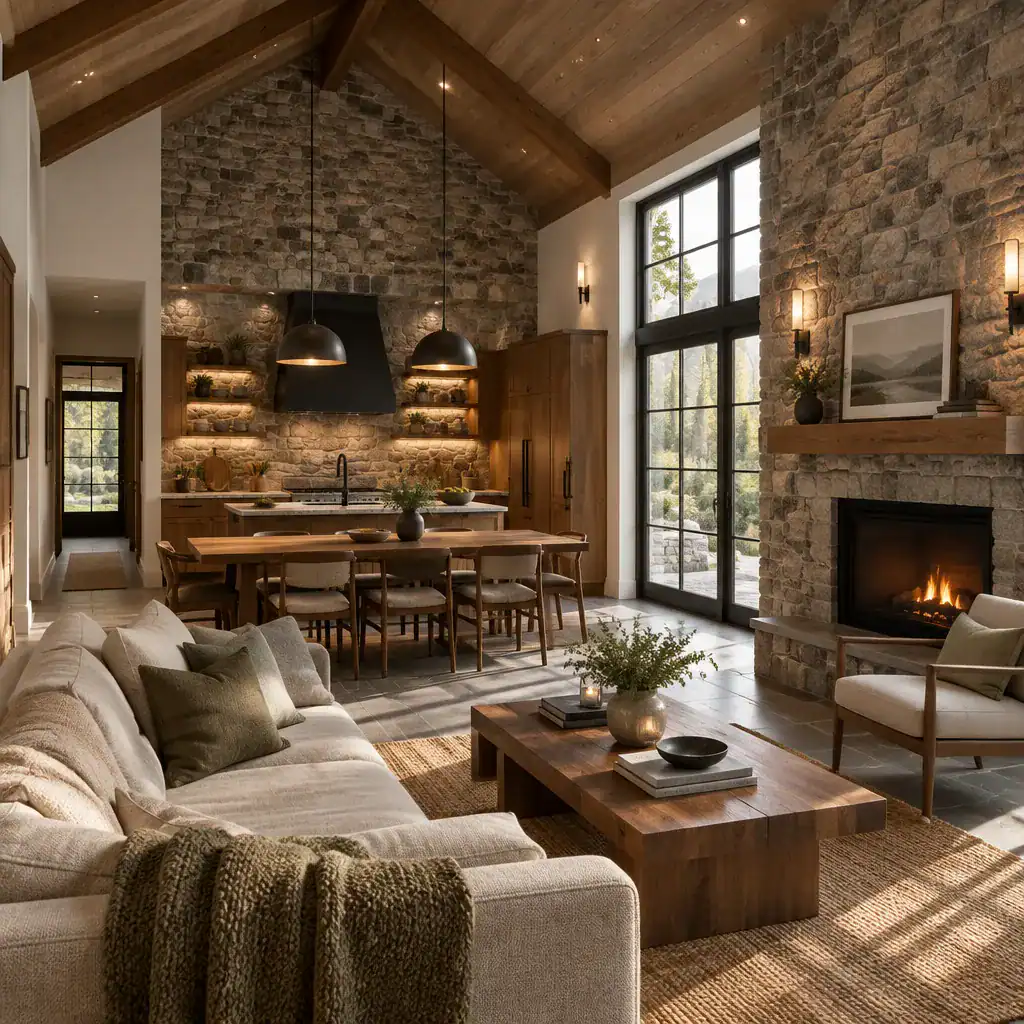
Windows are more than exterior details; they determine how contemporary the interior feels. Place them to frame garden views, bring light deep into shared spaces, and create a visual rhythm across the facade. Slim or dark framing can add a tailored edge to stone walls, while generous glazing near a living room or dining area can strengthen the home’s relationship with the landscape.
Use lighting in layers. Ambient lighting establishes an inviting overall glow, task lighting supports cooking, reading, and daily routines, and accent lighting reveals the dimension of stone, timber, or art. Pendants, discreet wall sconces, and table lamps can work together without overwhelming the architecture. Review stone, wood, paint, metal, and fabric samples side by side in daylight and under planned artificial lighting, since each finish can shift in appearance as conditions change.
Connect the Cottage to Its Landscape
The landscape should feel like an extension of the cottage, not a separate decorative project. Paths, planting beds, terraces, and seating areas can continue the home’s materials, scale, and calm geometry into the garden. A gravel or stone path, for example, can provide a simple transition from the approach to the entry while complementing the facade’s texture.
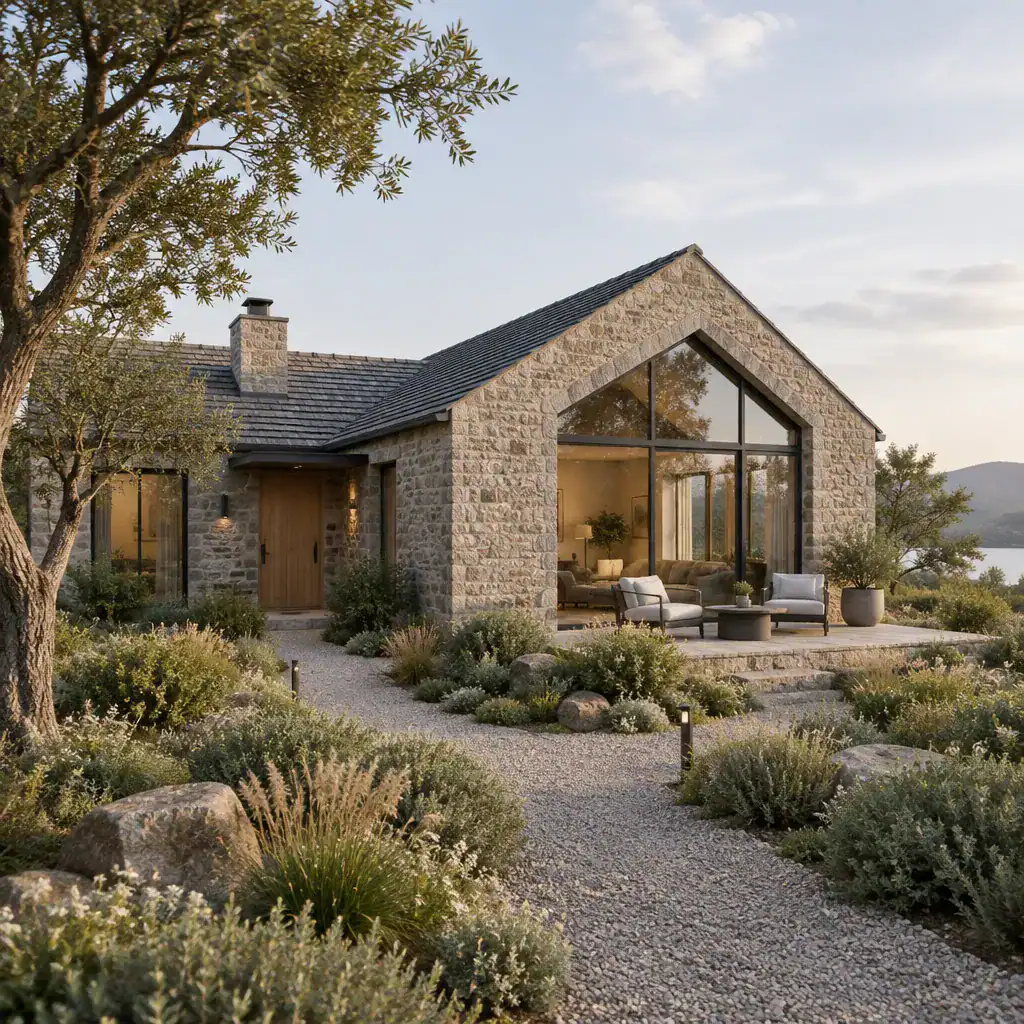
Keep the planting approach restrained so it supports rather than competes with the masonry. Repeated plant forms, a limited material palette, and clear edges can suit the modern side of the design, while looser layers of greenery preserve the cottage’s natural warmth. Choose plants and landscape materials according to local conditions, maintenance expectations, and the character of your individual site instead of following a universal planting formula.
A small terrace with comfortable outdoor seating can act as an extra room, particularly when positioned near large windows or glazed doors. Covered thresholds, a sheltered porch, or a simple overhang make the move between interior and garden more comfortable. When views, paths, and seating are arranged with intention, a modern stone cottage feels settled into its surroundings rather than simply placed on the land.
Avoid Common Modern Stone Cottage Design Conflicts
The most common design conflict comes from trying to include too many attractive finishes at once. Multiple stone colors, unrelated wood tones, several metal finishes, and competing decorative styles can make the home feel fragmented. A smaller palette, repeated across exterior and interior spaces, creates a stronger and more peaceful result.
Excessive rustic detailing can also weaken the intended modern character. Heavy ornamental brackets, overly distressed finishes, or too many reclaimed accents may distract from the clean form of the house. At the other extreme, removing all texture and softness can make stone architecture feel cold. The best balance pairs tactile materials and comfortable layers with simple forms, edited furnishings, and uncluttered sightlines.
Before final selections, review the entire concept through mood boards, finish samples, and coordinated exterior and interior elevations. Look for repeated forms, compatible undertones, and a consistent level of visual contrast. This process makes it easier to spot whether a door, fixture, fabric, or landscape material belongs within the overall design before it becomes a permanent choice.
A successful modern stone cottage is defined by balance, not by a fixed checklist of decorative features. When the stone exterior, warm interior palette, openings, lighting, and landscape are developed as connected parts of one concept, the result can feel both timeless and current. Adapt these ideas to your existing architecture, site conditions, lifestyle, and renovation priorities to create a cottage that is personal, cohesive, and welcoming.