
A front porch can give a compact ranch home a stronger sense of arrival while adding a practical place to pause, greet neighbors, or enjoy a little time outdoors. The goal is not to make the porch oversized, but to let it act as a welcoming visual anchor that complements the home’s simple, single-story form.
When planning a small ranch house with front porch, focus on how porch proportions, entry circulation, facade materials, and space-conscious details work together. These ideas offer a flexible starting point for conversations with a designer, builder, or architect, whether the porch is a modest covered stoop or a broader gathering area.
Start With a Porch Proportion That Fits the Small Ranch House
The porch should feel connected to the house rather than attached as an afterthought. Its width, depth, roofline, and supports should respond to the low, horizontal character of a ranch facade. A shallow roof extension with simple columns can frame the entry neatly, while a porch that is too tall, deep, or visually heavy may make the rest of a compact exterior seem smaller.
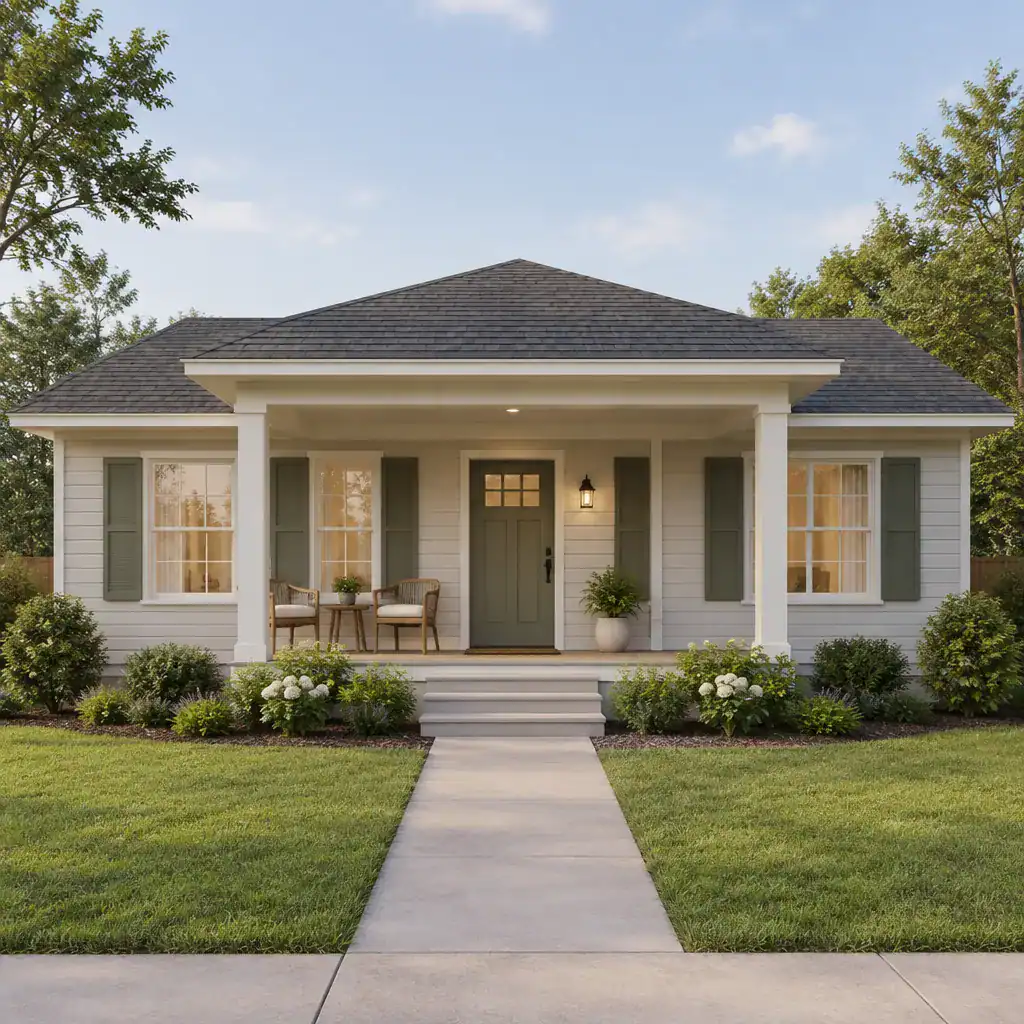
A compact entry porch is a useful direction when the main priority is shelter at the door and a clear focal point for the facade. It can provide room for a mat, lighting, and one or two modest decorative elements without taking over the front elevation. A wider, full-front porch creates more outdoor living potential and can emphasize the ranch house’s horizontal lines, but it needs careful detailing so the entry still remains easy to identify.
In either approach, protect the path from the front walk to the door. Account for the door swing, a comfortable standing zone for visitors, and any seating without creating pinch points. Keeping these areas visually open also helps the porch feel orderly and makes a compact home appear more generous from the street.
Organize the Front Entry for a Clear Indoor-Outdoor Transition
A well-organized porch creates a gentle sequence: front walk, covered threshold, front door, and then the interior. This transition makes the entry more intuitive for guests and allows the exterior to feel like a purposeful part of daily life rather than just leftover space in front of the house.
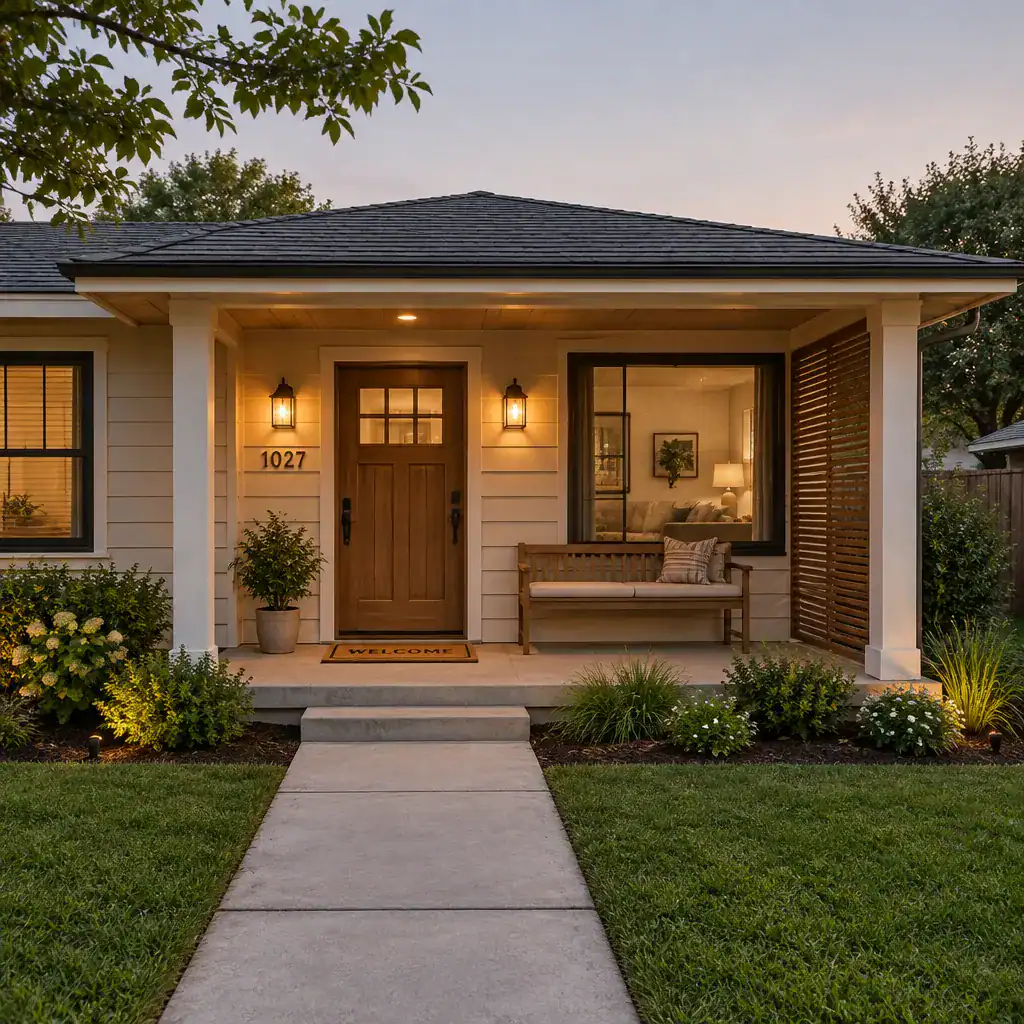
Place the door where it is visible from the approach, and use lighting to clarify the route after dark. A welcome mat, a protected location for package delivery, and a compact bench or perch can make the porch more useful while retaining a clean path. Wall-mounted fixtures are often a space-saving alternative to freestanding lights or bulky accessories.
Consider what a visitor sees when the door opens. Direct sightlines into a living room can make a small home feel bright and connected, but a partial screen, offset wall, furniture placement, or a small entry zone can preserve privacy. The most successful arrangement gives the interior a sense of openness without putting private daily activity on display from the front walk.
Use Ranch House Details to Strengthen the Exterior Character
Ranch house character often comes from quiet, coordinated details: low horizontal lines, broad uncomplicated roof forms, simple window groupings, and restrained trim. The porch can reinforce these traits by extending the roof rhythm and using supports that feel substantial enough for the facade without becoming overly ornate.
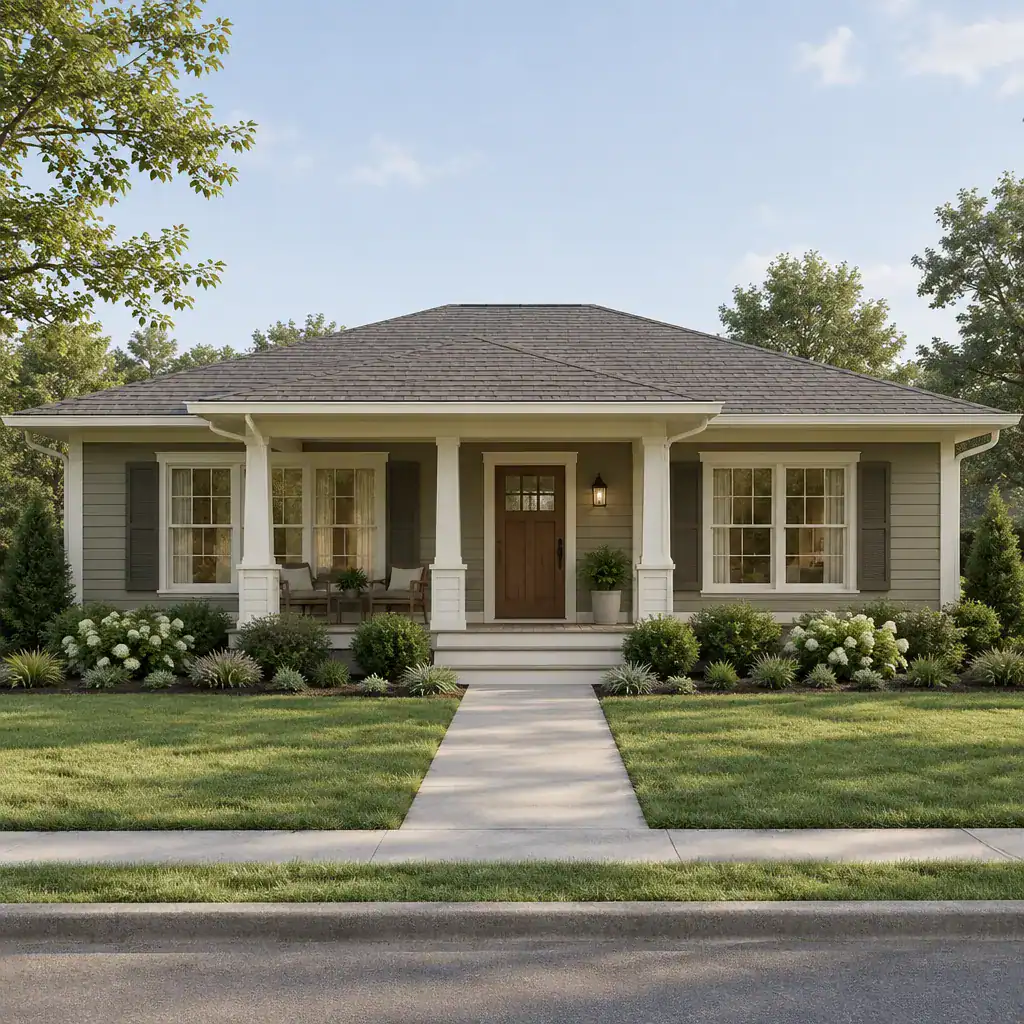
Coordinate the columns, railings, siding, roofing, front door, and porch floor so they read as one composition. For example, a simple column profile can echo the home’s trim, while the entry finish can provide a measured point of contrast. Consistency matters more than adding numerous decorative features.
A limited material and color palette can make a small ranch house with front porch feel intentional and visually calm. Choose a primary exterior material, one or two supporting finishes, and an entry accent that is easy to recognize from the curb. This approach helps a smaller facade retain definition without looking busy.
Make the Porch Useful Without Crowding the Exterior
Decide first how the porch will be used. A porch intended mainly for greeting guests needs clear access and minimal furnishings, while one intended for brief relaxation may support a pair of slim chairs and a small table. Matching furniture to the available circulation area prevents the entry from feeling obstructed.
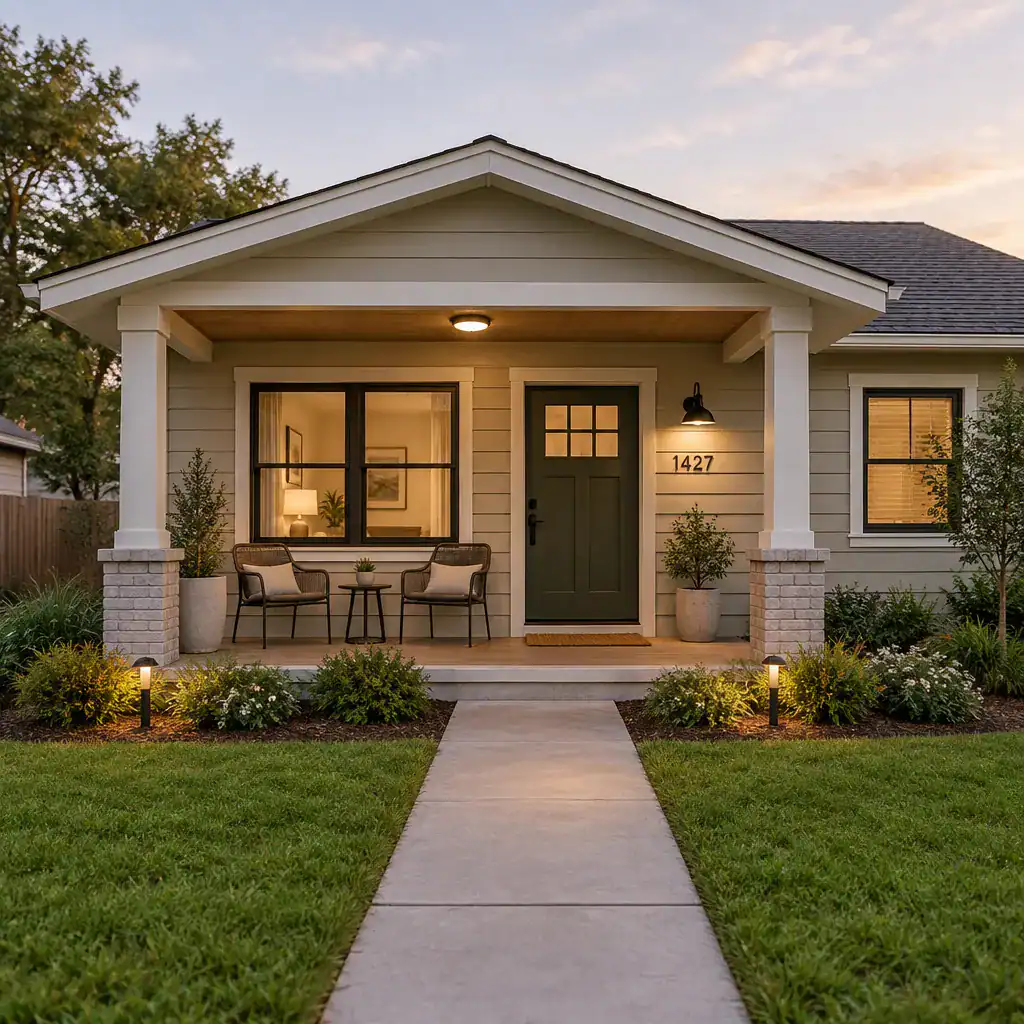
Compact seating, understated planters, and wall-mounted lighting add personality without consuming valuable floor area. Keep planters where they frame the steps or columns instead of narrowing the walking route, and select accessories that support the porch’s main purpose rather than compete with it.
Weather exposure should guide every finish and furnishing decision. Consider how sun, rain, wind, and routine cleaning may affect the pieces you choose, along with how visible they will be from the street. Durable-looking, easy-to-maintain selections can help the porch remain inviting without requiring a crowded collection of decor.
Connect the Porch Plan to an Efficient Single-Story Interior
The porch works best when its entry sequence continues naturally inside. From the front door, shared spaces such as the living area, dining zone, or kitchen can be easy to reach, while bedrooms and bathrooms are positioned so they are not immediately exposed. This gives a compact single-story home a welcoming but appropriately private layout.
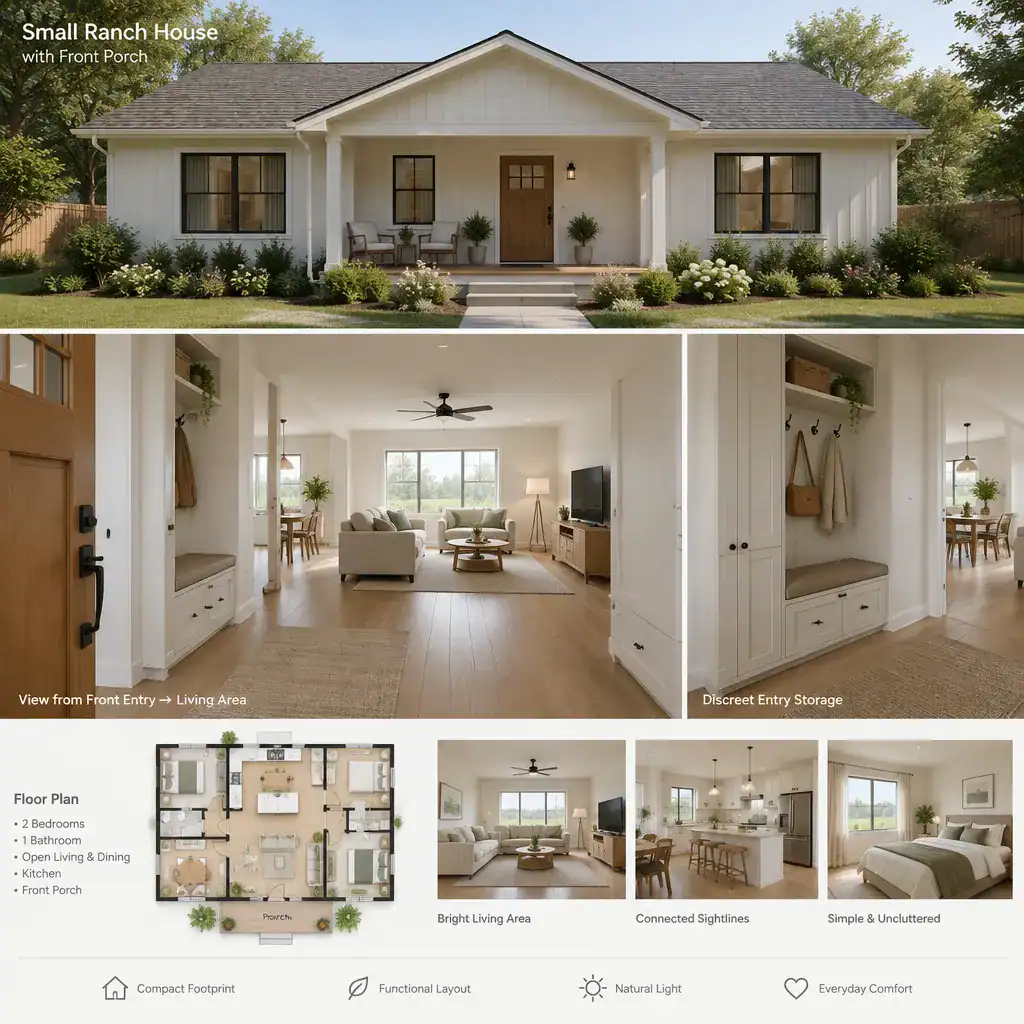
Open and partially open arrangements can strengthen the connection between the entry and common rooms. Long sightlines, daylight, and a visually uncluttered living area may make the interior feel larger, but subtle boundaries can still define where the foyer ends and everyday living begins.
Plan storage close to the door for coats, shoes, bags, and other daily essentials. A closet, cabinet, bench with concealed storage, or nearby utility zone can reduce clutter before it reaches the living area. That organization is especially valuable in a small ranch house with front porch, where the entry should remain a pleasant transition rather than an overflow space.
The best porch design balances exterior scale, a clear entry function, cohesive ranch character, and everyday usability. Use these principles to adapt the porch size, materials, furniture, and interior connection to the site and the way your household lives. With thoughtful choices, a compact ranch home can gain a front porch that feels welcoming, useful, and naturally suited to its architecture.