
Older farmhouse homes appeal because they feel welcoming, straightforward, and connected to the land around them. Their appeal is not only visual: a home with a familiar porch, simple roofline, and comfortable shared rooms can also support an easy daily rhythm. The most successful approach pairs that warmth with realistic decisions about how your household moves, stores belongings, rests, and gathers.
A good plan links its visible character to circulation, privacy, storage, and entertaining needs. This means distinguishing between details that create an authentic-looking impression and the modern planning requirements that make a home comfortable to use. The following guide considers layout choices, exterior composition, interior atmosphere, and the project checks needed before adapting a concept for construction.
Core Characteristics of a Vintage Farmhouse Plan
vintage farmhouse plans are a design direction rather than one fixed arrangement of rooms. They often begin with an approachable, uncomplicated form, a clear entrance, and a sense that the house belongs to its setting. A front porch, a readable path to the door, and views toward a garden, field, or yard can help make the home feel connected to the property instead of placed on it.
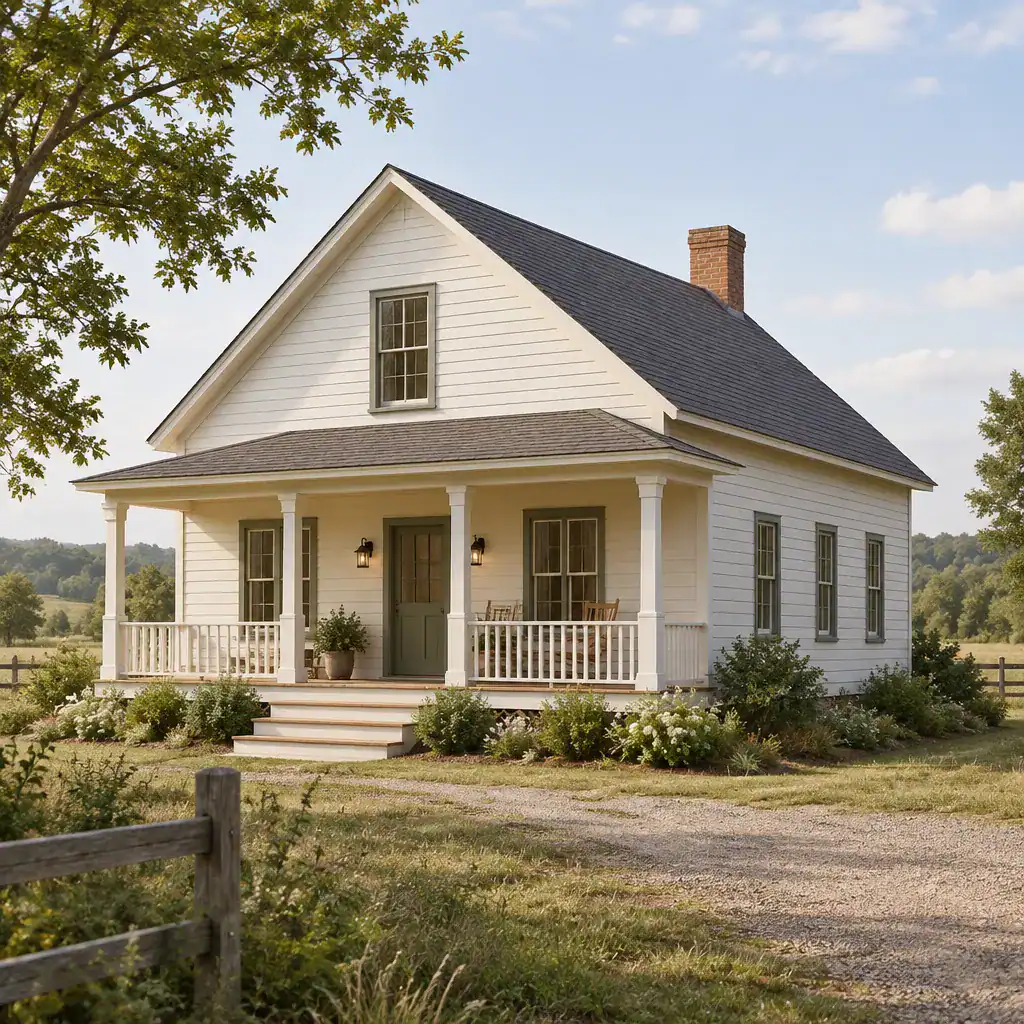
Inside, many farmhouse-inspired layouts organize life around a central living area with a practical relationship between the kitchen, dining space, and main gathering room. Flexible rooms can be especially valuable: a small den may become a guest room, hobby area, or work space as needs change. The goal is not to copy an old house exactly, but to retain its clear, useful logic.
Exterior character usually comes from coordinated, restrained choices. Balanced window placement, simple gable roofs, modest trim, and a well-proportioned porch can suggest a heritage feel without turning the house into an imitation of a specific period. Before comparing plans, identify which elements matter most to you, whether that is a broad porch, a compact footprint, defined rooms, or simple massing. This makes it easier to recognize which features are essential and which can be adjusted.
Layout Planning for Everyday Farmhouse Living
The choice between open rooms and more traditionally separated rooms has a major effect on daily life. An open kitchen, dining, and living area supports casual conversation and easier supervision, but it also creates longer sightlines and less acoustic privacy. More defined rooms can feel calmer, contain noise and visual clutter, and create distinct destinations, although they may need more deliberate circulation between spaces.
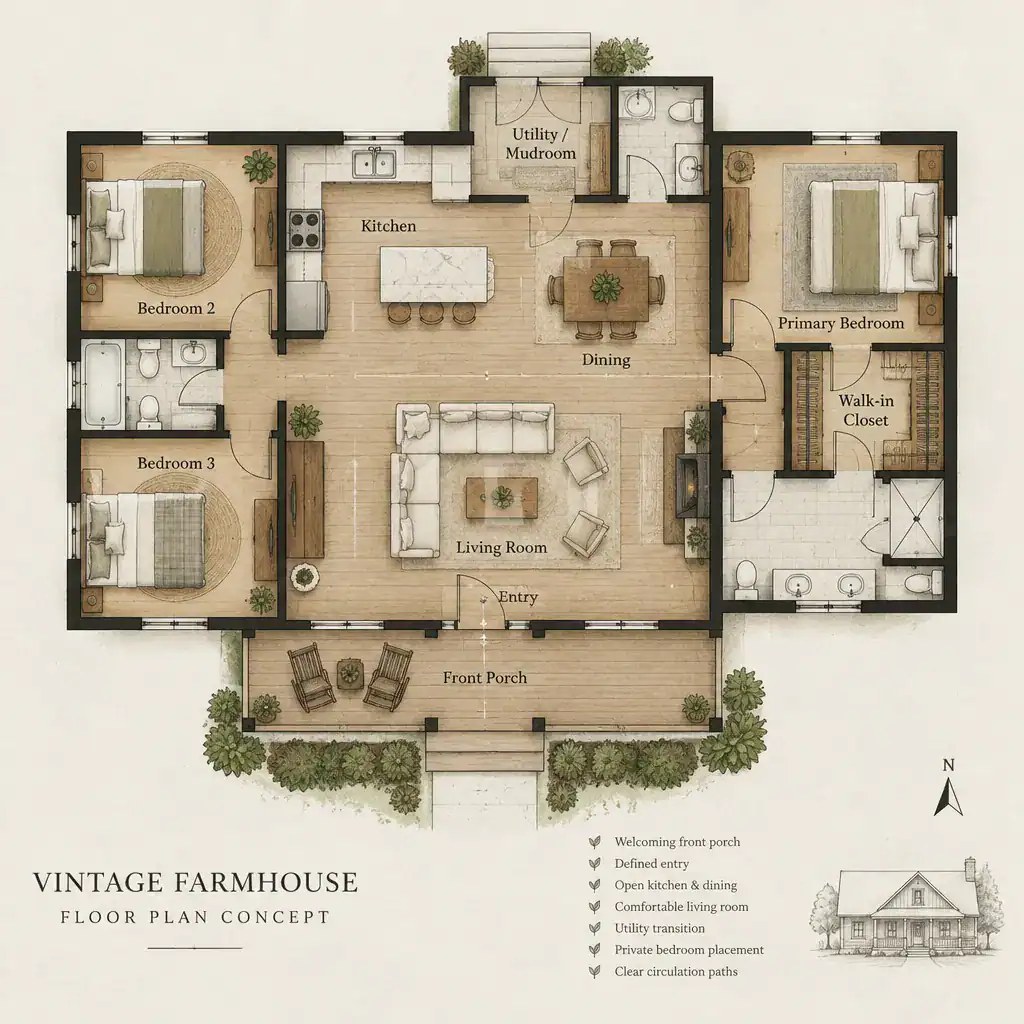
For everyday use, place the kitchen near the dining area and consider how both relate to the living room. This connection should work for weekday meals as well as informal gatherings, without forcing guests through a work zone. A kitchen island, table, or serving surface can support the transition, but the best arrangement depends on how many people typically cook, eat, and gather at once.
Entry transitions deserve equal attention. A defined front entry can preserve a welcoming arrival, while a side or rear utility entrance may handle shoes, coats, groceries, pets, and outdoor equipment. Include storage where it is used, not only where it is easy to draw on a plan. Clear paths between bedrooms, bathrooms, shared rooms, and outdoor areas will make the home feel more comfortable over time.
When reviewing vintage farmhouse plans, test them with furniture placement and movement paths. Check where a sofa, dining table, bed, and everyday storage will sit, then imagine carrying laundry, bringing in groceries, or welcoming visitors. A charming exterior cannot compensate for a layout that creates repeated obstacles indoors.
Exterior Details That Build Vintage Farmhouse Character
Vintage character is strongest when porch proportions, roof silhouette, window rhythm, siding direction, and entry emphasis are considered as one composition. A porch should feel useful enough for sitting or arriving, while the roof shape should suit the home’s overall massing rather than compete with it. Windows arranged with a consistent rhythm can make even a modest facade appear settled and intentional.
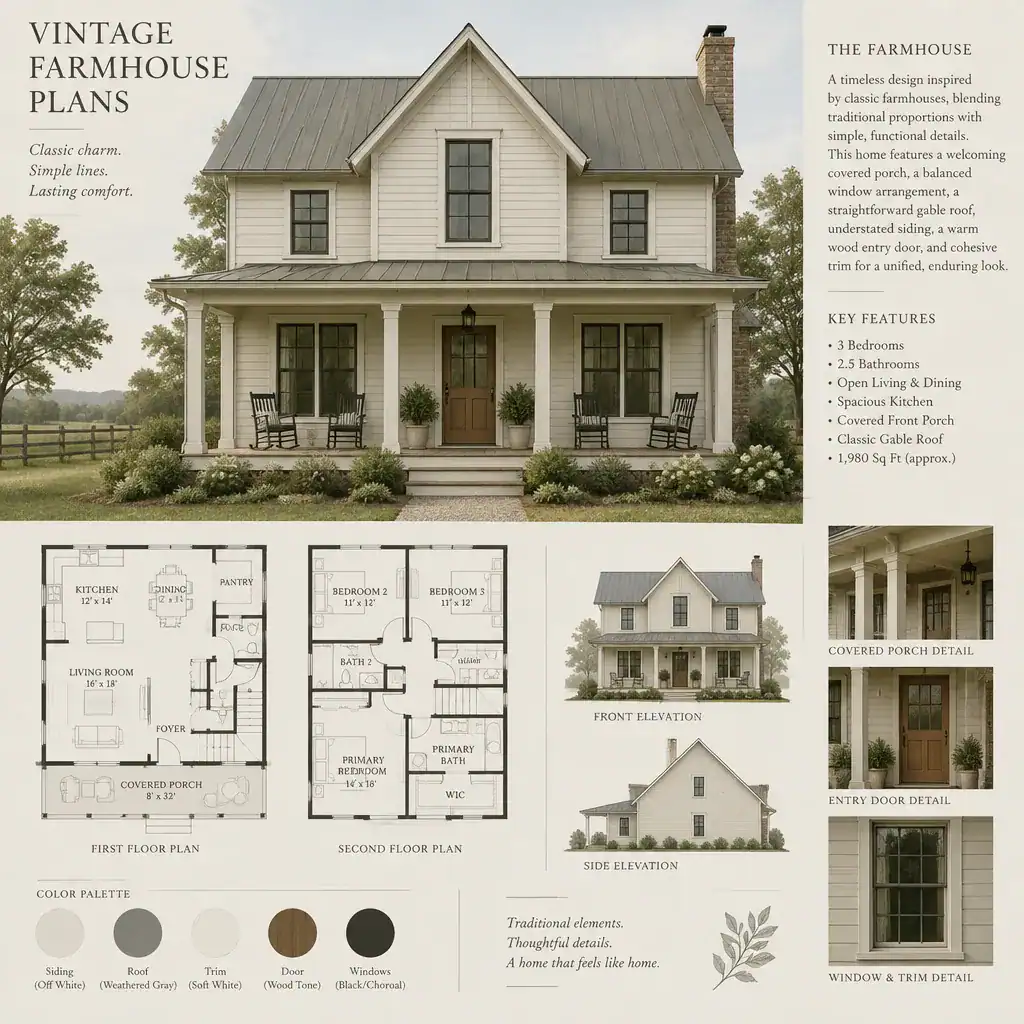
Restraint is often more convincing than a collection of decorative additions. Simple siding, limited trim profiles, a wood-toned or otherwise grounded entry door, and a coordinated palette can produce a more coherent result than elaborate ornament. Repeating a small number of materials and details helps the exterior read as a complete home rather than a set of unrelated references.
Also consider the approach to the house and its outward views. The footprint, driveway, walkway, porch, and major windows can frame gardens, mature trees, fields, or other valued site features. Regional building references can be useful sources of inspiration, but they should be researched carefully and adapted to the site rather than treated as universally authentic.
Interior Atmosphere and Material Direction
An interior can support a farmhouse mood through natural-looking finishes, simple trim profiles, visible texture, and furniture selected for real use. Wood cabinetry, textured flooring, painted surfaces, woven textiles, and modest hardware can introduce warmth without requiring a single prescribed style. The desired atmosphere may be light and airy, quietly rustic, or more tailored and traditional, so material and color choices should respond to that personal direction.
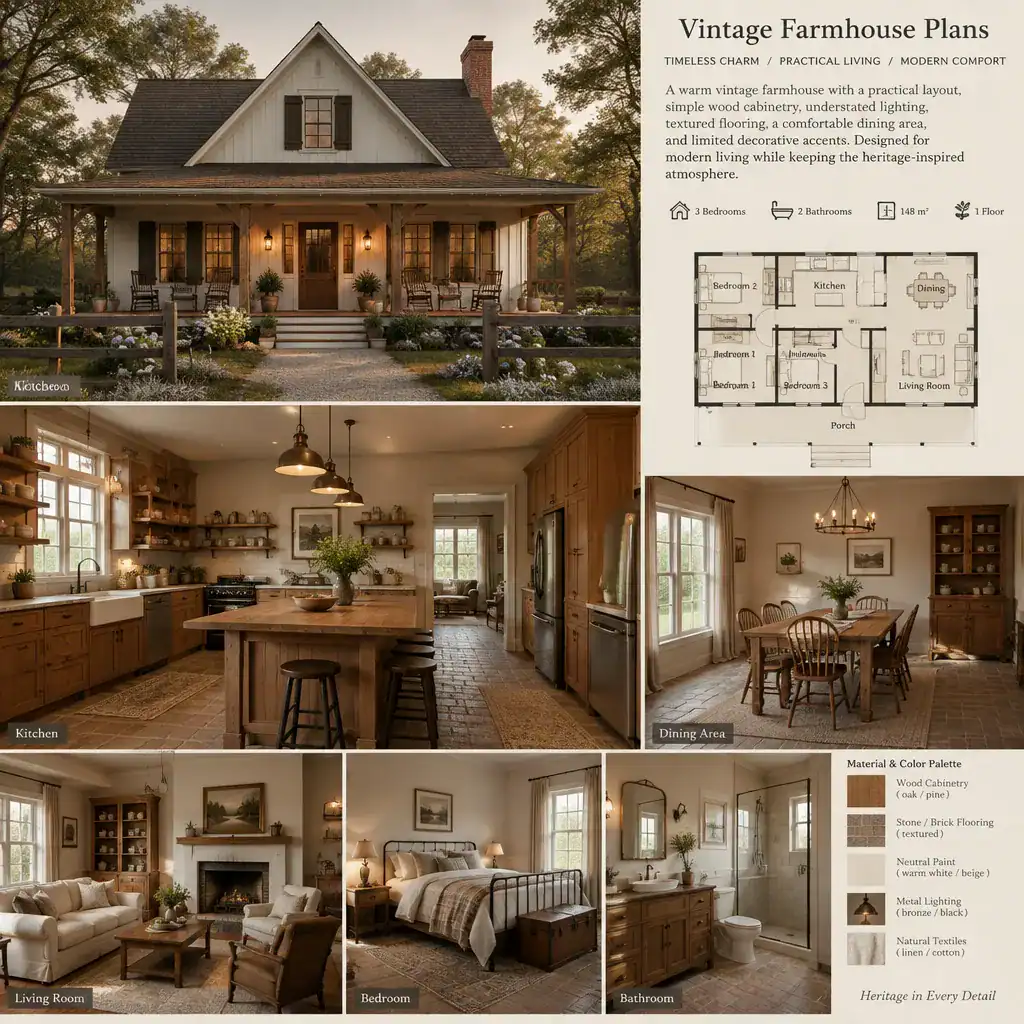
Contemporary functions do not have to overwhelm the traditional concept. Modern appliances can be integrated into a calm kitchen composition, while layered lighting can improve task visibility and evening comfort without becoming overly decorative. Built-in storage, efficient pantry organization, and comfortable heating and cooling systems can make the house easier to live in while allowing the visible finishes to remain simple.
Prioritize materials that are durable, cleanable, and appropriate for the household’s habits. A finish that looks appealing in a photograph may not suit wet entry areas, pets, children, or frequent entertaining. For performance, installation, and maintenance questions, confirm the suitability of specific products and assemblies with qualified professionals.
How to Compare and Adapt Vintage Farmhouse Plans
Compare vintage farmhouse plans with a consistent checklist rather than relying on first impressions. Review the relationship between rooms, circulation routes, storage capacity, natural light, outdoor access, and future flexibility. A plan that is visually appealing may still need adjustment if bedrooms lack privacy, the kitchen is isolated, or the main entry has no practical place for daily items.
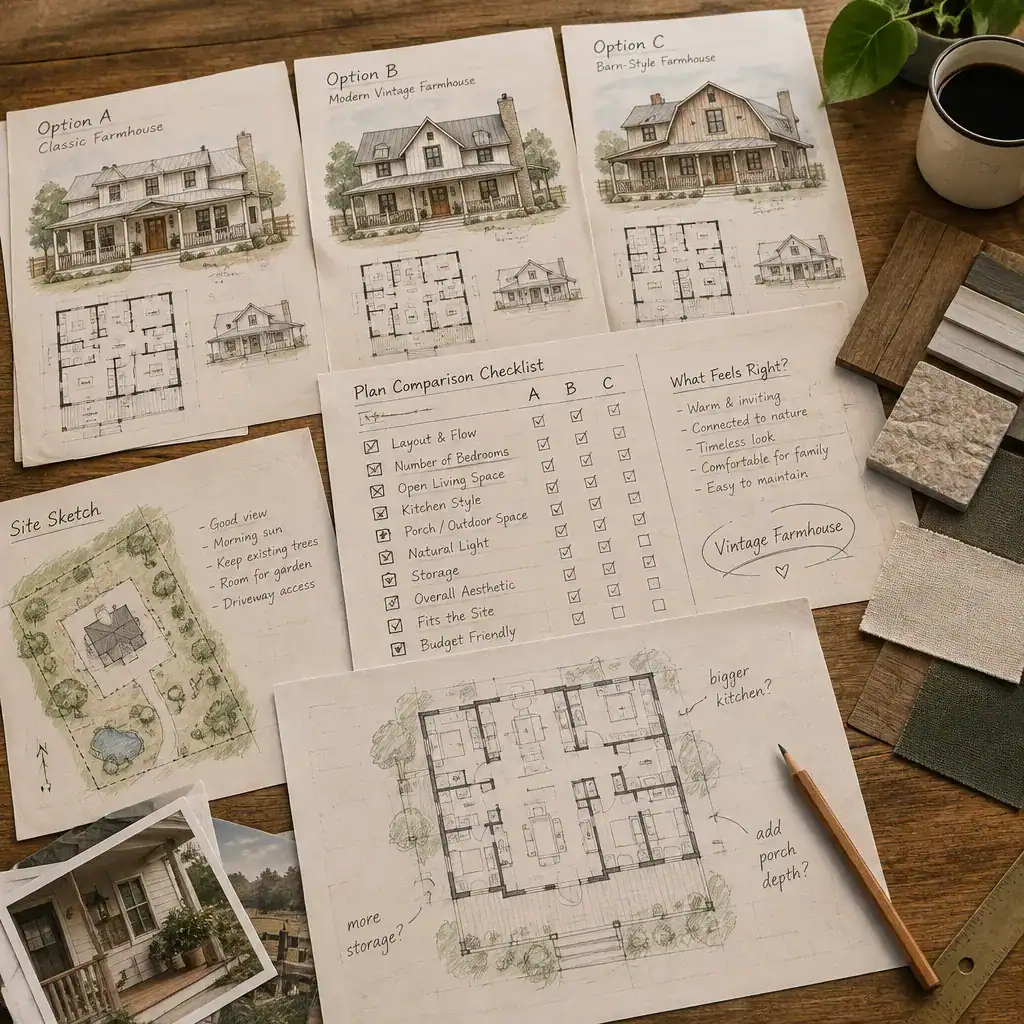
Separate non-negotiable household needs from character features that can be modified later. Required bedroom and bathroom arrangements, accessibility needs, work-from-home space, garage access, and storage may determine whether a plan is viable. Porch rail details, paint colors, light fixtures, and some trim choices are often easier to revise after the underlying layout is working well.
Online plans are useful starting points, not final construction documents. Site conditions, local regulations, structural requirements, energy performance, utilities, and climate all affect what can be built and how it should be detailed. Have the project reviewed by appropriate local design, engineering, and building professionals before construction, particularly when adapting a plan to a specific property.
The strongest choice balances recognizable farmhouse character with the way your household actually lives. Define the character you want first, test the layout against daily routines, coordinate exterior and interior decisions, and then verify technical feasibility. vintage farmhouse plans can provide lasting inspiration without requiring an inflexible recreation of a historical home.